planeta azul •
blue planet
82
·amura·
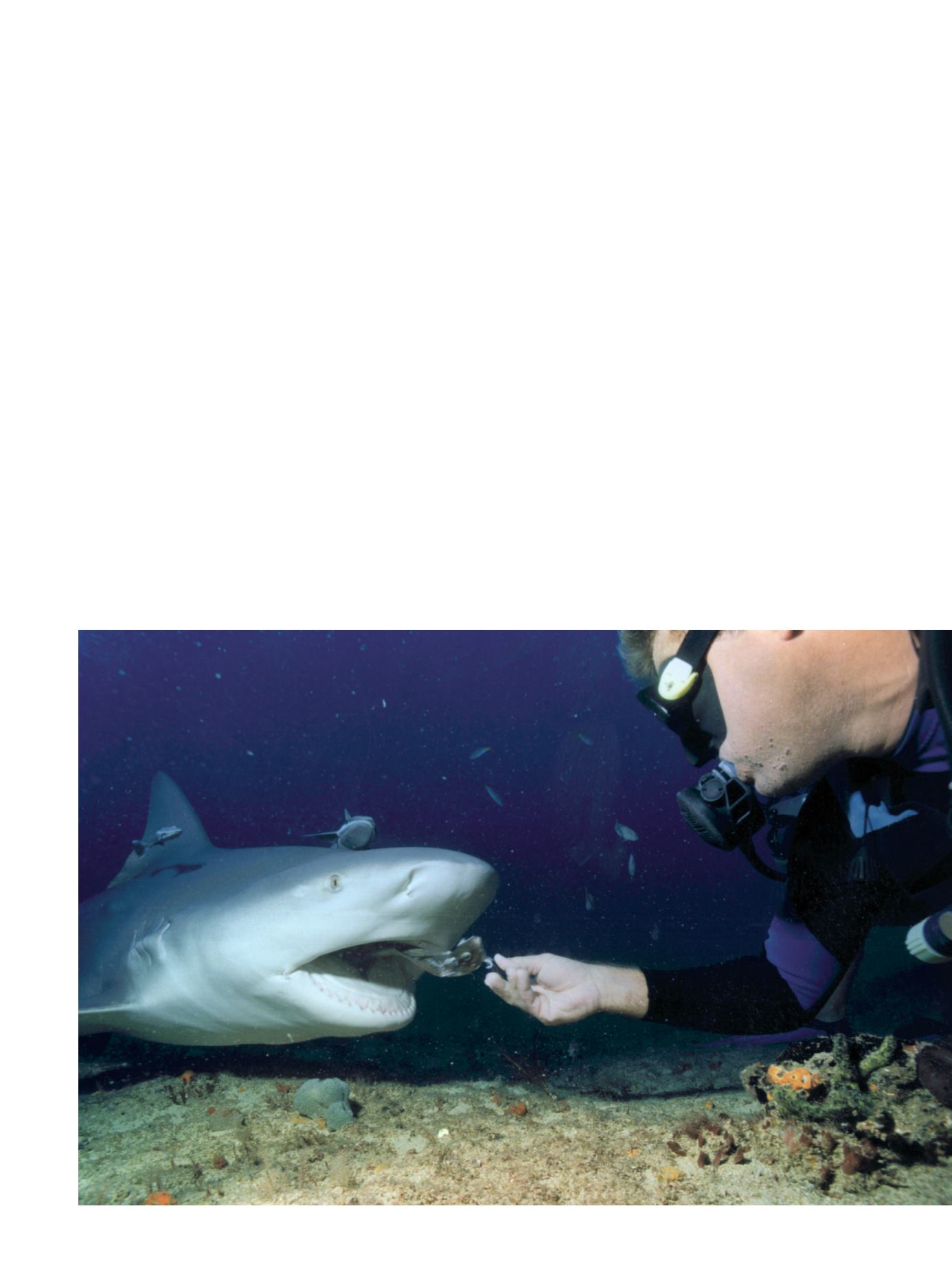
Of the 350 existing species of shark, only nine are
potentially dangerous to humans and one of them
is the bull shark (
Carcharhinus leuca
). It is found in all
the tropical and subtropical seas of the world and also
in rivers, estuaries and canals. It is an either brown or
gray big, robust animal. At birth it measures 50 cm
(19.6 in) and, when full grown, three and a half meters
(11.5 feet) and can weigh 400 kg (882 lb). It eats manta
rays and small fish and sometimes other sharks. Its
round snout is dangerous and filled with several rows
of sharp teeth. Its eyes are small and bright and they
close them when attacking.
After recalling this, my nerves began to tense,
especially since, besides Walter Dupond, Ricardo
Fuentes, Armando Gasse, Santiago Gutiérrez, Rafael
Nachon and Manuel Sains, good friends accompany-
ingme, the daughters of Rafa (Elsa), Manuel (Mariana)
and my daughter Cristina and niece Valentina had
also decided to tag along on the trip.
After breaking the mirror of the water’s surface
we began to descend near a sunken ship about 25
meters (82 ft) deep. Pepe made signs to quiet us and
be attentive to what was about to happen. Not much
time went by when the first shark appeared. We
could barely see it, shy and cautious. In a few sec-
onds, and as if coming out of nowhere, we observed
five more majestic animals. Pepe put more bait in
front of us and the sharks measured their turf, get-
ting closer and closer at every moment. They sur-
rounded us and observed. The level of adrenaline
went up and up and reached its maximum when the
sharks began to eat from the hand of their benefactor.
De las 350 especies de tiburones que existen, sólo nueve
son potencialmente peligrosas para el ser humano, y una de
ellas es ésta, el tiburón toro (
Carcharhinus leuca
). Se encuen-
tra en todos los mares tropicales y subtropicales del mundo,
y se los ve en ríos, esteros y canales.
Es un animal muy grande, robusto, de color café o gris
oscuro. Al nacer mide 50 cm, y en su madurez alcanza los tres
metros y medio, llegando a pesar 400 kg. Se alimenta de
mantarrayas y peces, e incluso de otros tiburones. Su hocico
es redondo, poderoso y armado de varias hileras de afilados
dientes. Sus ojos son pequeños y vivaces que se cierran a la
hora de atacar.
Mis nervios se empezaron a tensar, pues aparte de los
buenos amigos con las que iba (Walter Dupond, Ricardo
Fuentes, Armando Gasse, Santiago Gutiérrez, Rafael Nachon
y Manuel Sains), iban las hijas de Rafa (Elsa), de Manuel (Ma-
riana), mi hija Cristina y mi sobrina Valentina, quienes deci-
dieron acompañarnos en este viaje.
Después de romper el espejo de la superficie marina em-
pezamos a descender por un barco hundido hasta una pro-
fundidad de 25 m. Pepe nos hizo la seña de que estemos
quietos y atentos a lo que iba a suceder. No pasó mucho
tiempo antes que apareciera el primer escualo. Apenas si se
distinguía, temeroso, precavido. En unos segundos más y sa-
liendo de la nada pudimos observar hasta cinco majestuosos
animales marinos.
Pepe puso la carnada frente a nosotros y los tiburones
fueron midiendo su terreno, acercándose más y más en cada
momento. Nos rodearon y observaron. La adrenalina iba su-
biendo poco a poco y alcanzó su máximo nivel cuando los ti-
burones empezaron a comer de la mano de su benefac-
tor. Pasaban tan cerca que se podían tocar y acariciar. Lo


