fuera de borda •
outboard
90
·amura·
Texto /
Text:
Amura • Foto /
Photo
: Park Hyatt
U
bicado en una de las zonas residenciales más coti-
zadas y elegantes de la capital argentina, el Palacio
Duhau-Park Hyatt Buenos Aires es considerado un
clásico. En éste, sus huéspedes pueden vivir exactamente
en el corazón de Argentina, y gozar del entorno, ya que
está rodeado de elegantes boutiques, centros atrac-
tivos, los mejores restaurantes y el shopping más exclu-
sivo de la región.
Construido en 1934, el Park Hyatt Buenos Aires es
uno de los palacios que sobreviven en esa ciudad. Ubica-
do en Av. Alvear, está conformado por dos edificios: el
palacio, restaurado recientemente, y el edificio contem-
poráneo que fue construido a su lado y que conservó la
armonía arquitectónica original. Estos dos edificios se
encuentran ligados por sus grandes jardines y una mag-
nífica galería subterránea conocida como “Paseo de las
Artes”, que posee una extensa colección de obras dig-
nas de admirar.
L
ocated in one of the most elegant residential
areas of the Argentine capital, the Palacio Du-
hau-Park Hyatt Buenos Aires is considered a
classic, a place where guests can live exactly in the
heart of Argentina and enjoy the environs since it is
surrounded by elegant boutiques, exclusive centers,
the finest restaurants and the most select shopping
in the city.
Built in 1934, the Park Hyatt Buenos Aires is one
of the palaces that survive in the city. Located on Al-
vear Avenue, it consists of two buildings: the re-
cently restored palace and the contemporary
building that was built next to it and which preserves
the architectural harmony of the first. These two
buildings are linked by the large gardens and a mag-
nificent underground gallery knows as “Paseo de las
Artes” (Avenue of the Arts), which has a large collec-
tion of splendid art.
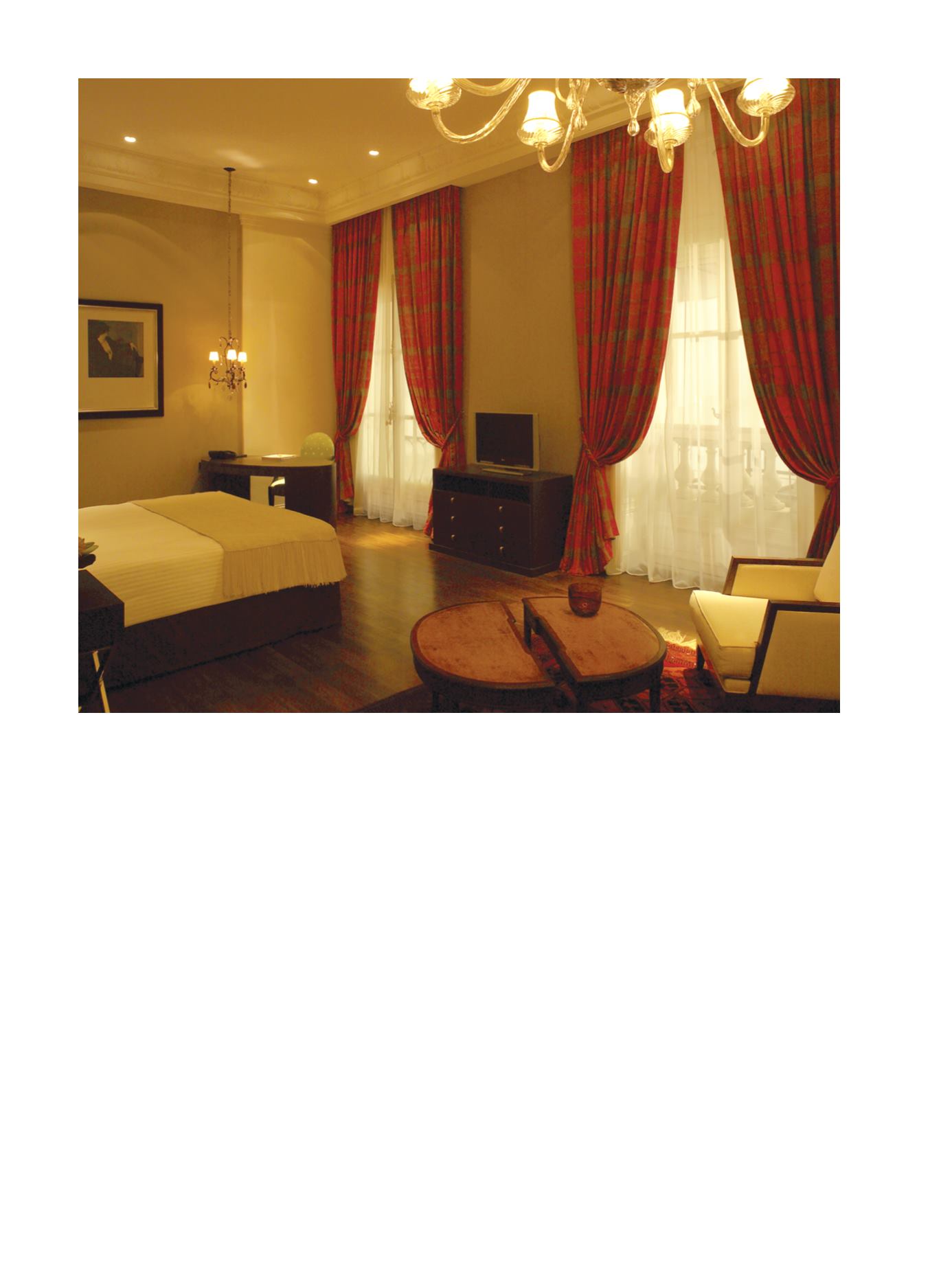
Un clásico en la ciudad de los clásicos
A Classic in the City of Classics
Park Hyatt Buenos Aires


