especies •
species
86
·amura·
30 toneladas, y presenta unas aletas pectorales enormes,
que miden hasta un tercio de la longitud de su cuerpo.
Reproducción en México
Cerca de 10 % de la población mundial de estas ballenas
se reproducen en México, por lo que se estima que hay
20,000 individuos.
En nuestro país se reproducen tres poblaciones di-
ferentes de ballenas jorobadas y se agregan en zonas de
reproducción particulares: alrededor de la Península de
Baja California (desde Loreto hasta Bahía Magdalena),
en la región costera desde el norte de Nayarit hasta el
Golfo de Tehuantepec (con concentraciones importan-
tes en Bahía de Banderas e Isla Isabel), y en el Archipié-
lago de Revillagigedo frente a Colima.
Estas ballenas migran al final de la primavera hacia
mares templados y fríos en latitudes altas, donde
encuentran su alimento en los meses de verano. Su
dieta incluye krill, sardina, anchoveta y macarela.
Cantos de sirenas
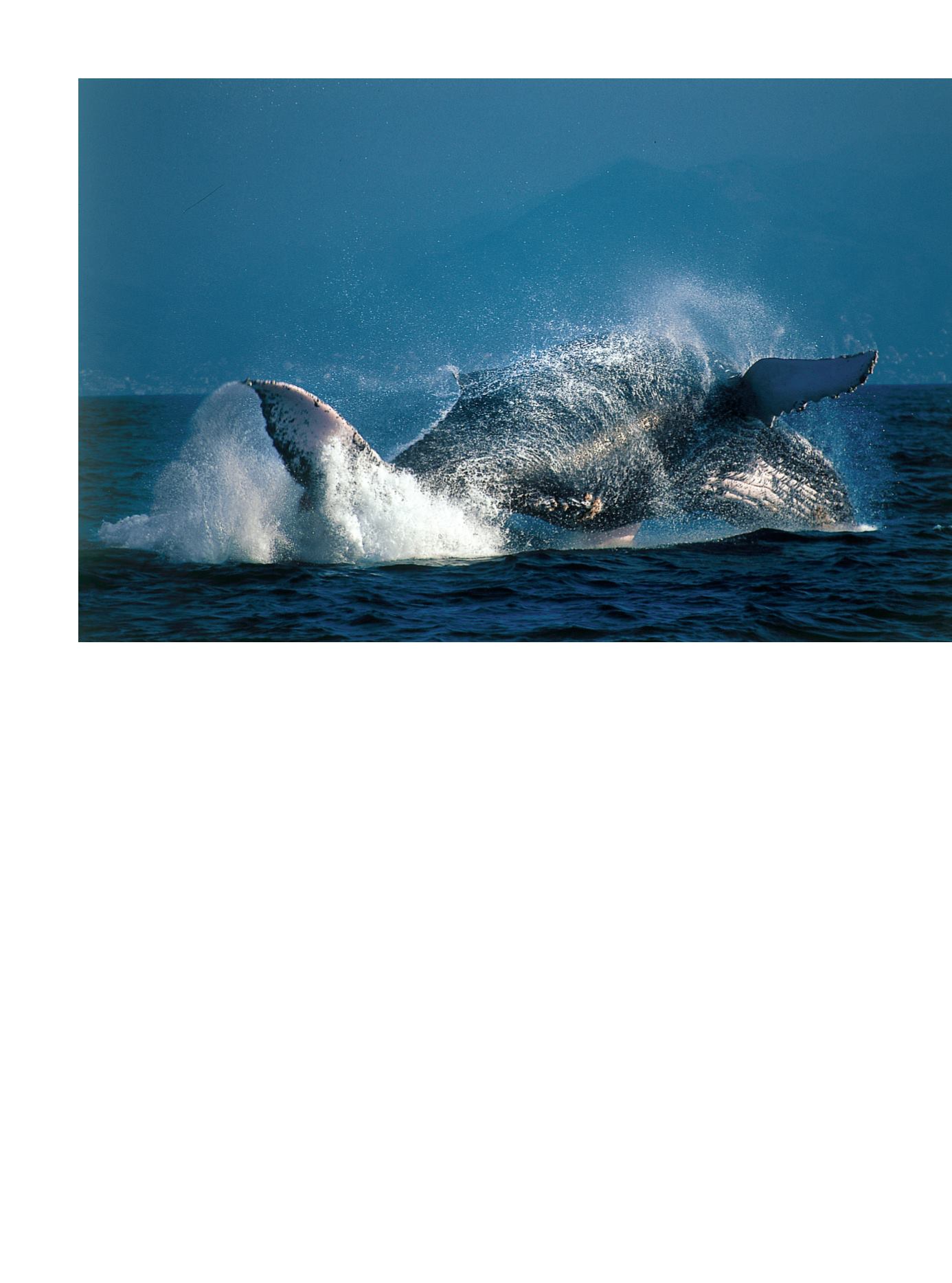
Es mundialmente reconocida por sus acrobacias y sus
cantos, ya que produce la mayor variedad de vocaliza-
ciones que cualquier otra especie de ballenas.
A lo largo de la historia naviera los marineros
describen estas vocalizaciones en sus crónicas como los
cantos de las sirenas, y actualmente han sido reproduci-
dos con instrumentos musicales en obras de música de
new age o jazz (Whales Alive y Paul Winter).
Estos mamíferos marinos producen sus cantos
exclusivamente en las zonas de reproducción, por lo
cual se deduce que tienen un rol de suma importancia
dorsal fin, which is formed when it arches its body
before plunging into the water. It measures from12 to
15 meters (39 to 49 feet) long, weighs approximately
30 metric tons and features enormous pectoral fins
that measure almost a third its total body length.
Reproduction in Mexico
Nearly 10 % of the world’s humpback whale popula-
tion reproduces in Mexico and it is believed that there
are about 20,000 individuals. Three different groups
of humpback whales reproduce in our country in spe-
cific reproductive zones around the Baja California
peninsula (from Loreto to Bahía Magdalena), in the
coastal region stretching from northern Nayarit to
the Gulf of Tehuantepec (with important concentra-
tions in Bahía de Banderas and Isla Isabel) and in the
Revillagigedo archipelago facing the coast of Colima.
These whales migrate at the end of spring
towards temperate and cold waters located in high
latitudes, where they feed during the summer. Their
diet includes krill, sardines, anchovy and mackerel.
It is renowned throughout the world because of
its acrobatics and songs, since it produces the largest
variety of vocalizations of any other species of whale.
Siren songs
Throughout the history of navigation, sailors reported,
in their chronicles, that these vocalizations were the
songs of sirens. Nowadays, they have been reproduced
using musical instruments and incorporated into New
Age and Jazz music (Whales Alive and Paul Winter).
These marine mammals produce songs exclusively in


