


 108 / 134

·amura·
104
especies •
species
UN ANIMAL
EXTRAORDINARIO
La ruta de la Ballenas dio inicio hace 50.000.000 de
años, cuando un mamífero terrestre buscó refugio en
los mares para evolucionar en el animal más grande de
todos los tiempos en el planeta. Este comienzo terres-
tre se confirma por sus pulmones, los cuales tiene en
vez de branquias, como el resto de los seres marinos.
Las ballenas deben subir a la superficie para inhalar
oxígeno en cantidades enormes que le son suficientes
para permanecer entre 35 min y hasta durante una
hora en las profundidades del océano, donde llegan a
alcanzar incluso 500 atmósferas.
Las ballenas cantan en diferentes modulaciones y
cadencias propias de cada familia o grupo, estas can-
ciones, que llegan a emitir un millón de frecuencias
distintas, viajan a través del agua a una velocidad va-
rias veces superior a la del sonido, comunicando men-
sajes que aún no han sido descifrados por los cientí-
ficos que los investigan. Estas eufonías las pueden
transmitir estereofónicamente mediante dos hondas
sónicas en varias direcciones: hacia arriba, adelante,
atrás o abajo simultáneamente. El oído de las ballenas
es 20 veces más sensible que el de los seres humanos,
un instrumento idóneo para recibir estas misteriosas
y poderosas armonías a través de la distancia inson-
dable del mar.
The whale route began approximately 50,000,000
years ago, when a terrestrial mammal sought
shelter in the seas and then evolved into the
largest animal that has ever roamed the earth.
Their origins on earth are confirmed because
they have lungs instead of gills like the rest of
the marine life. Whales must come up to the
surface to breathe oxygen in tremendous quan-
tities that prove enough to remain between 35
minutes up to an hour in the depths of the ocean,
where they have reached 500 atmospheres.
Whales sing in different modulations and
cadences native of each family or pod. These
songs, which can send out a million different
frequencies, travel through water several times
faster than sound, conveying messages that still
haven’t been deciphered by scientists who have
done research on them. These euphonies refract
in stereo through two sonic waves in differ-
ent directions: upward, forward, backward and
downward simultaneously. Whale hearing is 20
times more sensitive than humans’, the ideal in-
strument to receive these mysterious and pow-
erful harmonies across the unfathomable vast-
ness of the sea.
AN EXTRAORDINARY
ANIMAL
Foto /
Photo
: FARM7 / VISTA AL MAR / NATIONALGEOGRAPHIC / PINIMG / 3494ACOPYRIGHT / ROGH TIDES / WHALES ORG / 4K WALLPAPERS HD
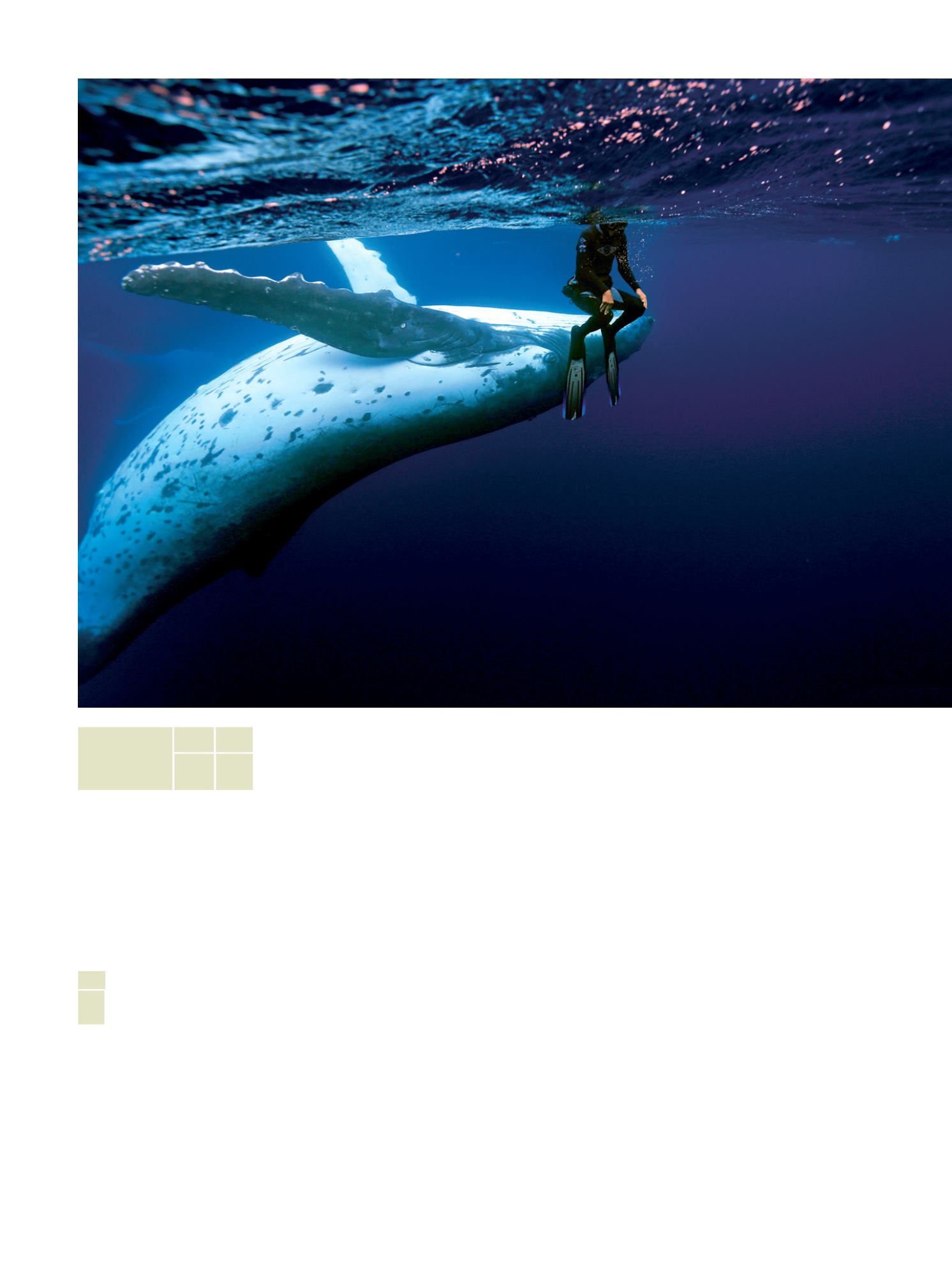
3.Laextraordinaria
gentilezadeungigante
de lanaturaleza./
T
heextraordinary
gentlenessofnature’s
giant.
4-5.Lasdiferentes
especiesdeballenas
migrandemaneras
distintas./
Different
speciesofwhalemigrate
indistinctways.
6-7Hayespeciesde
ballenasquenoemigran./
Therearewhalesspecies
thatdonotmigrate.
8.PhilGingerichesun
reconocidopaleontólogo
yeducador,expertoen
laevolucióndeprimates
yballenas./
Phil
Gingerichisarecognized
paleontologistand
educator,expertonthe
evolutionofprimates
andwhales.
9.Loscetáceos,delorden
de lasballenas,son
diversos:desde lagran
ballenaazula lapequeña
marsopa./
Cetacea,the
orderofthewhales,are
diverse:fromthebig
bluewhaletothesmall
porpoise.
3
4
5
6
8
9
7