los conquistadores •
the conquerors
120
·amura·
ambiguity.” And later on point out: “Ambiguity
had also been a poetical instrument used to cross
the border between the conscious and uncon-
scious.”
The way to the unconscious discovered by Freud,
visualized the human existence since its absurd’s, its
contradictions, its fears and the humor. The idea of
the work of the dream that Freud develops in
The
Dream Interpretation
, establishes a connection with
the Viennese modernism of the beginning of the
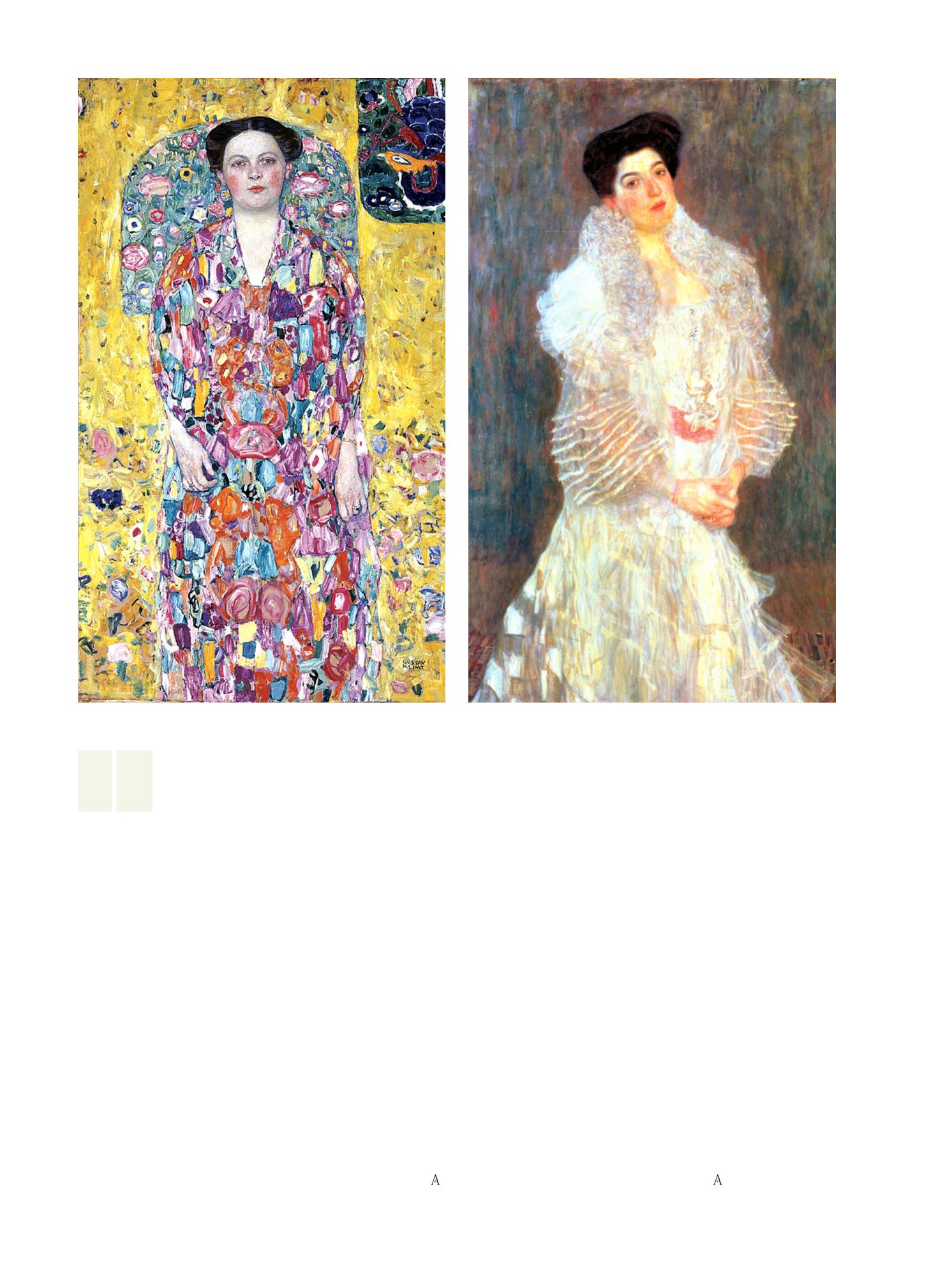
century. Let us think not only in the work of Gustav
Klimt, but also intheworkof EgonShieleandofOskar
Kokoschka. According to Freud, the dream is the dis-
guised fulfillment of a repressed wish, <the dream
diminishes the censorship and allows avoiding the
resistance>. This wish conflict that places in tension
the private reality and the public morality spheres
was reflected in the artistic production of the time.
The portraits of these artists make us realize a
dis-
comfort in the culture
, of a symptomthat emerges in
the body of the one painted in the portraits through
gestures and malformations. These symptomatic
portraits have been interpreted as carriers of a new
social conscienceandevenof anewethic. Inany case,
it would be an ethic that pick-up the bastard children
of the reason, which renegade member of the
western culture: the wish.
la ironía y la ambigüedad.” Y más adelante apunta:
“La ambigüedad ha sido también un instrumento
poético que cruza las fronteras entre el conciente y
el inconsciente.”
El camino del inconsciente descubierto por
Freud, visualiza la existencia humana desde sus
absurdos, sus contradicciones, sus temores y el
humor. La idea del trabajo del sueño que Freud desa-
rrolla en
La interpretación de los sueños
, establece
una conexión con el modernismo vienes de princi-
pios de siglo. Pensemos en la obra no sólo de Gustav
Klimt, sino también de Egon Shiele y de Oskar
Kokoschka. De acuerdo con Freud, el sueño es el
cumplimiento disfrazado de un deseo reprimido, <el
sueño disminuye la censura y permite evitar la resis-
tencia>. Este conflicto del deseo que pone en tensión
las esferas de la realidad privada y la moralidad publi-
ca, se vio reflejado en la producción artística de la
época. Los retratos de estos artistas nos hacen dar
cuenta de un
malestar en la cultura
, de un síntoma
que emerge en el cuerpo del retratado mediante ges-
tos y malformaciones. Estos retratos sintomáticos,
han sido interpretados como portadores de una
nueva conciencia social e incluso de una nueva ética.
En todo caso, sería una ética que recoge los hijos
bastardos de la razón, aquel familiar denegado de la
cultura occidental: el deseo.
1.
Portrait of Eugenia Primavesi
1913/14
© Toyota Municipal Museum of Art
2.
Portrait of Hermine Gallia
1904
© The National Gallery, London
2
1


