los conquistadores •
the conquerors
116
·amura·
The Vienna of Gustav Klimt
Texto / Text: Anarela Vargas • Foto /
Photo
: Tate Liverpool
La Viena de Gustav Klimt
E
n el marco de la celebración de la Capital
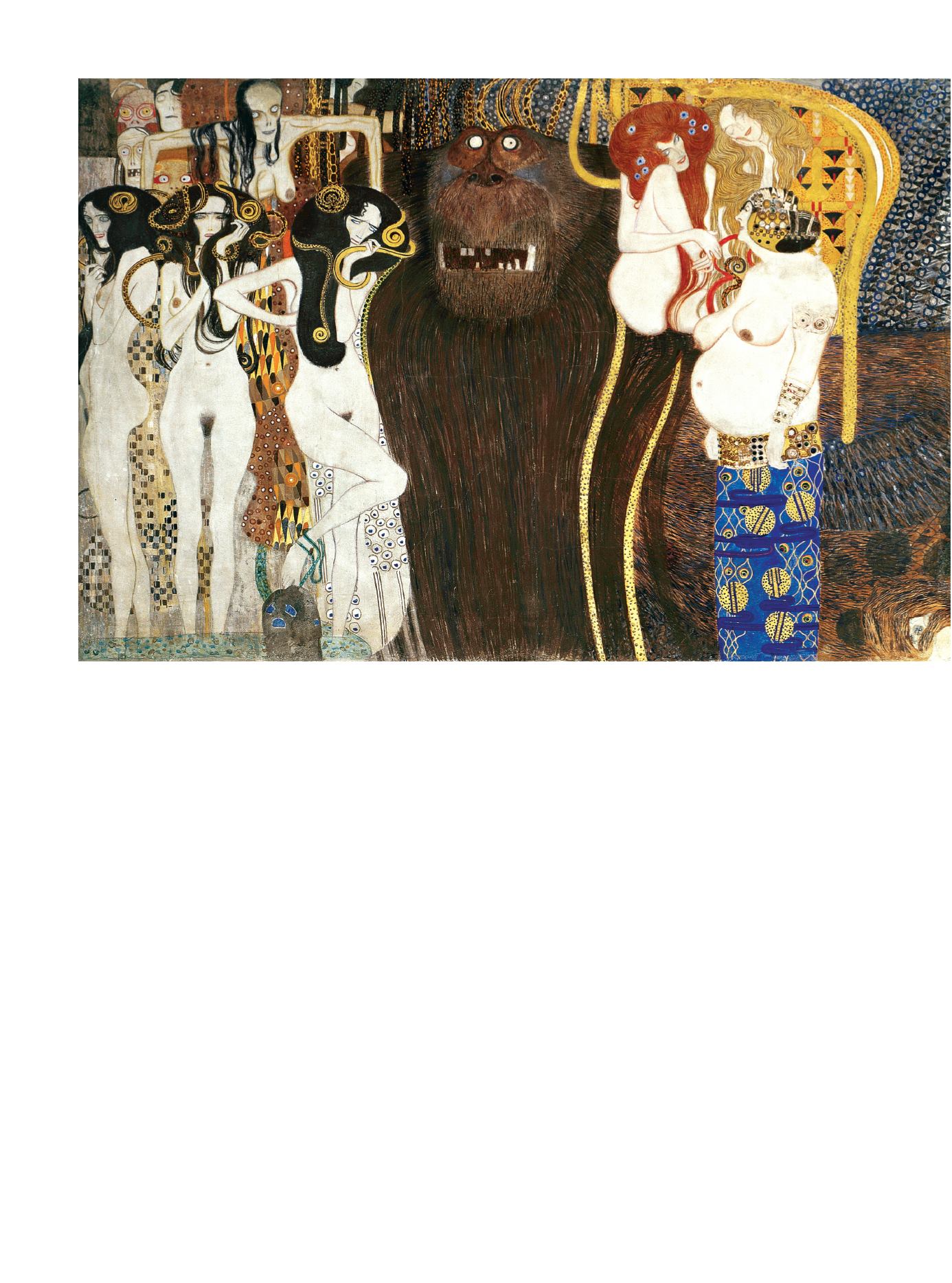
Europea de la Cultura 2008, la Tate Liverpool
presenta, por primera vez en el Reino Unido,
una exposición exhaustiva en torno al artista aus-
triaco Gustav Klimt.
Gustav Klimt: Painting, Design
and Modern Life in Vienna 1900
, recrea el sofistica-
do mundo de la Viena de principios de siglo XX. Y
presenta no sólo pintura, dibujo y gráfica del artis-
ta, sino también muebles, diseño, objetos de plata,
joyería, moda, diseño gráfico y material documen-
tal de la época, recopilado de todas partes del
mundo. La exhibición por un lado, apunta a la arti-
culación entre las llamadas ‘artes finas’ y las artes
aplicadas; por otra parte, rescata la espacialidad
más bien arquitectónica en la pintura de Klimt. La
cultura vienesa del principio de siglo que atestiguó
el ocaso del imperio Austrohúngaro, dio a su vez
nacimiento al pensamiento de Sigmund Freud y
Ludwig Wittgenstein -en el psicoanálisis y la filo-
sofía, a la música de Arnold Schoenberg, y por
supuesto, el arte de Egon Shiele y Oskar
I
n the framework of the celebration of the
European Capital of the Culture 2008, the Tate
Liverpool presents, for the first time in the
UnitedKingdom, a thoroughexhibitionaround the
Austrian artist Gustav Klimt.
Gustav Klimt:
Painting, Design and Modern Life in Vienna 1900
,
recreates the sophisticated world of the Vienna of
thebeginningsof theXX th century. And it doesnot
only presents paintings, drawings and graphics of
the artist, but also furniture, design, silver objects,
jewelry, fashion, graphic design and documentary
material of that time, compiled from all over the
world. On one hand the exhibition, points to the
joint between the so called ‘fine arts’ and the hard-
work arts; on the other hand, it rescues the archi-
tectural in Klimt’s paintings. The Viennese culture
of the beginning of the century that witnessed the
fall of theAustro-Hungaryempire, gavebirthat the
same time to the thinking of Sigmund Freud and
Ludwig Wittgenstein -in the psychoanalysis and
thephilosophy, to themusicofArnoldSchoenberg,


