



 125 / 142

·amura·
123
F
ue el gran reformador de las creencias re-
ligiosas en Persia. Aunque su cumpleaños
se celebra el 21 de marzo -como parte del
Festival del Año Nuevo persa- continua
siendo un misterio la línea de tiempo de
su vida y de su muerte; lo mismo sucede en cuanto al
lugar de su nacimiento, mencionando los siguientes
países probables: Azerbaiyán, Irán, Afganistán o Ka-
zajistán. La mayoría de los historiadores concuerdan
en que vivió durante el siglo VI a. C., fue contempo-
ráneo de los científicos Pitágoras y Tales de Mileto;
del fundador del teatro griego Tepsis, y en el ámbito
religioso de Confucio, Lao Tse, Buda y Mahariva. Se
cree que su muerte ocurrió a los 77 años, considerada
una edad iniciática.
“Happiness is the inheritance of those who work for the
happiness of others.”
Zarathustra
“La felicidad es la herencia de quien trabaja por
la felicidad de otros”
Zaratustra
H
e was the great informer of reli-
gious beliefs in Persia. Although his
birthday is celebrated on the 21st of
March--as part of the Persian New
Year celebrations--his life and death
remain a mystery. The same can be said regarding
his birth, although it’s possible that he may have
been born in the following countries: Azerbaijan,
Iran, Afghanistan, or Khajastan. Most historians
agree that he lived during the 6th century b.C., and
was a contemporary of Pythagoras and Thales of
Miletus; of the Greek dramatist Tepsis, and of Con-
fucius, Lao Tse, Buddha, and Mahavira as far as reli-
gious figures go. It is believed that he died when he
was 77 years old, considered an initiatory age.
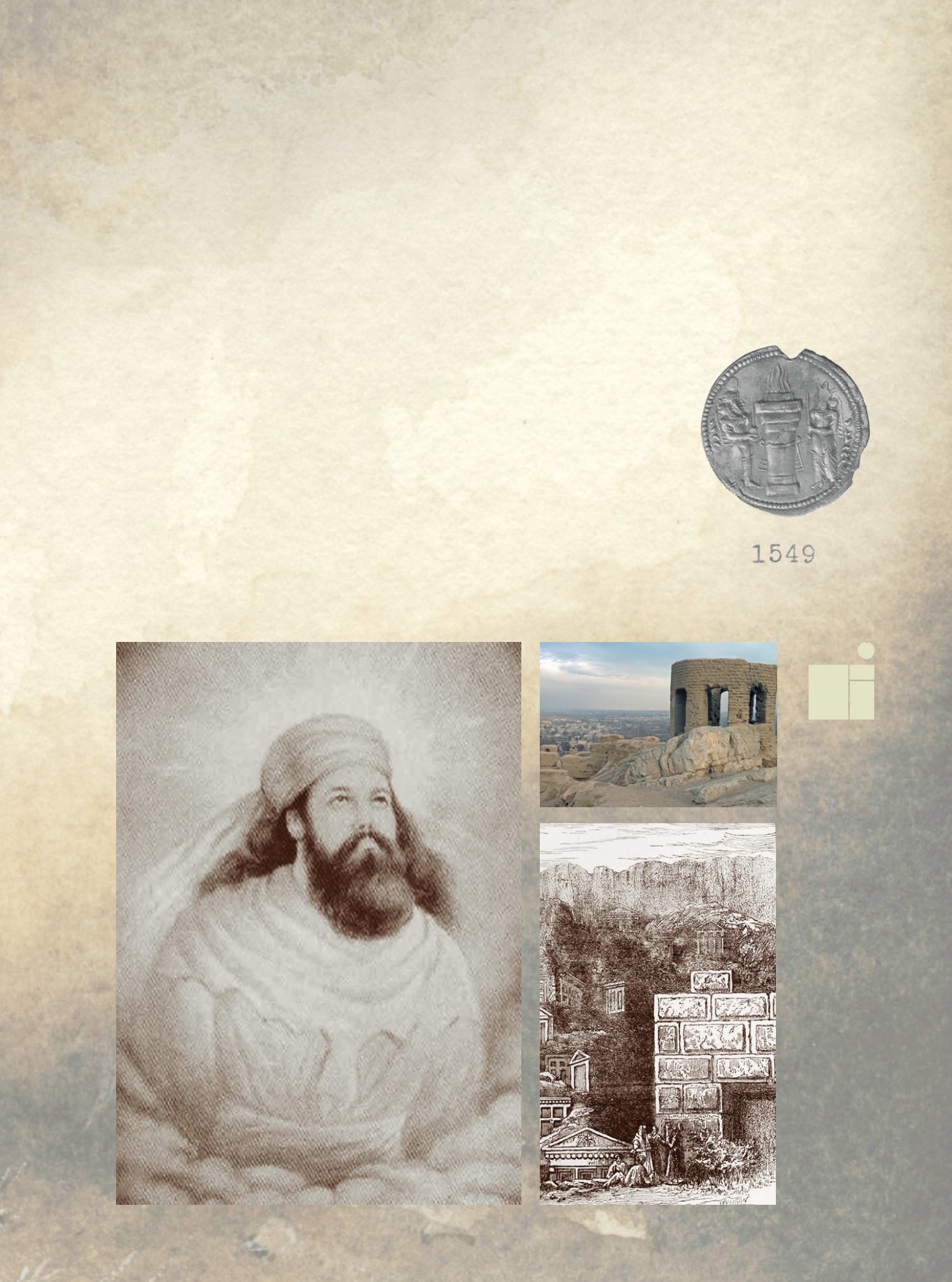
1. Moneda sasánida
con el fuego
de Zoroastro. /
Sasanian Coin with
Zoroastrian fire.
2. El maestro
del Mazdeísmo:
Zoroastro. / The
master of Mazdaism:
Zoroaster.
3.Templo del
fuego Zoroastro.
/ Zoroastrian fire
temple.
4.Discípulos
de Zoroastro
en Nínive, una
importante ciudad
asiria. / Disciples
of Zoroaster in
Ninevehe, an
important Assyrian
city.
2
3
4
1
personajes •
characters