



 126 / 142

La leyenda cuenta que nació con una gran sonrisa,
por lo que fue reconocido como un niño especial que
tenía una misión que cumplir. Durante su juventud
tuvo revelaciones de la “auténtica verdad”, y después
de un tiempo de ascetismo, comenzó su predicación
del Mazdeísmo o Zoroastrismo, que se extendió rá-
pidamente y que posteriormente influyó en judaísmo
y el cristianismo, mencionando algunas coincidencias
como : lucha eterna entre el bien y el mal, existencia
de ángeles y seres divinos protectores de los ungidos,
la resurrección, entre otras.
Diferentes teorías sustentan que no se trató de
una sola persona sino de una serie de maestros que
llevaron el mismó nombre a lo largo de varias gene-
raciones, según las cuales, el primer Zoroastro vivió
1000 años antes de la guerra de Troya, referido así por
Plinio el viejo (escritor, científico, naturalista y militar
romano). De acuerdo a los Parsis - practicantes del
Zoroastrismo- el segundo Zaratustra existió durante
el siglo IV a.C., y el tercero en el siglo VI a. C. Éste úl-
timo fue quien predicó y compiló la enseñanza, que
actualmente practican los Parsis de la India y los zo-
roastristas de Irán.
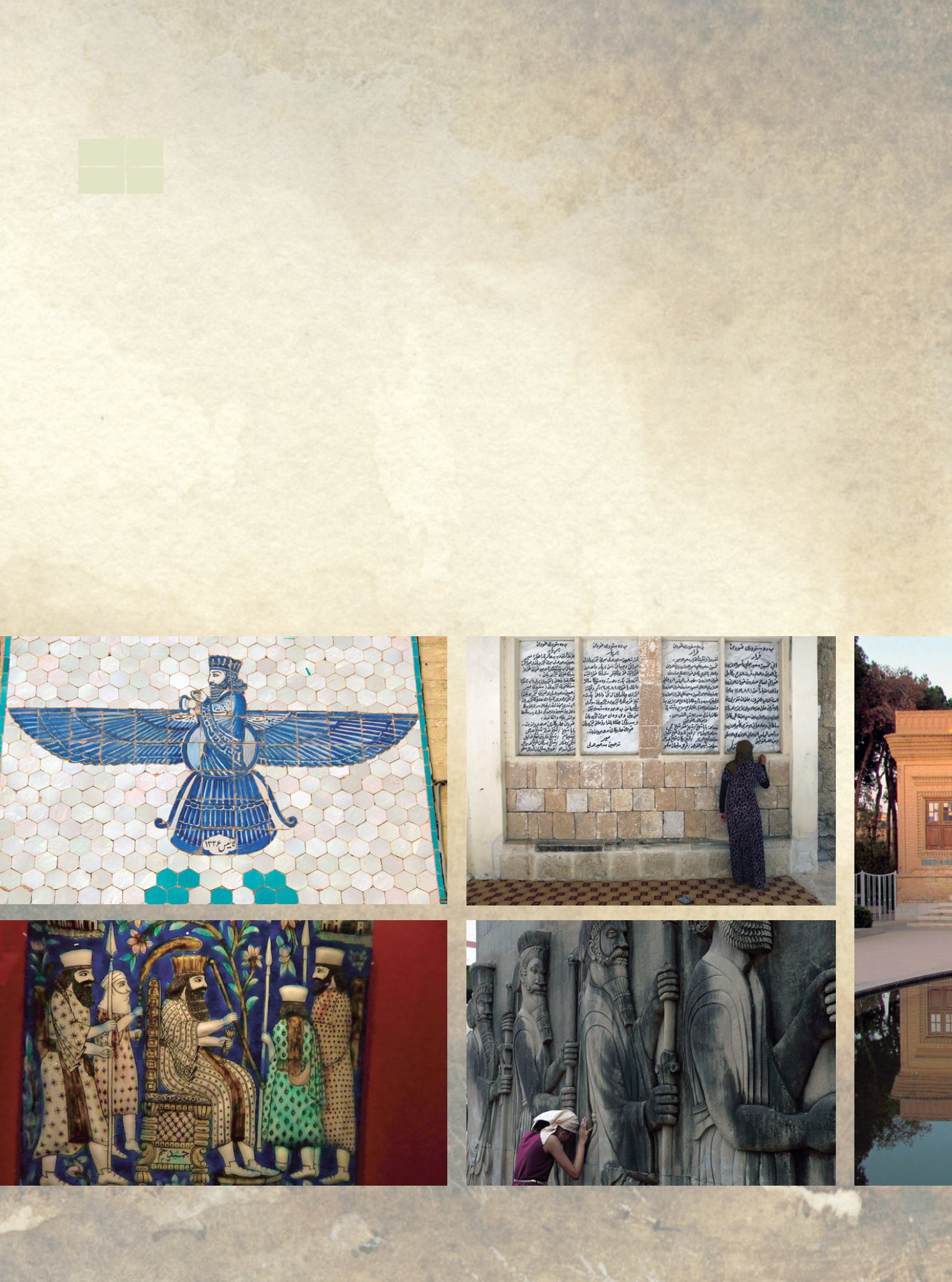
5y6.ArteZoroastrista.
/Zoroastrianism art.
7.ElZoroastrismoesun
religiónalternativadel
Islam./Zoroastrianism
is an alternative
religion of Islam.
8.Niña indiarezacerca
deun templodefuego.
/ Young indian prays
near a fire temple.
5
6
7
8
Foto /
Photo
: PETES GF / PRAKAMESH / XOMD / SIMMIT POST / USSHER
·amura·
124
Legendhas it that hewas bornwitha broad smile,
and as such, was recognized as a special boywho was
to undertake a mission. During his youth, he had
visions of the “genuine truth,” and, after living for
some time as ascetic, he began to preach about Maz-
daism, or Zoroastrianism, which spread rapidly and
would later go on to influence Judaism and Christi-
anity. Some of the traits these three sharemay sound
familiar: the struggle between good and evil, the ex-
istence of angels and the divine, protective beings of
the anointed, resurrection, amongst others.
Different theories maintain that this was not a
single person but a series of Teachers, passing along
the same name from generation to generation. The
first Zoroaster, then, would have lived 1,000 years
before the Trojan War, according to Pliny the Elder
(writer, scientist, naturalist, and Roman soldier).
According to the Parsis--practitioners of Zoroastri-
anism--the second Zarathustra lived during the 4th
century b.C., and the third during the 6th century
b.C.; this last being who prophesied and fulfilled his
teachings, and which are currently followed by the
personajes •
characters