



 65 / 142

·amura·
63
compás int • int compass
Guba, reserva cultural
Fundada a mediados del siglo al XVIII, se localiza a
170 km al norte de Bakú. Se distingue por la belle-
za sin igual de sus montañas. En la ciudad existen
un sinfín de lugares históricos y arqueológicos:
como las tumbas de Aghbil, sitio que data del siglo
XV, además de las mezquitas. El pueblo de Khan-
galy se encuentra en los suburbios. En una de sus
calles se erige un antiguo templo de Zoroastro,
construido en el siglo IX y situado en el lugar del
“fuego eterno”. Los aldeanos de Khangaly son
en sí mismos un fenómeno histórico y étnico,
alrededor de 1,000 habitantes han conservado
su lengua, vestuario, ceremonias y tradiciones,
sus propias regulaciones y leyes. Muy recomen-
dado visitar las cataratas Afurdzhin, y el cañón
Thenghi. Los habitantes de Guba presumen de la
hermosura sin igual de sus alfombras.
Guba, cultural reserve
Founded in themiddle of the 18th century, it is located
170 km to the north of Baku. It stands out for the un-
equaledbeautyof itsmountains. The city ishome to an
almost infinite number of historical and archeological
locations, such as: the tomb of Aghbil, dating back to
the 15th centuries, as well as numerous mosques. The
town of Khangaly is found in the suburbs. Fromone of
the streets, a ancient temple is erected in honor of Zo-
roaster, and was built in the 9th century in the place
of the “eternal fire.” The villagers of Khangaly are
in and of themselves a historical and ethnic phe-
nomenon. Around 1,000 of these have conserved
their language, their dress, their ceremonies, and
traditions intact, as well as their own regulations
and laws. We recommend that travellers see the
Afurdzhin waterfalls, and the Thengi canyon. The
people of Guba create some of the most gorgeous
carpets of the region, and are without parallel.
55
56
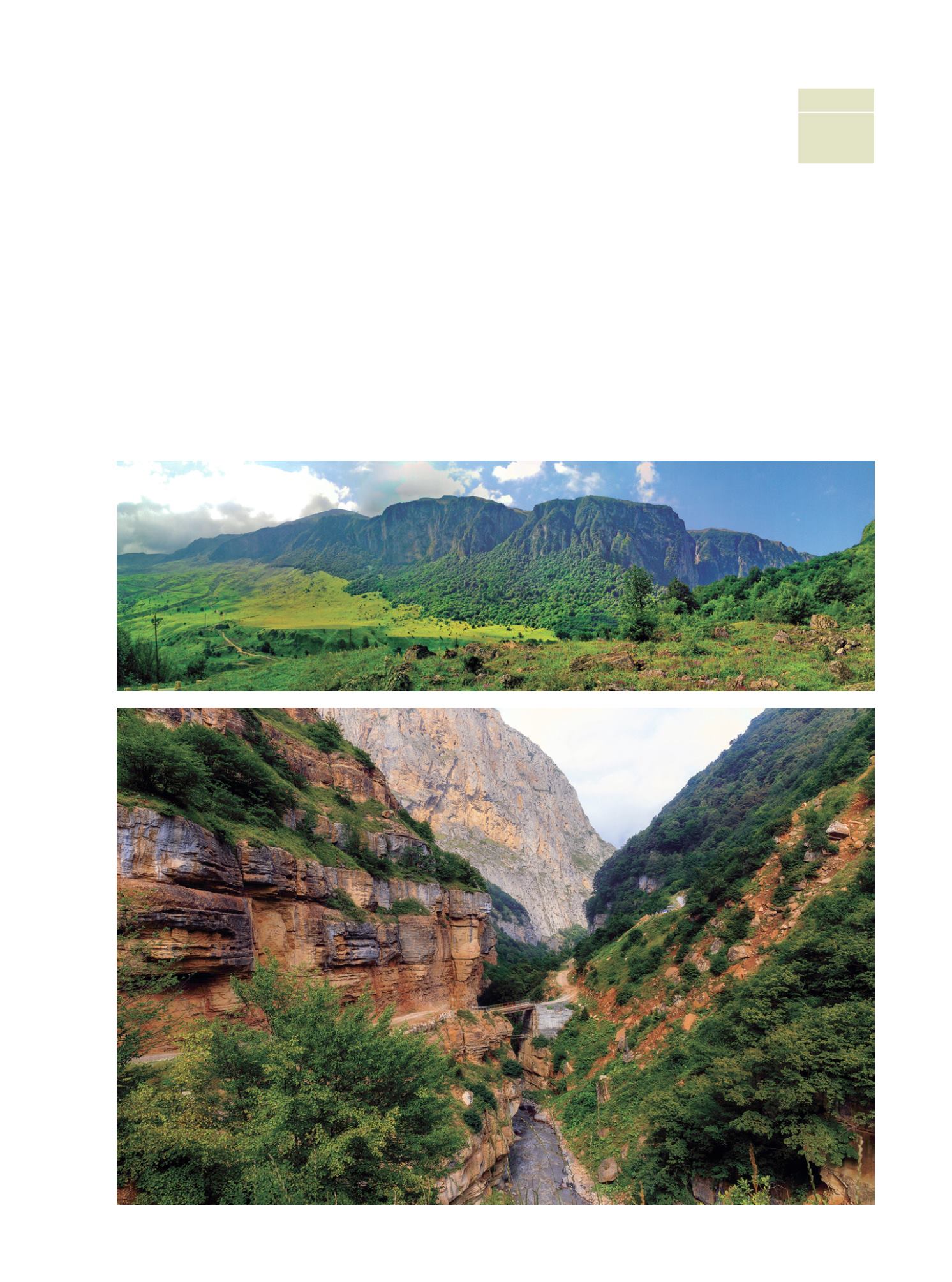
55. Caucasus
landscape inGuba,
Azerbaijan./
Paisaje
delCáucasoenGuba,
Azerbaiyán.
56.Montañasdel
Cáucasoen Guba./
Caucasusmontains
inGuba.