


 68 / 142

·amura·
66
compás int • int compass
Noah and Azerbaijan
Noah appears inside the Biblical tradition as the
chosen figure to save mankind and the wildlife by
way of an arc that could survive the global deluge.
In the Qur'an, sacred book of Islam, the figure of
Noah (Nuj) alsomakes an appearance, and is consid-
ered as one of the prophets.
Nakhichevan is an autonomous region, sepa-
rated from Azerbaijan, by Armenia. Legend has
it that it was founded by Noah and after running
aground at the summit of Ilandag, 40 days after
the deluge. There exists a funerary monument at
this site, which dates back to 1539 b.C., accord-
ing to some Persian historians. This place held
the “relics of Noah” until 1983. The sanctuary
is not only venerated in Azerbaijan, but also by
other countries in the Middle East.
Noé y Azerbaiyán
Noé aparece dentro de la tradición bíblica como el elegido
para salvar a la humanidad y vida silvestre, a través de la
construcción de un arca donde podrían sobrevivir al dilu-
viouniversal. Enel Corán, el libro sagradode losmusulma-
nes, aparece también la figuradeNoé (Nuj) aquienel Islam
considera como uno de los profetas.
Najicheván es una región autónoma, apartada del res-
todel Azerbaiyán, por Armenia. Las leyendas cuentanque
fue fundada por Noé y que la hendidura de la cumbre de
la montaña Ilandag fue producida al encallar ahí el arca de
Noé al finalizar los 40 días que duró el diluvio. En esta re-
gión existe un monumento funerario, cuya construcción
datadel1539a.C., deacuerdoaalgunoshistoriadoresper-
sas. Se cree que allí descansaron las "las reliquias de Noé"
hasta 1983. Este santuario es venerado no solo en Azer-
baiyán, sino también en los países deOrienteMedio.
61
62
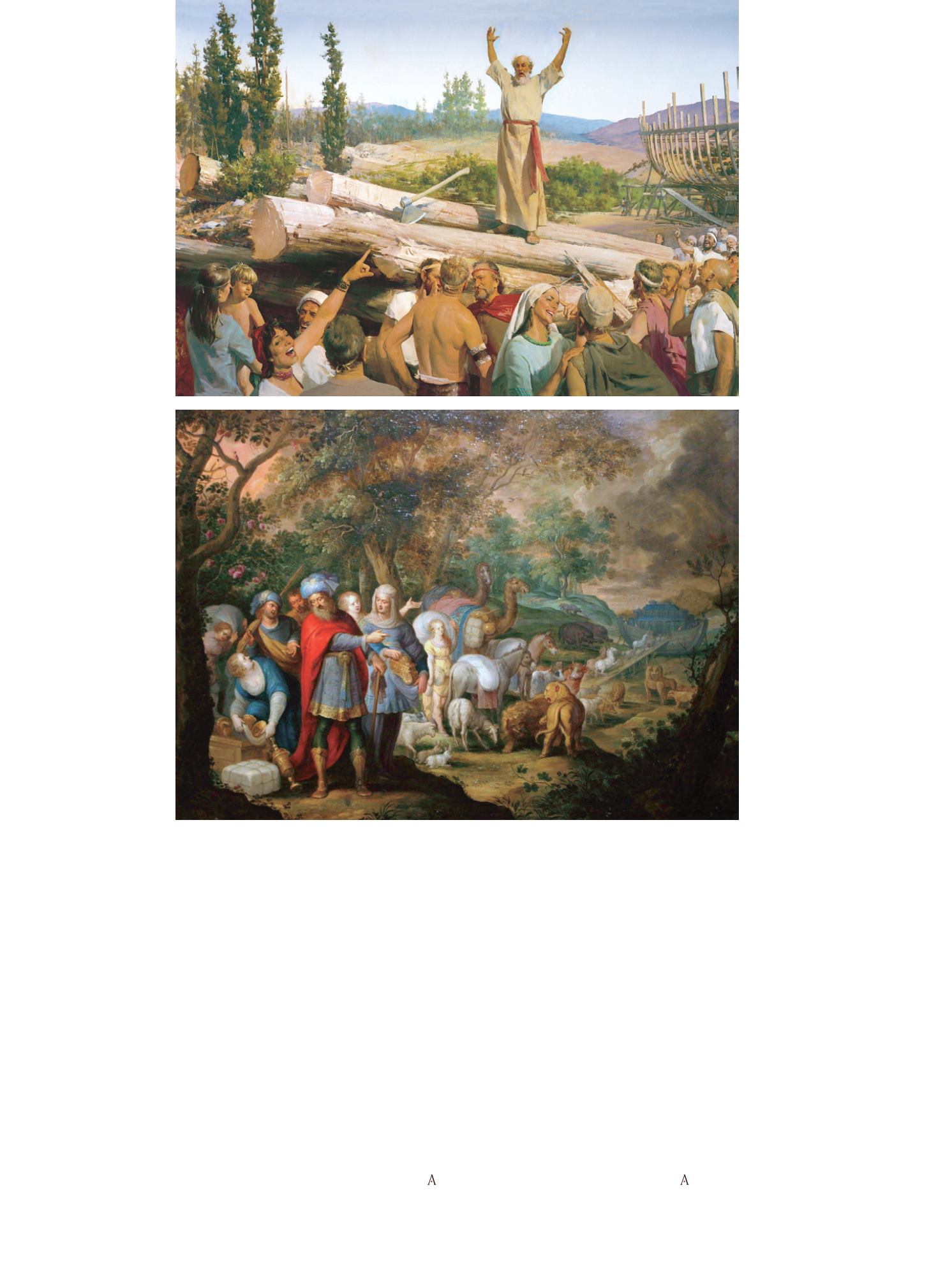
61. IlustracióndeNoé,
construyendoelarca.
/
Illustrationof Noah,
buildingtheark.
62. LlegadadeNoé
despuésdeldiluvio/
Noah'arrivalafterthe
flood.