Contrario a lo que se piensa, los piratas no solían
atacar a las flotas cargadas de oro americano que tenían
como destino España, pues éstas iban muy protegidas.
4wMo Te anJmaCan Tr, traT aMHVna tormenta, aMHVnoT Car-
cos quedaban rezagados. En cambio, preferían atacar a
los navíos mercantes provenientes de Europa cargados
demercancías y que normalmente navegaban solos, así
Domo a MaT deTproteHJdaT DJVdadeT DoTteraT de Ma Amn-
rJDa noWohJTpana, Domo 1anamg, $ampeDhe, $artaHena
o MaraDaJCo 1ero ademgT, TJempre RVe GVera poTJCMe,
evitaban el combate directo, prefiriendo amedrentar a
su presa para que ésta se rindiera sin combatir, lo que
sucedía con éxito la mayoría de las veces.
Cuestión de semántica
-a etJmoMoHra deM WoDaCMo Matrn
pirata
proviene del grie-
go peirates (
πειρατης
), que, en resumidas cuentas, de-
TJHna aM RVe Jntenta haDer GortVna en Ma aWentVra AVn-
que existen varios términos para designar a los que se
dedicaban a este oficio: piratas, corsarios, bucaneros y
filibusteros, todos tienen un significado distinto.
-oT DorTarJoT eran aRVeMMoT marJnoT RVe Donta-
Can Don Vna 1atente de $orTo, doDVmento otorHado
por un gobierno, para emprender una campaña na-
val –atacar– en contra de piratas y embarcaciones
enemJHaT eT deDJr, haDer Vn
cursus
(carrera en latín)
o persecución y saqueo de naves. Éstos proliferaron
eTpeDJaMmente en eM TJHMo 97*, aVnRVe todaWra hVCo
algunos hasta el XIX.
-oT CVDaneroT, por TV parte, prJnDJpaMmente de
orJHen GranDnT, haCJtaCan Mo RVe ahora eT )aJtr Te
caracterizaban por ser osados cazadores que ahu-
maban la carne de los animales que capturaban para
venderla a los barcos que pasaban cerca de la costa.
4e dJTtJnHVran por TVT ropaKeT deTDVJdadoT Z enTan-
grentados por las presas que descuartizaban. Cuando
MoT eTpavoMeT MoT eYpVMTaron, a ¬naMeT deM TJHMo 97** Te
refugiaron en la isla Tortuga y ahí se dedicaron al con-
trabando y la trata de esclavos, a la vez que atacaban
barcos pequeños, haciendo gran alarde de su fuerza y
DaVTando Vn Hran eTDgndaMo -a paMaCra CVDanero de-
riva de
boucan
, tJpo de Darne ahVmada TJn emCarHo,
también quiere decir alboroto, bullicio.
-oT ¬MJCVTteroT, en TV maZorra de orJHen hoMan-
dnT, JnGeTtaron eM mar de MaT AntJMMaT dVrante eM TJHMo
97**, KVTtJ¬DaCan TVT aDtoT dJDJendo RVe MVDhaCan por
la emancipación de las que fueron provincias ultrama-
rJnaT de &Tpava A ¬n de DVentaT, todoT eran Mo mJT-
mo, pero con diferentes nombres.
A matter of semantics
The root of the Latin word pirate is Greek peirates
(
πειρατης)
that, in a nutshell, refers to the person
trying to make a fortune through adventure; even
though there exist several terms to name people
engaged in this trade: pirates, corsairs, buccaneers
and freebooters, each one with different nuances.
Corsairs were seafarers possessing a Letter
of Marque and Reprisal, a document granted by
a government to undertake a naval campaign –
raid—against pirates and enemy vessels; that is,
doing a cursus (a race, in Latin language), a per-
secution and looting of ships. The corsairs prolif-
erated specially in the XVI century, even though
some of them remained until the XIX century.
As for buccaneers, most of them native from
France, they inhabited what at present is Haiti
and were characterized by being bold hunters who
smoked the meat of the game they had captured to
sell it to the passing ships by the coastline; they
wore sloppy apparel with gory stains spattered by
the quarry they would chop up. When the Span-
iards ousted them, at the end of the XVII century,
they took refuge in the Tortuga Island. There they
pursued smuggling and slave trade while they ma-
rauded small boats, boasting their strength and
causing big scandals. The word “bouccaneer” is
derived from boucan, a type of smoked meat; how-
ever, boucan also means uproar, hubbub.
The freebooters, mostly Dutch, harassed the
Caribbean Sea during the XVII century; justified
their overt acts declaring that they fought for
freeing the former overseas Spanish provinces.
All in all, everyone was the same, under a differ-
ent name, though.
Contrary to popular belief, pirates would not raid
fleets ladenwithAmericangold that hadSpainas des-
tinationbecausetheywereheavilyguarded.Theyonly
had the courage to do it if, after a storm, some ships
straggled. Instead, theywould rather have raided only
merchantmen coming from Europe, freighted with
goods, which normally sailed alone; the same as the
unprotected coastal cities from the Spanish America,
such as Panama, Campeche, Cartagena or Maracaibo;
but,moreover, every time itwas feasible, they avoided
direct confrontation, preferring to frighten their prey
so as it would surrender without presenting any com-
bat, whichhappened successfullymost of the time.
·amura·
126
IereOciB cVMtVrBM •
culture and heritage
-oTpJrataTTwMo
acostumbraban
atacarflotascon
oroamericanoque
ibanaEspañasi
éstosserezagaban
enunatormenta./
Piratesattackfleets
accustomedonly
Americangoldifthey
weretoSpainfell
behindinastorm.
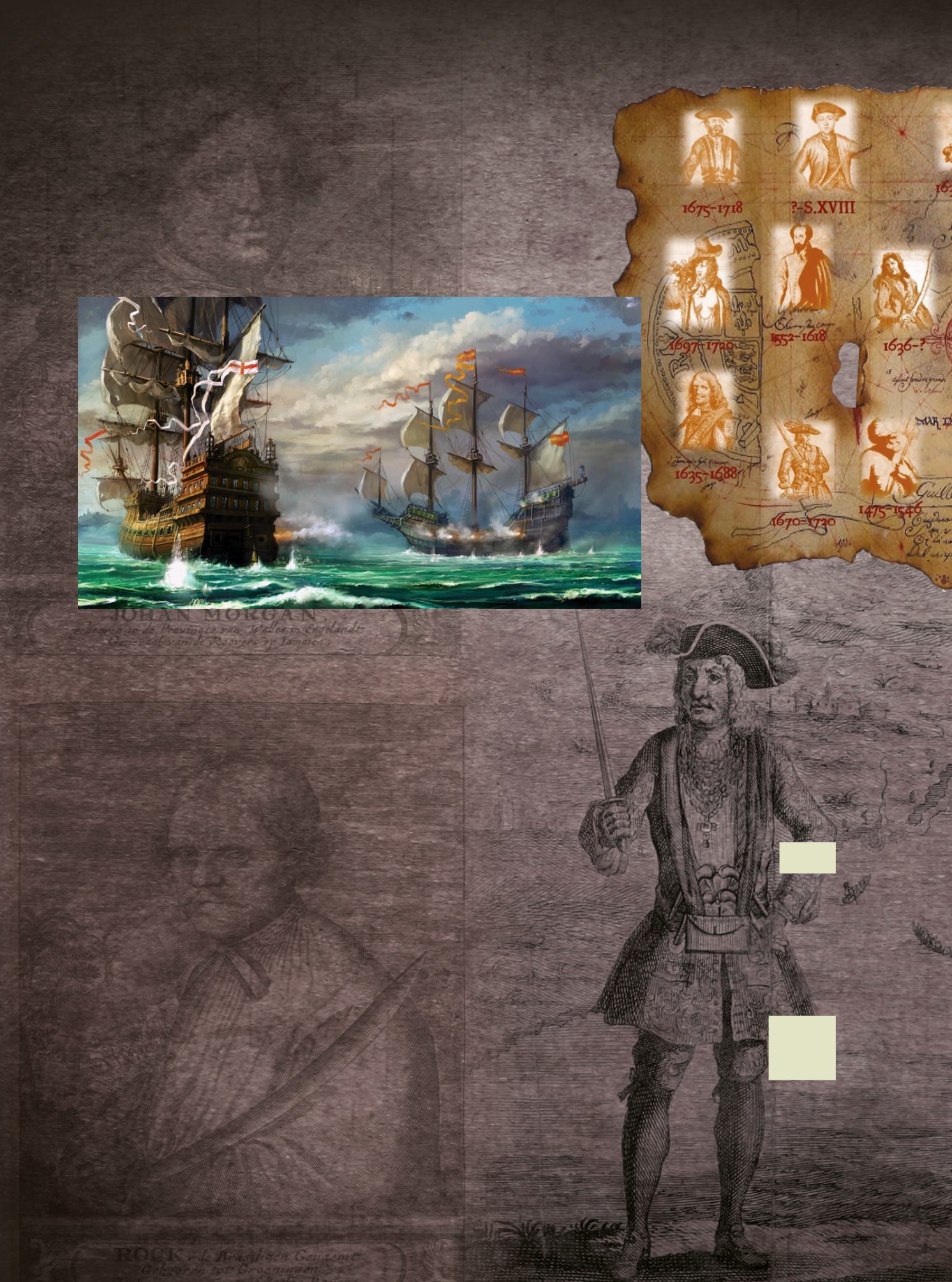
2 -oTDorTarJoT
saqueabanbarcos
conelrespaldode
Vna1etentede$orTo
paraatacarpiratasy
flotasenemigas./
The
piratesplundered
shipsbackedbya
CompetentCorsoto
attackpiratesand
enemyfleets.
1
2
Foto /
Photo
: /A5*0/A- G&0GRA1)*$ / ;A45A7,* / AB$ / MAG&4 F-8 / 5)0MA4 )&A5) / R0A% 5*1 / 7*45A-MAR


