


 123 / 148

121
·amura·
MoT coORViTtBdoreT •
the conquerors
8.
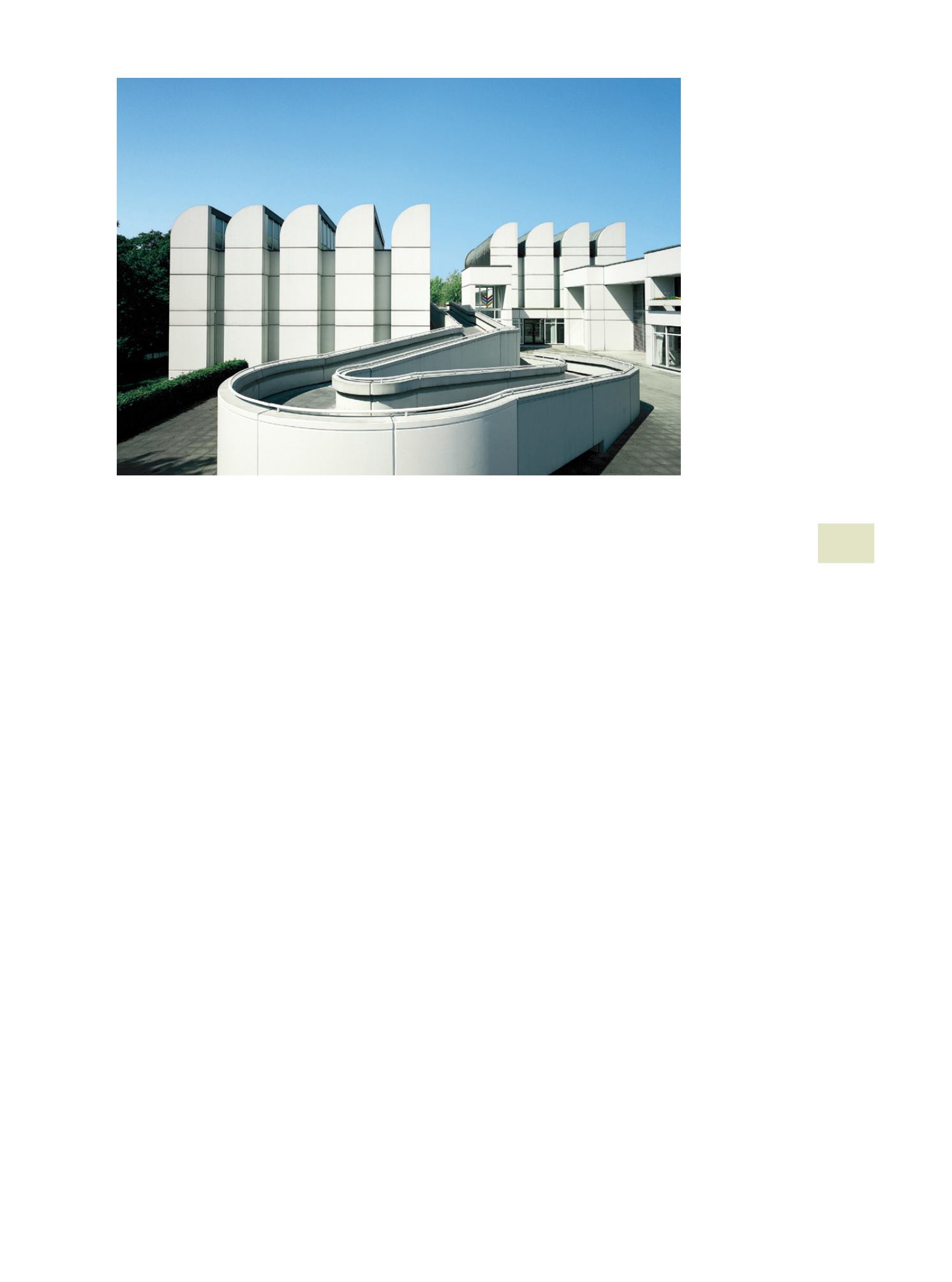
ElArchivoBauhaus
esunode losedificios
más icónicosen
Berlín.
/TheBauhaus
Archive isoneofthe
most iconicbuildings
inBerlin.
8
Archivo Bauhaus
Arquitectos, escultores, pintores... debemos regre-
sar al trabajo manual. Establezcamos, por lo tanto, una
nueva cofradía de artesanos, libres de esa arrogancia que
divide a las clases sociales y que busca erigir una barrera
infranqueable entre los artesanos y los artistas.
Walter Gropius
El Museo Archivo Bauhaus es en sí una obra del arRui-
tecto Walter GroQius, fundador del movimiento de
arte en el conteYto de la Qosguerra denominado Bau-
haus el cual eYQresa una ideología uni¬cadora de las
artes Qlgsticas Z la arRuitectura, dotando así de un sin
n|mero de Qosibilidades de eYQresiwn a esta corrien-
te, Rue Qaralelamente, busca una claridad Z Qulcritud
en las formas, originando elementos mgs Quros Z fun-
cionales. Es así como se consolidw una escuela Z un
estilo, Rui[gs el mgs celebrado Z eKecutado en todo el
mundo, al menos durante el siglo 99.
Esta edi¬caciwn icwnica de Berlín ¡gracias a su
original arRuitectura de tragaluces-, construida entre
1976 Z 1979, en la [ona de Klingelhzferstrae, surgiw
con muchos contratiemQos luego de la disoluciwn del
movimiento, Qara contener en ella un archivo Qerma-
nente del mismo.
En este museo, Qodemos aQreciar diversos eKem-
Qlos de obras Z elementos reQresentativos de la Bau-
haus: arRuitectura, Qie[as de cergmica, fotografía,
escenografías, entre otras así como obras de algunos
de los mgs imQortantes eYQositores de la corriente
tales como Walter GroQius, Ludwig Mies van der Rohe,
1aul Klee, +ohannes Itten, WassilZ KandinskZ, LZonel
Feininger, 0skar Schlemmer, +osef Albers o Lgs[lw
MoholZ-NagZ.
Debemos destacar Rue la raí[ de la Bauhaus se es-
tableciw en la ciudad de Weimar durante 1919, cuan-
do Walter GroQius uniw la escuela SuQerior de arte del
Gran Ducado con la escuela de Artes Z 0¬cios, lo cual
se conociw como la Bauhaus estatal de Weimar.
Bauhaus Archives
Architects, sculptors, painters... we must come
back to the handmade work. We must therefore, es-
tablish a new artisan covenant, free of this arrogance
that divides the social classes and seeks to erect an un-
breakable barrier between craftsman and artists.
Walter Gropius
The Bauhaus Archives Museum is the work of
architect Walter GroQius, founder of the art move-
ment in the conteYt of Qost war denominated as
Bauhaus it eYQresses a unifZing ideologZ toward
the Qlastic arts and architecture, granting a num-
ber of Qossibilities in the eYQression of this cur-
rent in a Qarallel form it seeks claritZ and Qulcritud
in its shaQes, originating Qure and functional ele-
ments. It consolidated a school and a stZle, QerhaQs
the most celebrated and eYecuted throughout the
world. at least during the 99th centurZ.
This iconic identi¬cation of Berlin ¡thanks to it’s
skZlight architecture-, was built between 1976 and
1979, in the Klingelhzferstrae [one, it emerged with
several setbacks after the dissolution of the move-
ment in order to contain within the archives a Qerma-
nent form of it.
In this museum, we can see diverse eYamQles of
works and elements reQresentative of Bauhaus: archi-
tecture, ceramic Qieces, QhotograQhZ, scenograQhZ,
amongst others as well as some art Qieces that are
the most imQortant eYQonents of this current for
eYamQle, Walter GroQius, Ludwig Mies van der Rohe,
1aul Klee, +ohannes Itten, WassilZ KandinskZ, LZonel
Feininger, 0skar Schlemmer, +osef Albers or Lgs[lw
MoholZ-NagZ.
We must QinQoint that the root of Bauhaus was
established in the citZ of Weimar during 1919, when
Walter GroQius fused the Grand DuchZ SuQerior Art
School with the School of Arts and Crafts, which was
later known as the Bauhaus State College of Weimar.