



 109 / 140

·amura·
107
herencia cultural •
culture and heritage
Jim-zo
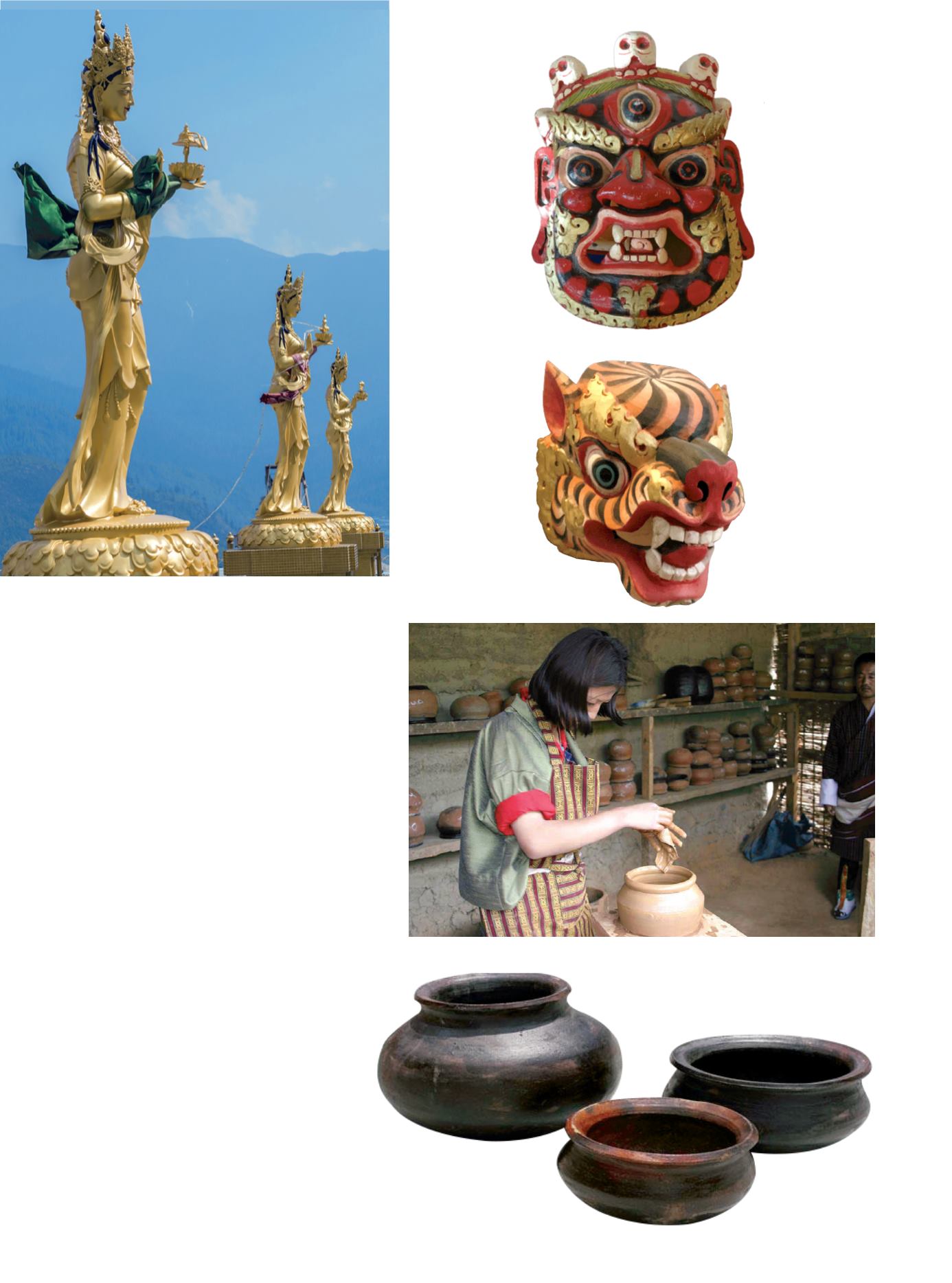
Sculpture on clay is more ancient than sculpture on
metals like bronze. These sculptures are characterized
for their beauty and delicacy, hollowon the inside but
full ofmeaning on the outside, portraying enthralling
beings or landscapes. Sculpting in clay is a male craft,
but pottery is reserved forwomen, and theybothcarry
great significance. Pottery is still an active craft that
evolved, but still follows the ancient process of shap-
ingandbaking the clay. Sculptures are typically found
in temples, monasteries and
Dzongs
, while pottery is
still wildly used in everyday life.
La escultura en barro es más antigua que la escultu-
ra en metales como el bronce. Estas esculturas de
barro se caracterizan por su belleza y delicade-
za, huecas por dentro pero llenas de significado
por fuera, representando seres cautivantes o
paisajes. La escultura en barro es un oficio mas-
culino, pero la alfarería se reserva para las muje-
res, y ambas poseen gran importancia. La alfarería
continúa siendo un oficio activo que ha evolucionado,
pero aún sigue el proceso antiguo de amoldar y hornear
el barro. Las esculturas se encuentran típicamente en
templos, monasterios y
Dzongs
, mientras que la alfare-
ría todavía se utiliza en la vida cotidiana.
Escultura
Sculpting