


 114 / 140

·amura·
112
herencia cultural •
culture and heritage
Par-zo
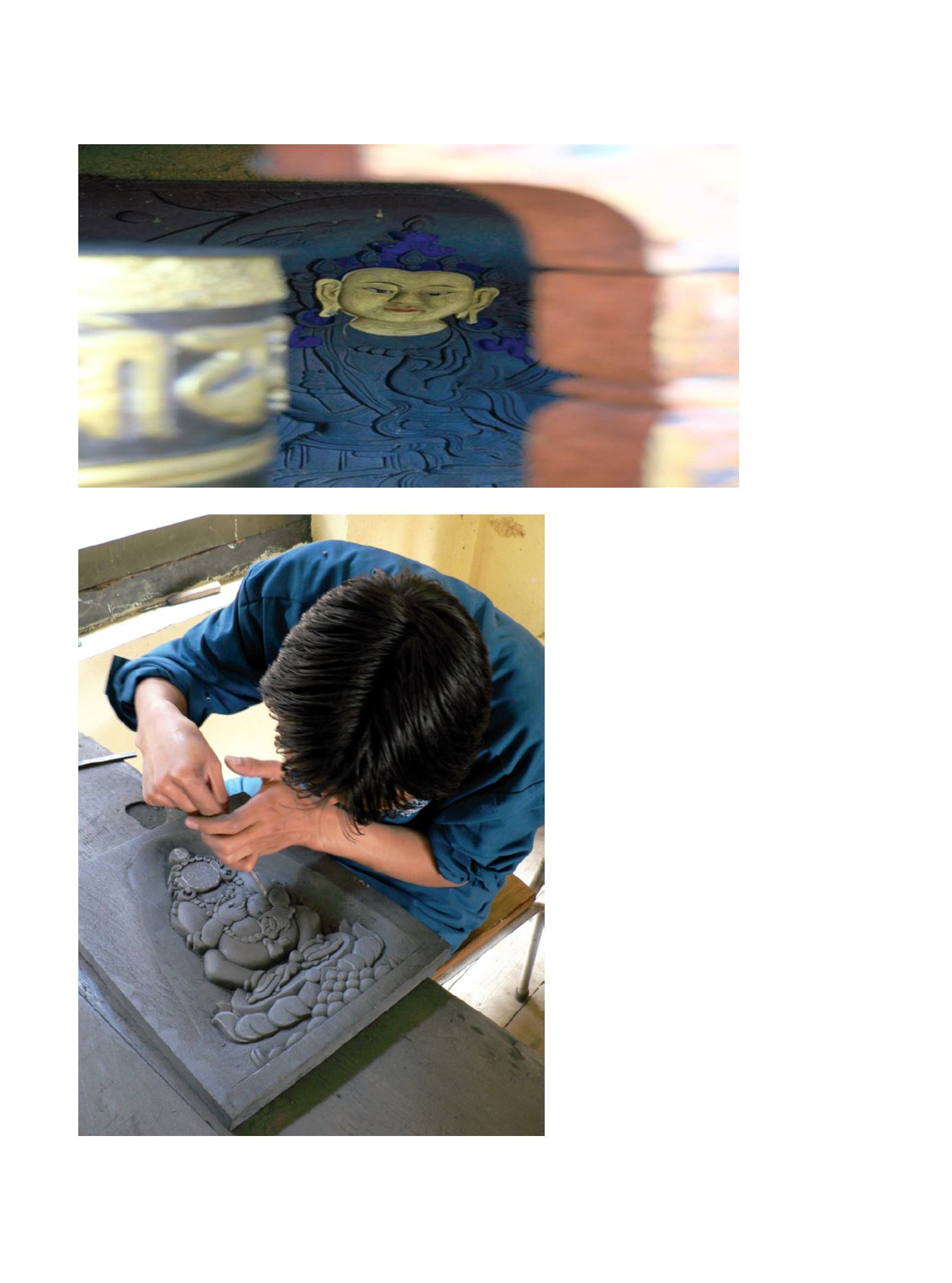
Una vez que las estructuras están de pie, el tallista
es el encargado de grabar, con precisión extraordi-
naria, desde madera y loza a piedra y papel. Man-
tras, deidades y motivos culturales están tallados
en máscaras tradicionales, falos utilizados en fes-
tivales religiosos, ventanas, puertas y todas las su-
perficies posibles. La madera es el material más im-
portante para el grabado, debido a la rica variedad
de maderas en Bután. Fue introducido en el siglo XIII
por diversas escuelas del budismo tibetano.
Once the structures are standing, the carver
takes over with extraordinary precision to en-
grave from wood and slate to stone and paper.
Mantras, deities and cultural motifs are carved
into traditional masks, phalluses used in reli-
gious festivals, windows, doors and every other
possible surface. Wood is the most important
form of carving, due to Bhutan’s rich variety of
woods. It was introduced in the 13th century by
various schools of Tibetan Buddhism.
Grabado
Carving