



 111 / 140

Lug-zo
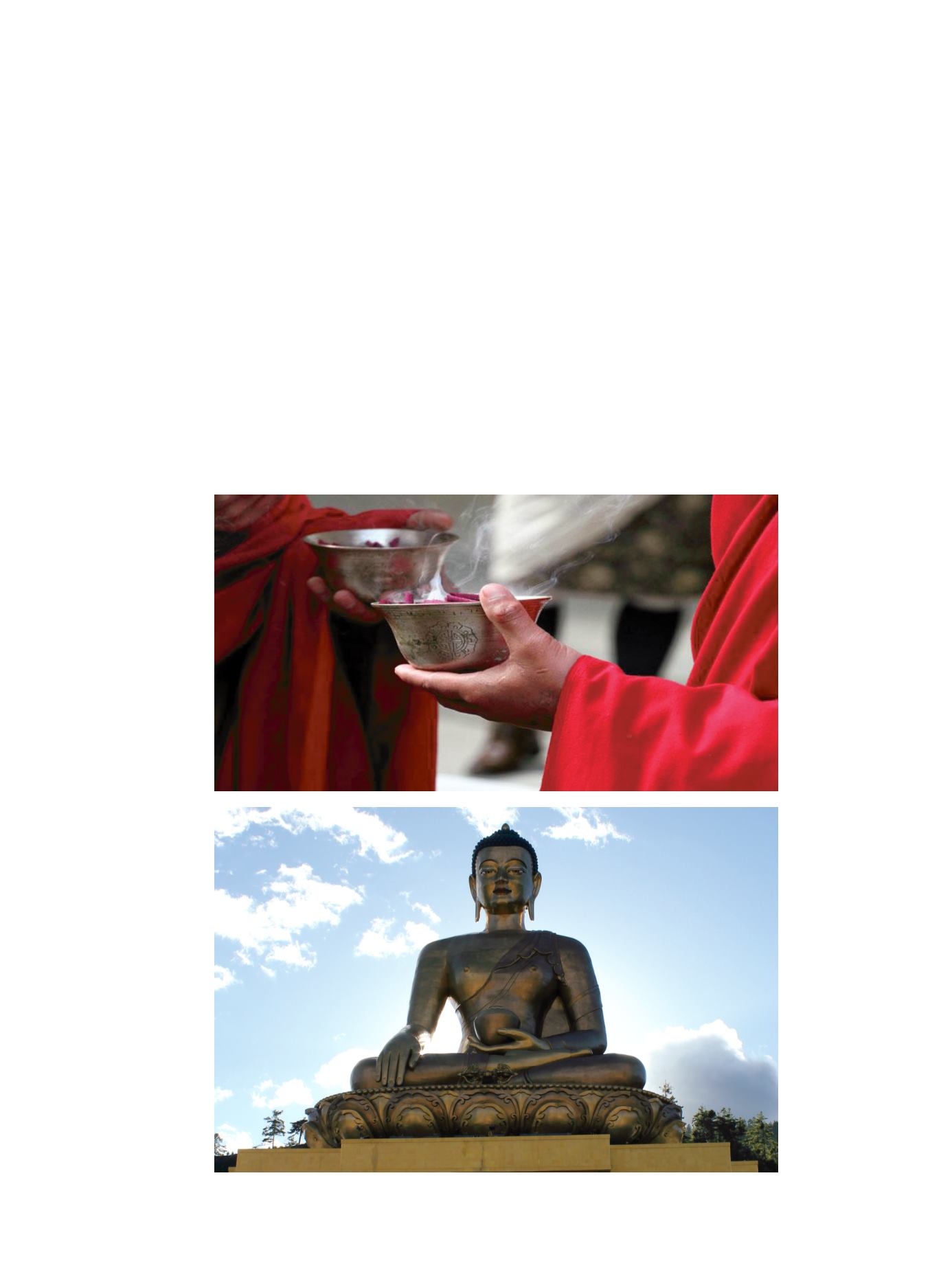
El arte de la fundición fue introducido en Bután en
el siglo XVII por artesanos nepaleses. Varía entre
la creación de utensilios culinarios, pináculos y
estatuas hasta instrumentos musicales, cerámica,
herramientas y ornamentos.
La fundición se lleva a cabo mediante un proce-
so complejo que requiere talento y destreza en las
dos técnicas que se practican: fundición de cera y de
arena. Gyalsey Tenzin Rabgye, el treceavo
Je Khenpo
(una autoridad religiosa) de Bután, era maestro de la
fundición en cera, y creó 1,000 budas, incluyendo al
Buda principal en el
Dzong
de Punakha.
The art of casting was first introduced in Bhu-
tan in the 17th century by Nepalese artisans.
It ranges from the creation of kitchen utensils,
pinnacles and statues, to musical instruments,
pottery, tools and ornaments.
Casting involves a complex process that re-
quires a lot of skill and masterfulness in the
two techniques that are practiced: wax and sand
casting. Gyalsey Tenzin Rabgye, 13th
Je Khenpo
(a religious authority) of Bhutan, mastered wax
casting, and crafted 1,000 Buddha, including the
main Buddha at the Punakha
Dzong
.
Fundición
Casting
herencia cultural •
culture and heritage
·amura·
109