



 118 / 140

especies •
species
B
után está considerado como un
ecosistema crucial para la super-
vivencia del Tigre de Bengala Real
(
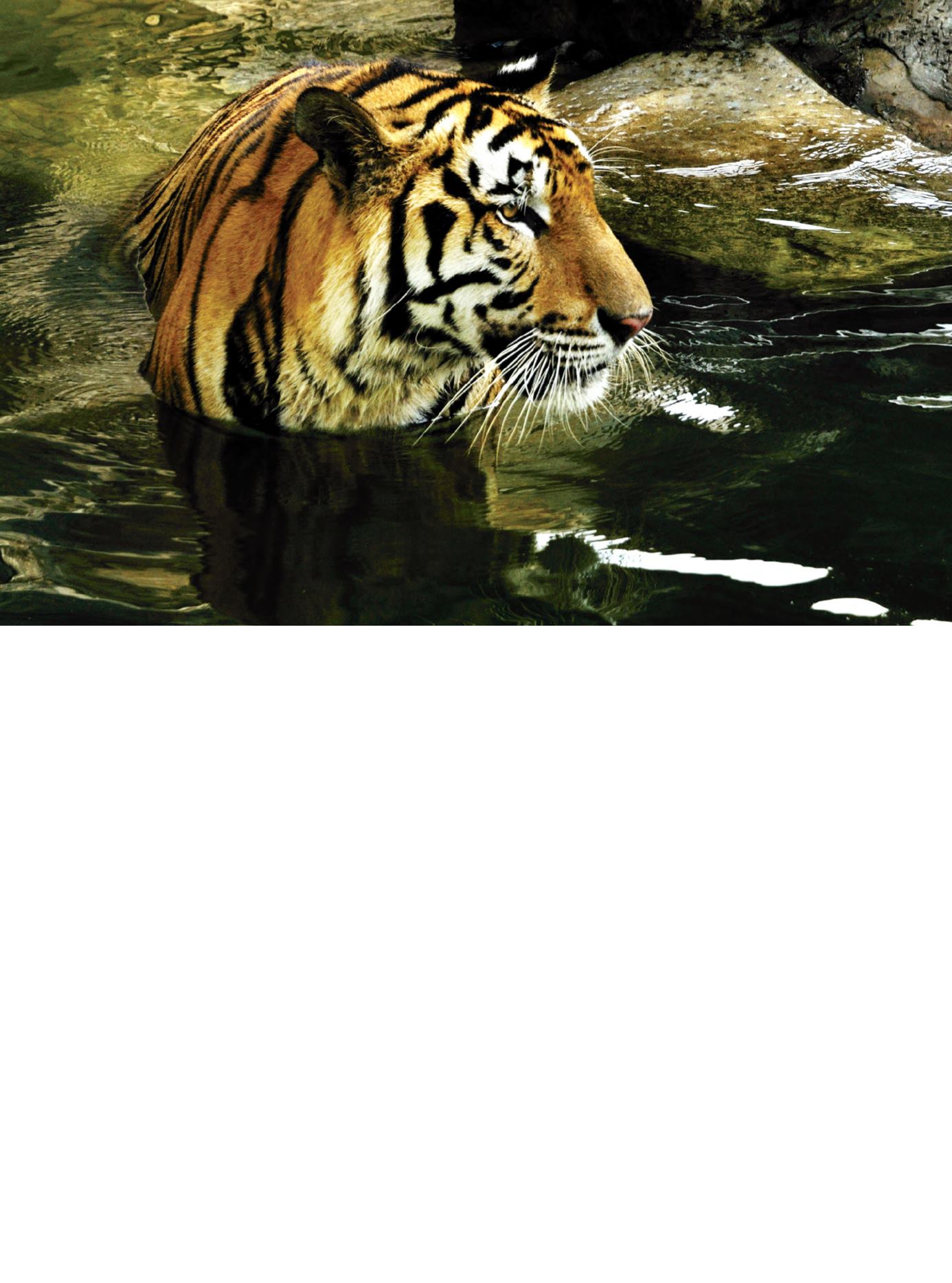
Panthera tigris tigris
) debido a su
compromiso con la preservación de
su paisaje natural. Es un país que
aprecia su privacidad y por esta ra-
zón nunca promoverá la presencia
del tigre como atracción turística. Al contrario, Bután des-
alentará la interferencia humana en las profundidades de
los territorios donde habitan los tigres.
Los tigres de bengala son seres solitarios; los ca-
chorros dependen de su madre los primeros 18 me-
ses de sus vidas hasta que comienzan a cazar por sí
mismos. Con el tiempo, se alejan de la camada para
empezar una existencia de soledad, ya que prefieren
merodear y cazar en los rincones aislados de los bos-
ques de Bután, donde abundan las especies presa que
han nutrido al tigre en su lucha por sobrevivir.
El gobierno y organizaciones dedicadas a la con-
servación, como La Fundación de Bután, con ayuda del
Instituto de Conservación e Investigación Ambiental
Ugyen Wangchuck (UWICE), se han comprometido a
proteger los hábitats que albergan especies en peligro
como el tigre de bengala, el cual aparece en la Lista Roja
de IUCN. De acuerdo con un censo de tigres del 29 de
julio, 2015 (día mundial del tigre) que se llevó a cabo
gracias al gobierno y a organizaciones como el Fondo
Mundial para la Naturaleza (WWF), Bután reportó 103
tigres que viven en los territorios vírgenes del país,
abarcando desde áreas subtropicales hasta bosques de
altitudes inusuales.
En el budismo, el
tigre es una de las
cuatro dignidades
del camino del
guerrero; repre-
senta compasión
y generosidad.
In Buddhism, the
tiger is one of the
Four Dignities
of the Warrior’s
Path; it represents
compassion and
generosity.
B
hutan is considered a crucial
ecosystem for the survival of
the Royal Bengal Tiger
(Pan-
thera tigris tigris)
because of
its commitment to preserve
its natural landscape. It is a
private country, and for this
reason it will never advertise
the presence of the tiger as a tourist attraction.
On the contrary, Bhutan will discourage human
interference deep in tiger territory. Bengals are
solitary beings; cubs will depend on their moth-
ers for the first 18 months of their lives up until
they start hunting on their own. They wander
away from the litter eventually and begin their
solitary existence, as they prefer to roam and
hunt on their own, and Bhutan’s abundance in
prey species has nurtured the tiger in its fight
for survival.
The government and conservation organiza-
tions have committed to protect the habitats that
harbor endangered species like the Bengal with
programs like The Bhutan Foundation in support
of The Ugyen Wangchuck Institute for Conserva-
tion and Environmental Research (UWICE). The
Bengal Tiger appears as endangered in the IUCN
Red List. According to a July 29, 2015 tiger census
carried out by the government and organizations
like the World Wildlife Fund (WWF), Bhutan re-
ported 103 tigers living in the wilderness of the
country, spanning from subtropical areas to un-
usually high altitude forests.
·amura·
116