



 120 / 140

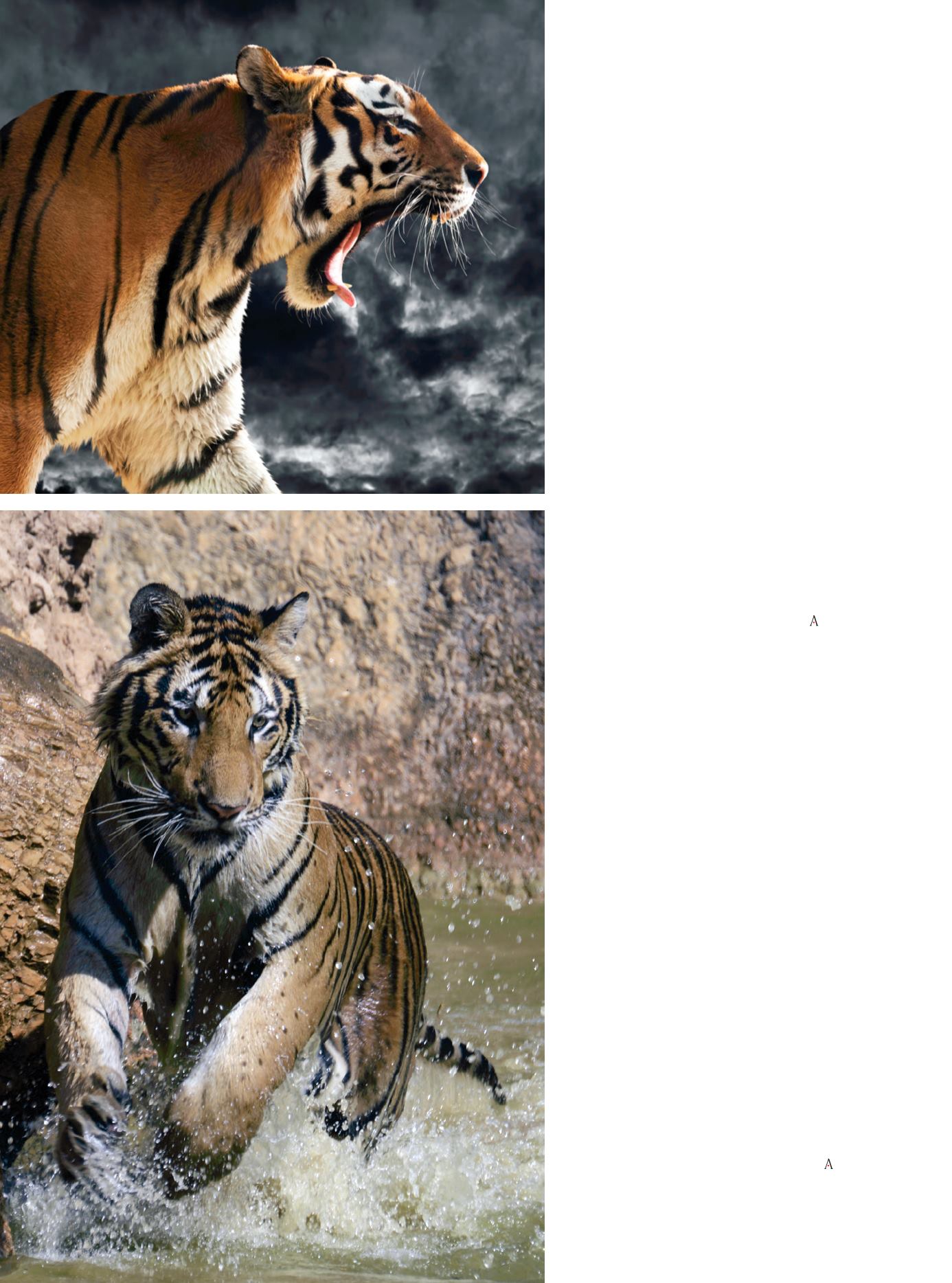
El Bengala tiene las características típicas de un
tigre: pelaje anaranjado o amarillo con rayas negras,
pero existen las mutaciones del inusual tigre blanco y
el incluso menos común tigre negro que también pro-
vienen del Bengala. Asimismo se distingue por ser la
segunda subespecie más grande; el tigre siberiano es
el más grande. Los machos pesan aproximadamente
221kg y miden alrededor de 2.7 a 3.1m de largo, in-
cluyendo la cola. Ya que son criaturas crepusculares,
solo cazan al alba o al atardecer, y su pelaje anaran-
jado rayado les permite camuflarse en el contraste
entre las sombras y la tenue luz del sol para acechar
a su presa. Son nativos de Bangladesh, Bután, India y
Nepal, y son profundamente apreciados dentro de la
cultura. Bután, en particular, es extremadamente res-
petuoso de esta especie por su simbolismo espiritual
y su importancia dentro del budismo, y muchos han
aconsejado al resto de estos países que tomen la ini-
ciativa para estar más involucrados en la preservación
de sus tigres.
Sinembargo, lapiel y losórganosdel tigresoncodicia-
dos en el mercado Chino, donde algunas personas creen
que contienen poderes curativos. Esta clase de demanda
fomenta la caza clandestina y reduce los números en la
población de tigres. La deforestación y la falta de presas
también ponen en peligro la supervivencia de este felino.
La pérdida de cualquier especie, especialmente un gran
predador como el tigre de Bengala, afectaría un ecosis-
tema en formas inimaginables, así que es fundamental
continuar trabajando para la conservación de todos los
aspectos de la naturaleza con la eficacia de Bután.
The Bengal has the typical traits of a tiger: or-
ange or yellow fur and black stripes, but the rare
white tigers and the even rarer black tigers are also
mutations that come from the Bengal. It is also dis-
tinctive for being the second largest tiger subspe-
cies, with the Siberian Tiger as the largest. Males
weigh approximately 221kg and measure around
2.7 to 3.1m in length, including the tail. Since they
are crepuscular creatures, they only hunt at dawn or
twilight, and their black-striped orange fur allows
them to camouflage within the contrast of shadow
and dim sunlight to stalk its prey. They are native
to Bangladesh, Bhutan, India, and Nepal, and they
are deeply appreciated in their culture. Bhutan, in
particular, is very respectful of the species due to
its spiritual symbolism and its importance within
Buddhism, and many have advised the rest of these
countries to take action and become more involved
in preserving their tigers.
However, tiger pelts and organs are coveted
in markets like China, where some people believe
them to contain healing properties. This sort of
demand encourages poaching and the decrease
of numbers in the tiger population. Deforestation
and depletion of prey also endangers the survival
of this feline. The loss of any species, especially a
strong predator like the Bengal, would affect the
ecosystem in unimaginable ways, so it is critical
to continue to work on the conservation of every
aspect of nature with the efficiency of Bhutan.
·amura·
118
especies •
species