


 124 / 140

·amura·
122
conservancy • conservación
This natural reserve extends through five dis-
tricts: Paro, Thimphu, Punakha, Wangdue Phodrang
and Gasa. It borders the TibetanAutonomous Region.
Additionally, it provides a fundamental link to the
Kanchenjunga Conservation Area in the northeast
of India and eastern Nepal. There are healing hot
springs in their lands. It is the home of 376 impres-
sive glaciers; when they melt, they form lakes that
flow into some of the most important rivers of Bhu-
tan: Pachhu, Wangchhu, Pho Chhu and Mo Chhu,
where they developed big hydroelectric projects to
generate clean and renewable energy (not just for
Bhutan; they export it to India as well), which com-
pensates for 6 million tons of CO
2
emissions into the
atmosphere annually in their neighboring country.
The park is also one of the richest territories in
cultural and biological diversity. Considered a con-
servation jewel of exceptional universal value by
UNESCO, it is a haven for countless species in dan-
ger of extinction, both flora and fauna, as well as
cultural heritage. Around 6,000 people organized in
semi-nomadic communities inhabit the park, living
for centuries in perfect harmony with their natural
surroundings. Each community has its own culture
and dialect.
Esta reserva natural se extiende a través de cinco
distritos: Paro, Timpu, Punaka, Wangdue Phodrang y
Gasa. Colinda con la frontera de la región autónoma ti-
betana. Además, aporta un vínculo fundamental para
el Complejo de Conservación de Kanchenjunga en el
noreste de la India y Nepal oriental. En sus tierras bro-
tan aguas termales curativas. Es la morada de 376 im-
ponentes glaciares, cuya nieve al derretirse, conforma
lagos que alimentan algunos de los principales ríos de
Bután: Pachhu, Wangchhu, Pho Chhu y Mo Chhu, don-
de se han desarrollado grandes proyectos hidroeléc-
tricos para generar energía limpia y renovable (no
solo para el país, ya que la exportan a India), lo cual
compensa anualmente seis millones de toneladas de
emisiones de CO
2
a la atmósfera en su país vecino.
El parque es también una de las más ricas zonas
en diversidad cultural y biológica. Considerada por la
UNESCO como una joya de conservación con valor uni-
versal excepcional, es el refugio de muchas especies
en peligro de extinción de la flora y la fauna, así como
del patrimonio cultural. Alrededor de 6,000 personas
organizadas en comunidades semi-nómadas habitan
en el parque, viviendo desde hace siglos en perfecta
armonía con el entorno natural. Cada una cuenta con
su propia cultura y dialecto.
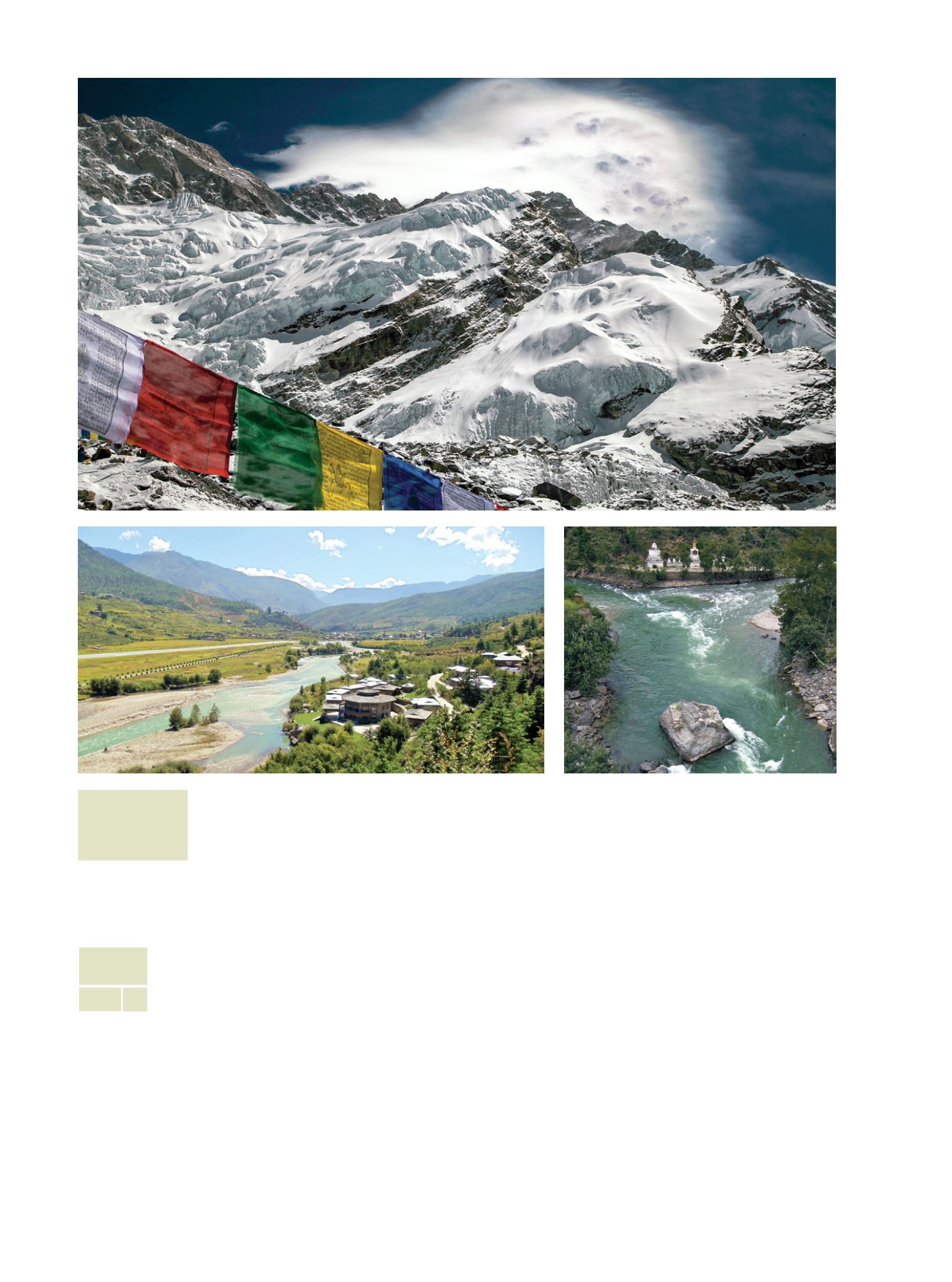
1
2.Lascumbressagradas
Jomolhari,TsherimgangyJitchu
Drake./
Thesacredsummits
Jomolhari,TsheringGangand
JitchuDrake.
3.Estáconsideradopor la
UNESCOcomouna joya
deconservaciónconvalor
universalexcepcional./
It’s
consideredaconservation
jewelofexceptionaluniversal
valuebyUNESCO.
4.Losviajerospuedenpasar
muchosdíasexplorandoel
ParqueNacionalJigmeDorji
Wangchuck./
Travelerscan
spendmanydaysexploring
JigmeDorjiWangchuck
NationalPark
2
3
4
1.Elparquenacionalofreceuna
oportunidad increíbleparaestar
encontactocon lanaturalezay
lavidasilvestre./
TheNational
Parkprovidesanamazing
opportunitytobeincontact
withnatureandwildlife.
Texto /
Text
: Felipa Avilés • Foto /
Photo
: PRIME BHUTAN / CLOUDFONT / LITTLE BUTHAN / © DEKANARYA / STOCK-PHOTO / C3