El diseño de la exposición ofrece una dimensión
enriquecedora que consiste en fotografías, boce-
tos, apuntes y acuarelas proyectados en los muros
de las salas, todo relativo a las joyas expuestas, así
que el público descubre cómo, para quién y por qué
se crearon muchas de las piezas. Esto aporta ele-
mentos que permiten al asistente captar el pleno
sentido de la exhibición.
Del catálogo de la exhibición tomamos y trans-
cribimos textos del Director Artístico del Museo
Thyssen-Bornemisza, Guillermo Solana, historiador,
crítico de arte y profesor de Estética en la Universi-
dad Autónoma de Madrid; del Director de Imagen y
Herencia de Cartier, Pierre Rainero, considerado el
“Ángel de la Guarda de Cartier”; y de Jorge Varela, Di-
señador en Cartier y Comisario de la exhibición:
The design of this exhibition provides an inspir-
ing dimension consisting of photographs, draw-
ings, sketches and watercolors projected on the
walls of the rooms, they are all related to the jewels
in the exhibit, allowing the audience to discover
how, to whom and why many pieces were created.
These elements permit the visitor to capture the
full sense of the exhibition.
Fromthe exhibit’s catalog, we tookand transcribed
texts from the Artistic Director of the Museo Thyssen-
Bornemisza, Guillermo Solana, historian, art critic and
professor of aesthetics at the Autonomous Univer-
sity of Madrid; from Cartier’s Director of Photography
and Inheritance, Pierre Rainero, who is considered
the “Guardian Angel of Cartier” and from Jorge Varela,
Cartier’sDesigner andCommissioner of the exhibition:
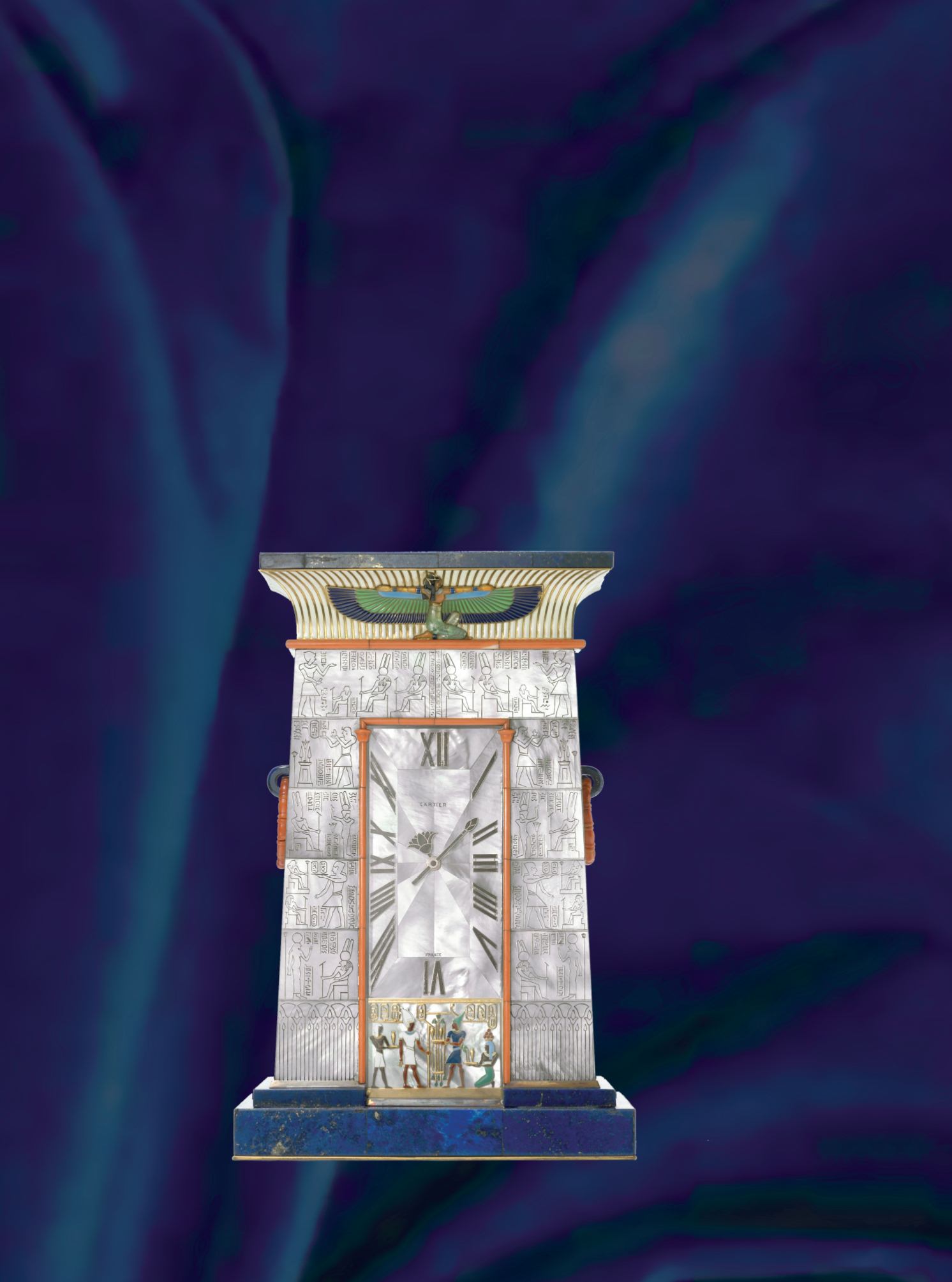
Reloj Egipcio con sonería / Egyptian Striking Clock
Cartier París 1927
Nick Welsh, Cartier Collection © Cartier
Exposición: El Arte de Cartier
24 de Octubre de 2012 – 17 de Febrero de 2013
Museo Thyssen-Bornemisza, Madrid
joyas •
jewelry
·amura·
132


