·amura·
125
Three wives is the equivalent of having a cer-
tain amount of cows to provide for the family. That
is how the cattle defines, limits and creates the eco-
nomic and social relations. All of these people de-
pend wholly in their cattle; in such a way that they
take care of it as a son. they are their best veterinar-
ians, give them food andwater, and even sleep a few
inches away from them. For this reason, it’s divine
character is completely understandable. It is be-
cause of this, the firm believe, due to its animistic
religion, sent by Ngai, all the cows of the world be-
long to them, therefore, are sacred.
With the passing of times and several adapta-
tions, this tribe had to redesign its development.
Their orthodox idea was to live exclusively on cattle,
today they are learning to farm, cultivate and extract
some earning from tourism.
Before heading back to the village, on a side of the
hut, I observed a pretty new construction, the Maasai
don’t seemto close themselves to the realitywhich sur-
roundsthem,maybeforneedorlackofalternative,Isaw
itwas a little school. In it, children learnedEnglish, Maa,
Swahili, amongst other subjects. For my surprise, I saw
the sincere opportunity of learning more from them,
and establish other type of bonds, so, that afternoon, I
didn’t hesitateonconsultingWilliamabou thepossibil-
ity of participating in the education of the children and
bring myself closer to their culture, which was pre dis-
posedwithgoodspirit tomy intentions.
Tres esposas equivalen a tener una determinada
cantidad de vacas para mantener a la familia. Así es
como el ganado define, limita, y posibilita las relacio-
nes sociales y económicas. Toda esta gente depende
absolutamente de su ganado; tan es así, que: lo cuidan
como un hijo, son sus mejores veterinarios, extraen
sus bebidas y alimentos, y duermen con ellos a unos
pocos centímetros. Es comprensible, por esta razón,
el carácter divino que adquieren sus vacas. De aquí la
creencia firme, dada su religión animista, que envia-
das por Ngai, todas las vacas del mundo les pertene-
cen, por lo tanto, son sagradas.
Con el paso del tiempo, y las adaptaciones, esta
tribu tuvo que replantearse su desarrollo. Si bien, su
idea ortodoxa era vivir exclusivamente del ganado,
hoy en día, están aprendiendo, no sin reticencias, a
cultivar y a extraer ganancias del turismo.
Antes de volver a la aldea al costadito de la cho-
za observé una construcción bastante nueva. Los
Másai parecen no cerrarse a la realidad externa, qui-
zás por necesidad o por falta de alternativa, vi que
era una pequeña escuela. Allí los niños aprendían
inglés, maa, y swahili, entre otras materias. Ante mi
sorpresa, vi la oportunidad sincera de aprender más
de esta gente y establecer vínculos de otro tipo, así
que, no tarde en consultar a William sobre la posi-
bilidad de participar en la educación de los niños
y acercarme a su cultura, lo cual lo predispuso de
buen ánimo a mis intenciones.
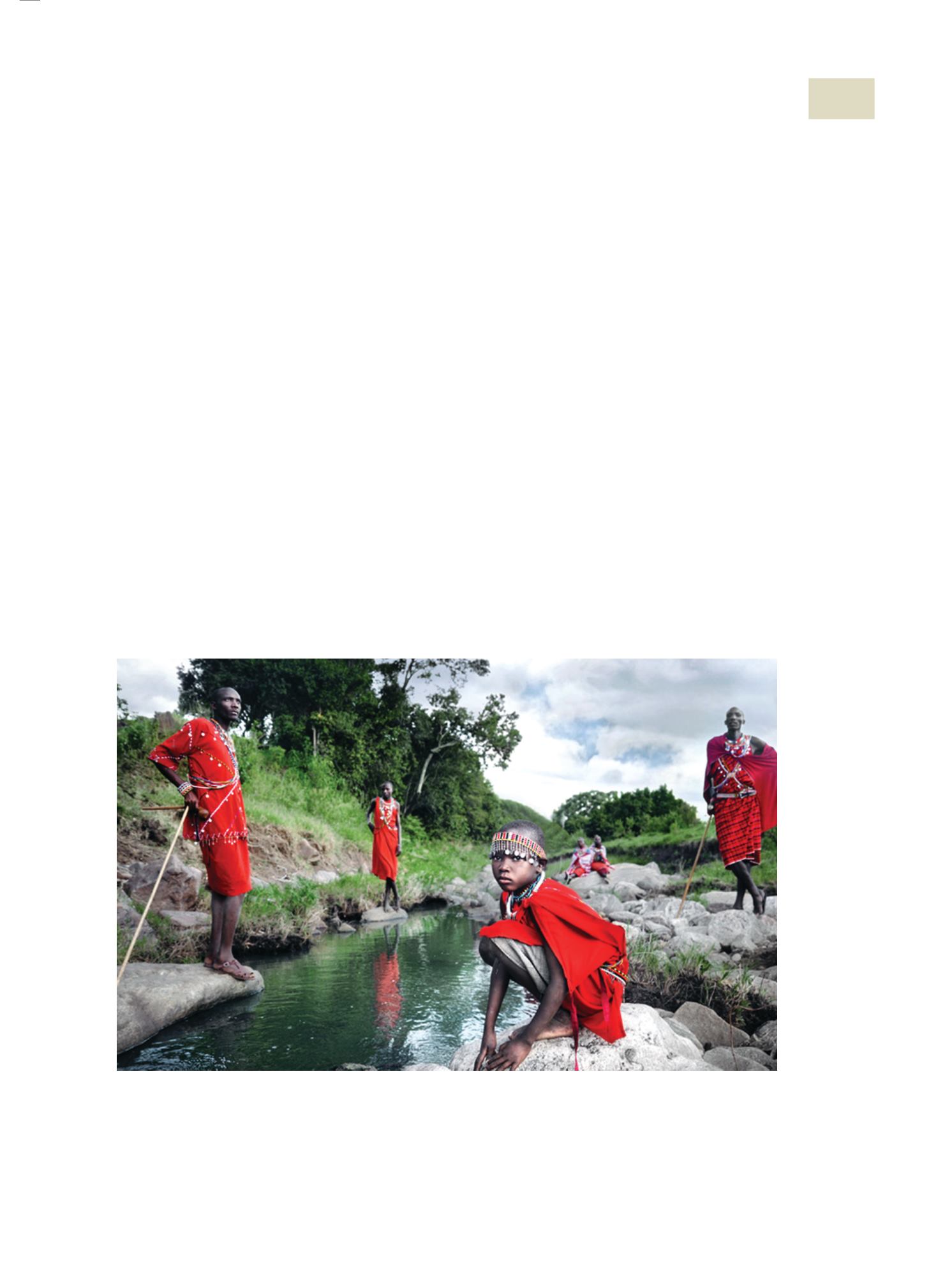
14. Las tribus Másai
viven en la salvaje
Kenia, y aún tienen
sus costumbres y
tradicionales valores.
/
These Masai
tribes people live
in the wilderness
of Kenya and still
upholdmost of their
traditional values
and customs.
14.
conservancy •
conservación


