Es tan probable, que éste sea el remoto origen
de la producción creativa-plástica, que ha seguido
hasta nuestros días en partida doble: como el arte
expresionista del África moderna y como sustrato
de los expresionismos europeos; las vanguardias
con la experimentación abierta para la ruptura
con lo clásico. La relación fue de ida a las culturas
ancestrales y de las sociedades ancestrales a Euro-
pa y más tarde a Estados Unidos.
Los artistas europeos estaban apasionados por
las culturas arcaicas, pero imbuidos de una supe-
rioridad en muchos casos arrogantes, a causa de
su conocimiento del arte y de su práctica agnós-
tica. Para explicar esta misma situación, Pamela
McClusky (2002: 14) utiliza el término de neo-tar-
zanismo, acuñado por Wole Soyinka, es decir, la
tendencia de los occidentales por fijar África como
el lugar del animal, la jungla y la disonancia o dis-
cordia necesitando un salvador blanco (preferi-
blemente de familia aristocrática). Los abstraccio-
nismos geométricos, cubistas y expresionismos,
fueron tocados por las culturas estéticas africanas,
pintores, de la talla de Pablo Piccaso. Otros que se
pueden inscribir en este proceso de encuentro-
convivencia de espíritus culturales son: Maurice
de Vlaminck, fauvista junto con sus compañeros,
André Derain, Raoul Dufy y Henry Matisse1.
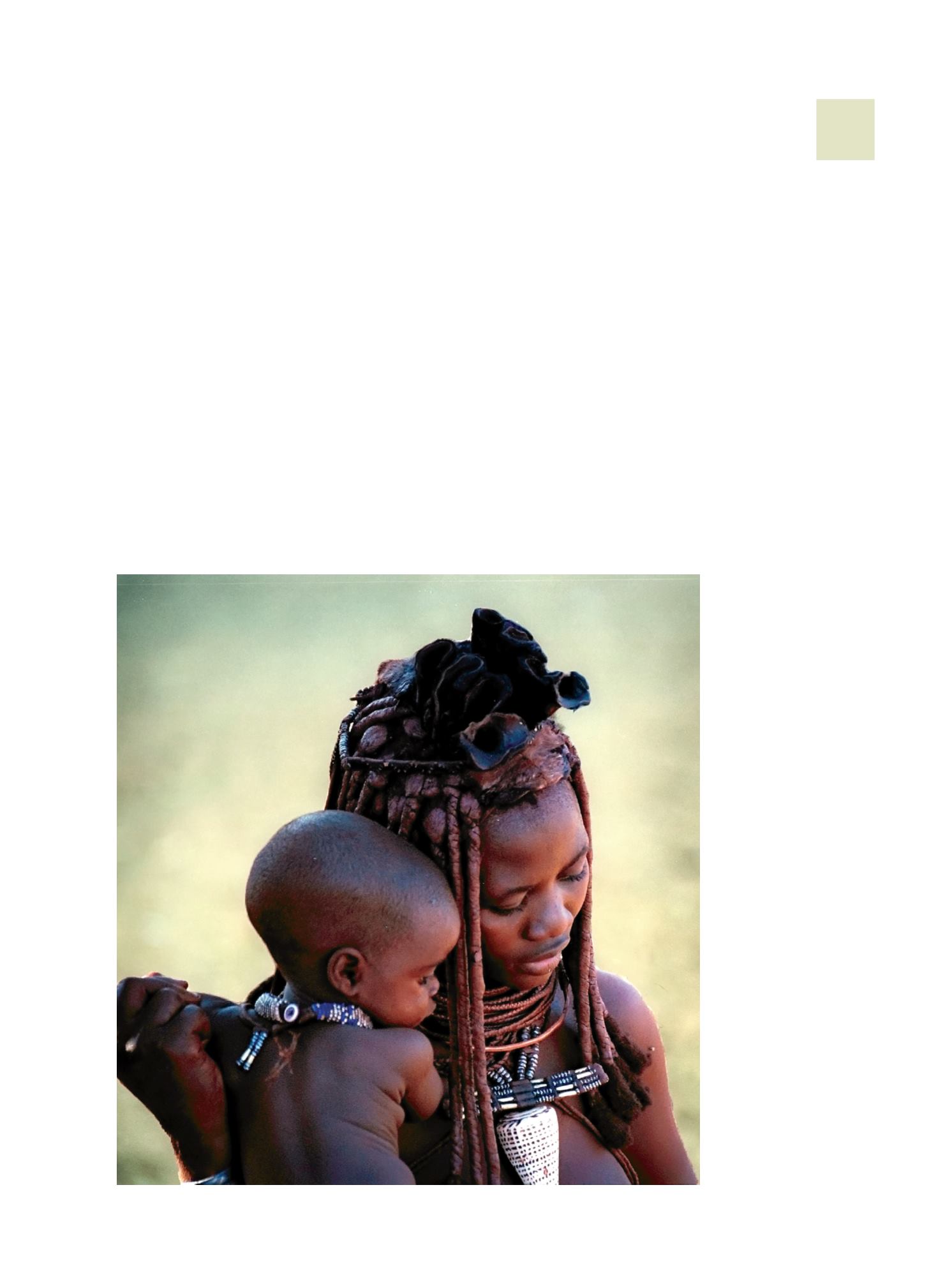
15. Namibia, “tierra
de los valientes”, es
uno de los países
más jóvenes de
África. /
Namibia,
“land of the brave”
is one of the Africa’s
youngest countries.
·amura·
111
los conquistadores •
the conquerors
It may be that this is the remote origin of the
creative-plastic production that has continued
until our times, in a double way, as modern Af-
rica expressionist art and as a substrate to the
European expressionisms; vanguard with an
open experimenting, a rift with the classic. The
relation would go to the ancestral cultures and
from the ancestral societies to Europe and later
to the US.
The European artists were passionate of the
archaic cultures, but immersed in haughtiness,
cavalier in many a case, due to their knowledge
of art and their agnostic practices. In order to
explain this situation in itself, Pamela McClusky
(2002: 14) uses the term “Neo-Tarzanism”, coined
by Wole Soyinka, that is, the Westerners pen-
chant for fixing Africa as the place of the animal,
the jungle, and dissonance or disagreement; by
needing a white savior (preferably, from an aris-
tocratic family.) Geometric, cubist and expres-
sionist abstractionisms were touched by the
African aesthetic cultures, painters the size of
Pablo Picasso; others that might be inscribed in
this process of encounter, this living-together of
cultural spirits, are: Maurice de Vlaminck, a fau-
vist, with his companions André Derain, Raoul
Dufy and Henry Matisse1.
15


