·amura·
124
especies •
species
En la religión hinduista, al tiempo que creó el mun-
do, Brahma dio vida a Airavata, antepasado de los ele-
fantes y el primero en salir de la concha fundadora del
dios. Desde ese instante, en este animal fuerte y pode-
roso ha residido la inocencia y la malicia, la sabiduría y
la guerra, la experiencia y el valor. Por eso el gobierno
indio estableció un proyecto mediante el cual se de ca-
rácter formal y jurídico a la National Elephant Conser-
vation Authority (NECA), equivalente a la ya existente
Autoridad para la Conservación del Tigre Nacional.
Esta institución realizaría un esfuerzo de la mano
de otras organizaciones no gubernamentales de ca-
rácter mundial como la WWF, para la conservación del
elefante, especie que, actualmente, cuenta con una
población de más de 25,000 ejemplares.
Entre las propuestas para la conservación de lo
que se conoce como el mamífero más grande sobre la
tierra, los cuales llegan a medir hasta 6.5 metros de
longitud y más de tres metros de altura, se incluyen
un aumento del número de reservas en el país, el se-
guimiento a través de chips y otras tecnologías de las
poblaciones de elefantes, la lucha contra la caza furti-
va, mediar en los conflictos de estos animales con el
hombre (a veces se producen estampidas que destro-
zan poblados) y proteger los corredores de elefantes
controlando las actividades cercanas y reubicando, si
es necesario, a las poblaciones locales. Además de los
elefantes silvestres, existen 3,500 elefantes en cautive-
rio, principalmente en templos y parques zoológicos.
InHindu religion, when creating the world, Brah-
ma breathed life to Airavata, antecessor of the el-
ephants, and the first one to leave the God’s creation
shell. From that moment on, innocence and malice,
wisdom and war, experience and courage, have re-
sided in this strong andpowerful animal. That iswhy
the Indian government founded a project to give
formal and legal character to the National Elephant
Conservation Authority (NECA), tantamount to the
National Tiger Conservation Authority (NTCA).
This institution would make an effort hand in
hand with other non-governmental worldwide or-
ganizations such as the World Wildlife Fund (WWF)
for the conservation of the elephant, species that
currently has a 25,000 specimen population.
Among the proposals for the conservation
of the biggest animal on Earth (it might reach
a 6.5 m length and more than a 3 m height) in-
clude: to augment the reservations’ number in
the country; to put tracking chips and use other
technologies to trail the elephant population; to
combat poaching; to mediate in the conflicts be-
tween these animals and human beings (some-
times stampedes destroy towns); to protect the
elephant corridors by controlling the nearby
activities and relocating, if necessary, the en-
demic populations. Besides the wild elephants,
there exist 3,500 elephants in captivity, mainly
in temples and zoos.
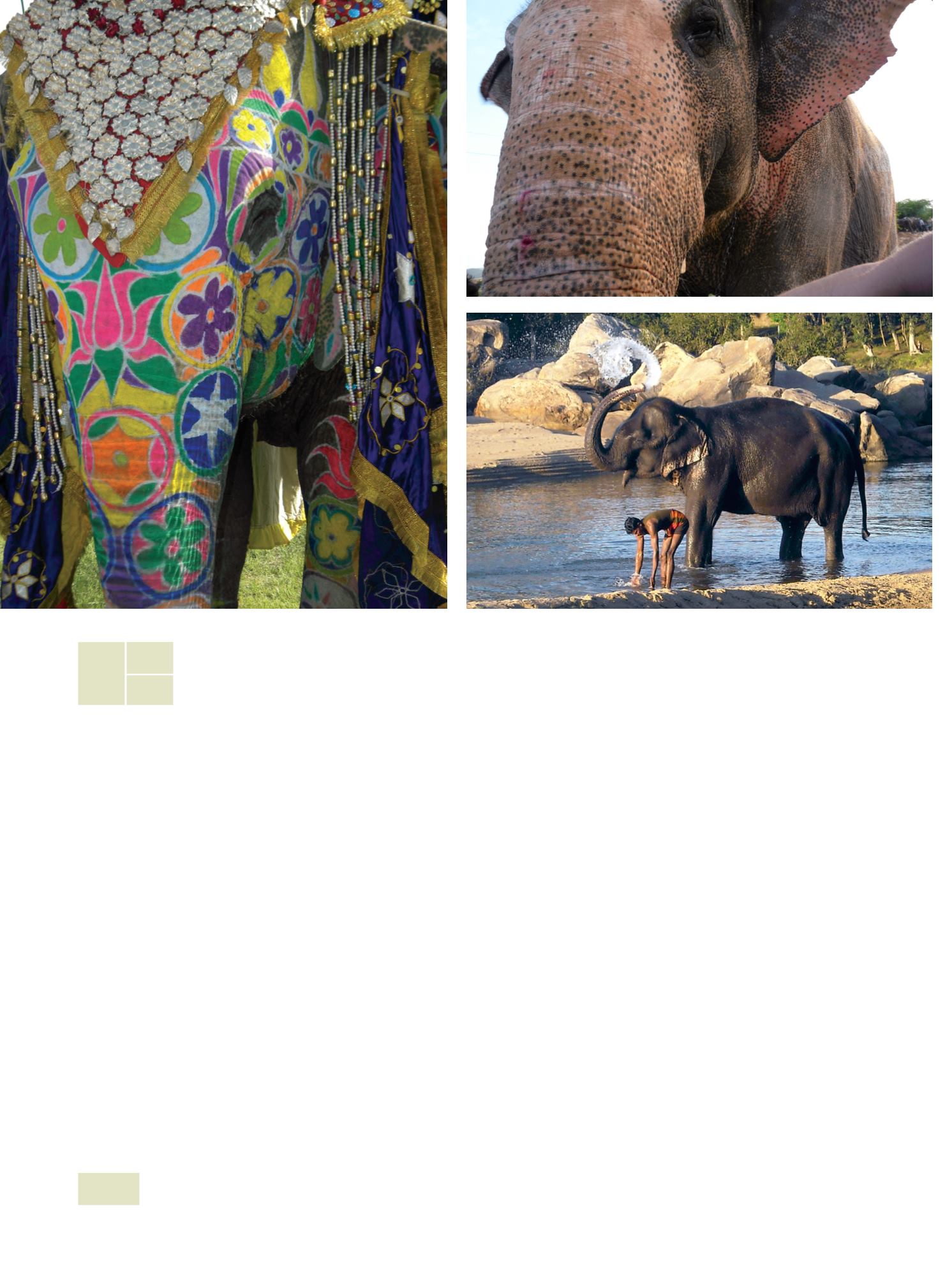
8.Elelefantees
veneradopor los
indiosdesdetiempos
inmemoriales.
CadaañoenJaipur,
Rajastán,secelebrael
FestivaldelElefante.
/
Theelephant
isreveredbythe
Indianssincetime
immemorial.Every
yearinJaipur,
Rajasthan,is
celebratedElephant
Festival.
9.Eselmamíferocon
lagestaciónmás larga,
deaproximadamente
23semanas./
Itisthe
longestmammalian
gestation
approximately
23weeks.
10.Elelefanteasiático
eselanimalterrestre
másgrandedel
planetay llegaavivir
hasta60años./
The
Asianelephantisthe
planet’slargestland
animalandcanlive
upto60years.
12.Tienenun
promediodevidade
entre30y40años./
Theyhaveanaverage
lifespanofbetween
30and40years.
8
9
10
12


