



 157 / 176

·amura·
155
IFrFOcia cVMtVraM •
culture and heritage
W
hen did humans begin to be
transported by sea? We don´
t
know. But with a little bit of
imagination we can recreate
that moment. Let’s go back in
time to the Upper Paleolithic. A Cro-Magnon is on
the bank of a river, probably fishing. Suddenly he
sees, passing in front of him, a tree trunk floating,
washed away. It draws his attention because he
has never seen anything like that before. He knows
that the trunks are heavy and therefore doesn´
t un-
derstand why it does not sink in water. Finally, the
trunk moves on and also our Cro-Magnon. Years lat-
er, another of our ancestors observes a similar scene,
but this time the trunk is stuck between two rocks.
Bolder than the other one, he walks over to inspect
and climb on it. Immediately, the trunk dislodges
and continues its path on water, with a more than
terrifiedmanon it. Voila! Navigation is born. Maybe it
didn´
t happen quite like this, but it sounds good.
Undoubtedly, navigation was born before the
first cities. The oldest known canoe was found in
Pesee, Netherlands, and is more than 8,000 years
old, which indicates that when humans began
to settle in large villages on the banks of rivers,
they already knew and dominated this art. Had it
not been so, what would’ve been the point of liv-
ing near water? This idea is strengthened when
we analyze the Sumerian culture, the oldest one
known, and realize that their ships roamed the
Tigris and Euphrates connecting large cities and
transporting their goods to trade between them
- It was probably them who invented sails to har-
ness the power of wind. The same can be noted
in the other major early cultures: China, India,
Egypt and Mesoamerica.
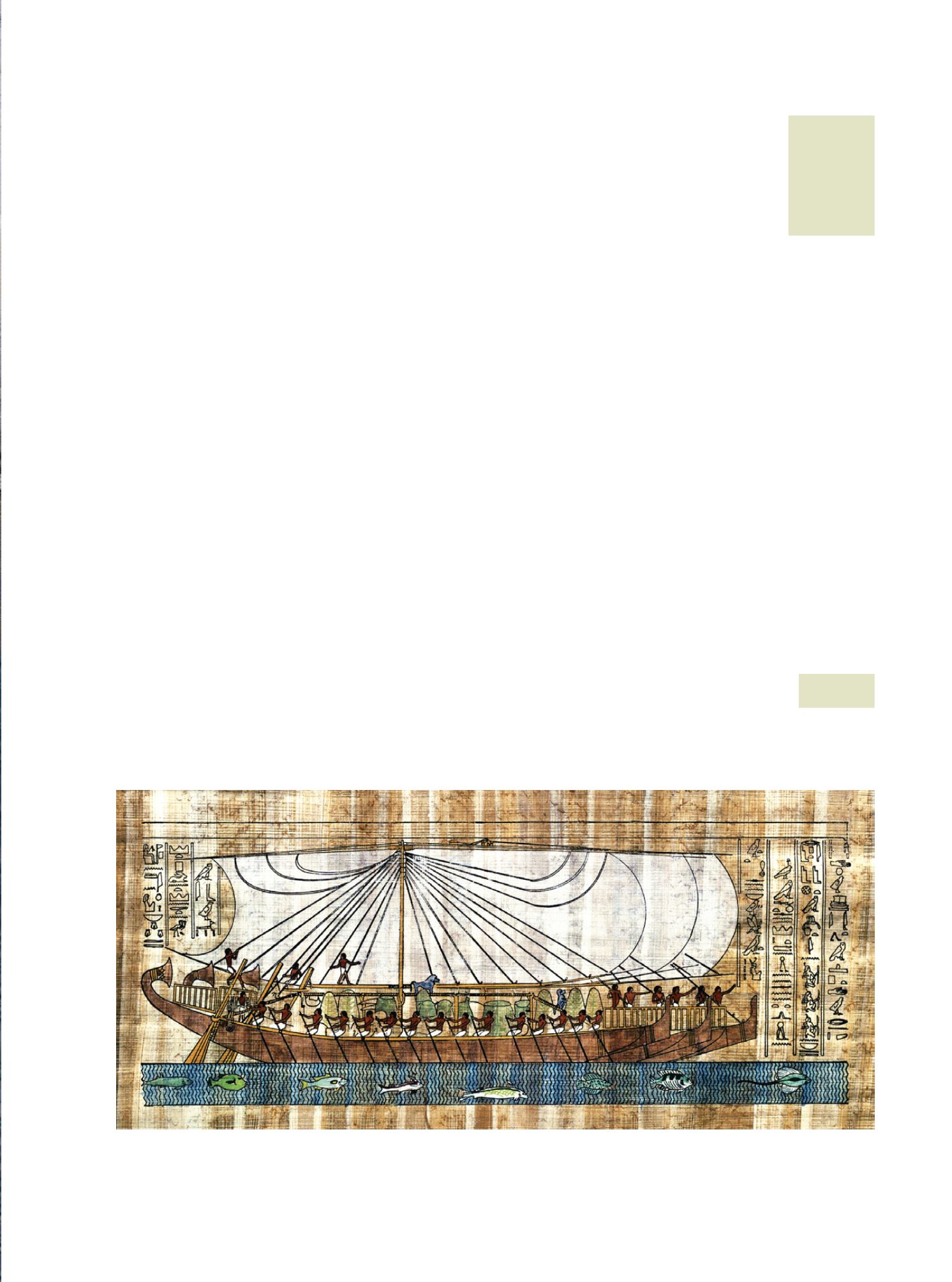
1. Diversosartistas
IBO JOtFOtBEoSFDSFBS
MBTQSJNFSBTFTDFOBT
EF MBOBWFHBDJwO
FT MoNgTDFSDBOo
RVFtFOFNoTBVO
tFTtJNoOJo /
Variousartistshave
triedtorecreate
thefirstscenesof
navigation,itisthe
closestwehavetoa
witness.
-oTFHJQDJoTTJO
EVEBGVFSoOQJoOFSoT
EF MBOBWFHBDJwO /
TheEgyptians
certainlypioneered
navigation.
1
¿$
VgOEo DoNFO[w FM TFS IVNBOo
B tSBOTQoStBSTF QoS NBS /o Mo
TBCFNoT 1FSo DoO VO QoDo EF
JNBHJOBDJwO QoESFNoT SFDSFBS
FTF NoNFOto RFtSoDFEBNoT FO
FM tJFNQo IBTtB FM 1BMFoMrtJDo 4VQFSJoS UO $SoNBvwO
TF FODVFOtSB FO MB oSJMMB EF VO Sro QSoCBCMFNFOtF QFT-
DBOEo %F SFQFOtF WF QBTBS GSFOtF B nM VO tSoODo RVF
otB BSSBTtSBEo QoS MB DoSSJFOtF -F MMBNB MB BtFODJwO
QVFT OVODB BOtFT IBCrB WJTto BMHo BTr cM TBCF RVF MoT
tSoODoT ToO QFTBEoT Z QoS FTo Oo FOtJFOEF QoS RVn
nTtF Oo TF IVOEF FO FM BHVB &O ¬O FM tSoODo TJHVF TV
DBNJOo Z OVFTtSo $SoNBvwO tBNCJnO AvoT EFTQVnT
otSo EF OVFTtSoT BODFTtSoT oCTFSWB VOB FTDFOB QBSF-
DJEB QFSo FO FTtB oDBTJwO FM tSoODo TF BtoSB FOtSF EoT
SoDBT MgT BWFOtVSBEo RVF FM BOtFSJoS TF BDFSDB Z BM
JOTQFDDJoOBSMo TF TVCF FO nM %F JONFEJBto FM tSoODo
TF EFTBtBTDB Z DoOtJO|B TV DBNJOo ToCSF FM BHVB DoO
VO NgT RVF BtFSSBEo TFS IVNBOo FODJNB EF nM 7oJMg
)B OBDJEo MB OBWFHBDJwO A Mo NFKoS Oo oDVSSJw BTr QFSo
TVFOB CJFO
&T JOEVEBCMF RVF MB OBWFHBDJwO OBDJw BOtFT RVF MBT
QSJNFSBT DJVEBEFT -B DBOoB NgT BOtJHVB RVF TF DoOoDF
TF FODoOtSw FO 1FTTF )oMBOEB Z tJFOFNgT EF
BvoT
EF BOtJHFEBE Mo RVF OoT JOEJDB RVF DVBOEo MoT TFSFT IV-
NBOoT DoNFO[BSoO B BTFOtBSTF FOHSBOEFT QoCMBEoT B MBT
oSJMMBT EF MoT SroT ZB DoOoDrBO Z EoNJOBCBO EJDIo BStF 4J
Oo IVCJFSB TJEo BTr RVn DBTo tFOrB WJWJS DFSDB EFM BHVB
&TtB JEFB TF GoStBMFDF DVBOEo BOBMJ[BNoT MB DVMtVSB TVNF-
SJB MB NgT BOtJHVB DoOoDJEB Z OoT EBNoT DVFOtB RVF TVT
CBSDoT SFDoSSrBO MoT SroT 5JHSJT Z cVGSBtFT DoOFDtBOEo TVT
HSBOEFT DJVEBEFT Z tSBOTQoStBOEo NFSDBODrBT QBSB Do-
NFSDJBS FOtSF FMMBT 1SoCBCMFNFOtF GVFSoO FMMoT RVJFOFT
JOWFOtBSoO MBT WFMBT QBSB BQSoWFDIBS MB GVFS[B EFM WJFOto
-oNJTNoQoEFNoToCTFSWBS FO MBTotSBTHSBOEFT DVMtVSBT
QSJNJHFOJBT: $IJOB *OEJB ZMFToBNnSJDB
2