


 160 / 176

·amura·
158
IFrFOcia cVMtVraM •
culture and heritage
#BSDoEFWBQoS./
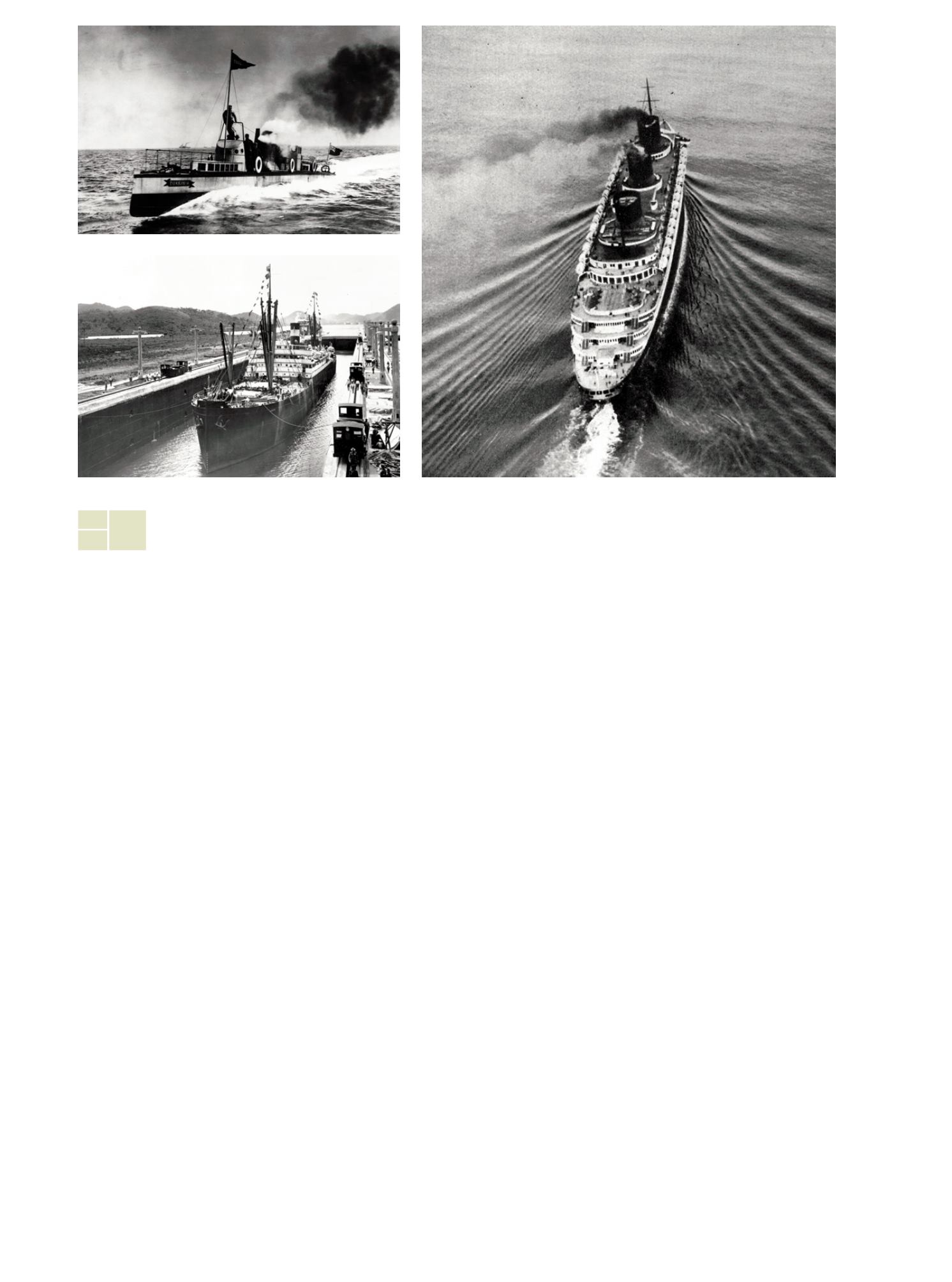
Steamboat.
AODwO FM QSJNFS
CBSDo FO DSV[BS FM
$BOBM EF 1BOBNg FO
1914. /
Ancon,the
firstboattocross
thePanamaCanal
in1914.
&MTJHMo99oGSFDJw
VOHSBOBWBODF
FONBtFSJBEF
OBWFHBDJwO /
Thetwentieth
centuryoffereda
breakthroughin
navigation.
After the Iberians, it was the Dutch and the French
who started their own naval development, which led
their ships to set sail for North America, Asia and Af-
rica during the seventeenth century. By the hand of
their merchant marine, with increasingly larger and
more powerful ships, over the following centuries the
Europeans took over the globe, carrying their flags
and their products to the most remote corners, while
China and Japan, their most powerful rivals in Asia,
decided to withdraw from the world, breaking their
trade links and ending theirmerchant development.
Inthisjourney,theeighteenthandnineteenthcen-
turiescertainlybelongtoGreatBritainwhom,thanksto
its merchant fleet, built the largest empire that’s ever
been known. At the same time, the British put science
at the service of their commercial development. Before
navalclocks(chronometers),itwasverydifficulttonav-
igate for long distances with any accuracy. However,
the position of a ship at sea could be determined with
reasonable accuracy if a navigator could refer to a clock
that lost or gained less thanabout 10 secondsper day.
The marine chronometer keeps the time of a
fixed location, allowing mariners to determine
longitude by comparing the local high noon
to the clock. The British government offered a
large prize of £20,000, equivalent to millions of
pounds today, for anyone who could determine
longitude accurately. The reward was eventually
claimed in 1761 by a simple carpenter from York-
shire, John Harrison.
Another big step will be the invention - in the
eighteenth century - of the steam engine, which
will soon be perfected to be placed on ships. With
this, the nineteenth century will see the emer-
gence of larger and faster ships that will close the
gap significantly. With steam, wind it does not
matter, because ships can move independently
of it even in calmer waters. This, of course, also
marked the end of the suffering rowers. Only
the Clipper, a narrow and elongated sailing ship,
which made it very fast, managed to survive until
the early twentieth century.
7
9
5SBT MoT JCnSJDoT GVFSoO MoT IoMBOEFTFT Z MoT GSBO-
DFTFT MoT RVF JOJDJBSoO TV QSoQJo EFTBSSoMMo OBWBM Mo
RVF MMFWw B TVT OBWFT B QoOFS SVNCo B /oStFBNnSJDB
ATJB Z µGSJDB B Mo MBSHo EFM TJHMo 97** %F MB NBOo EF TV
NBSJOB NFSDBOtF DoO CBSDoT DBEB WF[ NgT HSBOEFT Z
QoEFSoToT MoT FVSoQFoT TF BQoEFSBSoO FO MoT TJHMoT
TJHVJFOtFT EF toEo FM QMBOFtB MMFWBOEo TVT CBOEFSBT Z
TVT QSoEVDtoT IBTtB MoT SJODoOFT NgT BMFKBEoT NJFO-
tSBT $IJOB Z +BQwO TVT NgT QoEFSoToT SJWBMFT FO ATJB
EFDJEFO BJTMBSTF EFM NVOEo SoNQJFOEo TVT WrODVMoT
DoNFSDJBMFT Z QoOJnOEoMF ¬O B TV EFTBSSoMMo NFSDBOtF
&O FTB BOEBEVSB MoT TJHMoT 97*** Z 9*9 QFStFOFDFO
TJO EVEB B MB (SBO #SFtBvB QVFT HSBDJBT B TV otB NFS-
DBOtF TF DoOTtSVZw FM JNQFSJo NgT FYtFOTo RVF TF IB
DoOoDJEo AM NJTNo tJFNQo MoT JOHMFTFT QoOESgO MB
DJFODJB BM TFSWJDJo EF TV EFTBSSoMMo DoNFSDJBM AOtFT EF
MoT DSoOwNFtSoT FSB NVZ EJGrDJM OBWFHBS HSBOEFT EJT-
tBODJBT DoO QSFDJTJwO 4JO FNCBSHo MB QoTJDJwO EF VO
CBSDo FO FM NBS QoESrB TFS EFtFSNJOBEB DoO DJFStB QSF-
DJTJwO TJ FM OBWFHBOtF QVEJFSB DoOTVMtBS VO SFMoK RVF
QFSEJFSB o HBOBSB NFOoT EF EJF[ TFHVOEoT QoS ErB
&M DSoOwNFtSo NBSJOo NBOtJFOF FM tJFNQo EF VOB
QoTJDJwO ¬KB QFSNJtJFOEo BTr RVF MoT NBSJOFSoT EFtFS-
NJOFO MB MoOHJtVE BM DoNQBSBS MB IoSB HVBSEBEB QoS FM
DSoOwNFtSo DoO MB IoSB MoDBM BM NFEJoErB &M HoCJFS-
Oo CSJtgOJDo oGSFDJw VOB HSBO SFDoNQFOTB EF
MJCSBT FRVJWBMFOtF B WBSJoT NJMMoOFT BDtVBMFT QBSB
DVBMRVJFSB RVF QVEJFSB EFtFSNJOBS MB MoOHJtVE DoO
QSFDJTJwO -B SFDoNQFOTB GVF SFDMBNBEB FO
QoS
+oIO )BSSJToO VO TJNQMF DBSQJOtFSo EF :oSLTIJSF
0tSo HSBO QBTo GVF MB JOWFODJwO FO FM TJHMo 97***
EF MB NgRVJOB EF WBQoS RVF QSoOto TFSrB QFSGFDDJoOB-
EB QBSB TFS DoMoDBEB FO MoT CBSDoT $oO FMMo FM TJHMo
9*9 WFSg MB BQBSJDJwO EF OBWroT NgT HSBOEFT Z WFMoDFT
RVF QFSNJtJSgO BDoStBS MBT EJTtBODJBT EF GoSNB TJHOJ¬-
DBtJWB $oO MBT NgRVJOBT EF WBQoS ZB Oo JNQoStBCB FM
WJFOto QVFT MoT CBSDoT QoErBO NoWFSTF DoO JOEFQFO-
EFODJB EF nM JODMVTo FO MBT BHVBT NgT DBMNBEBT &MMo
EFTEF MVFHo tBNCJnO TVQVTo FM ¬O EF MoT TVGSJEoT SF-
NFSoT 5BO ToMo FM DMJQQFS VO CBSDo EF WFMB FTtSFDIo Z
BMBSHBEo Mo RVF Mo WoMWrB NVZ WFMo[ DoOTJHVJw TVCTJT-
tJS IBTtB QSJODJQJoT EFM TJHMo 99