


 40 / 134

·amura·
36
compás int • int compass
La Banda Oriental, siglos XVI - XVIII
Banda Oriental, 16th and 18th Centuries
Entre 1515 y 1516, se enmarca el inicio de la conquis-
ta española con la llegada de la flota comandada por
Juan Díaz de Solís al Río de la Plata, por orden del rey
Fernando el Católico; otras teorías aseveran que el pri-
mer “descubridor” de la zona fue Américo Vespucio, al
frente de una expedición portuguesa.
Inicialmente al territorio uruguayo se le llamó
La Banda Oriental, en donde por más 100 años los
ensayos de colonización fracasaron por diversas ra-
zones. En 1619, se establecen los jesuitas y fundan
el pueblo de Ibiricuará. Por otro lado, los portugue-
ses ocupaban regiones del litoral atlántico cercanas
a las desembocaduras de los ríos Amazonas y de
la Plata. En 1680, el navegante portugués Manuel
de Lobo funda la Colonia del Sacramento. A raíz de
esto, se agudizó el masivo desembarco de inmi-
grantes, que con el devenir de la historia aportaron
sus improntas para conformar una nueva nación.
Otro elemento fundamental integrador del pue-
blo uruguayo fue tributado por los africanos traídos
como esclavos a América. Fueron introducidos en
el Río de la Plata, y procedían principalmente de las
costas de Guinea, Congo, Angola y Mozambique. Se
estima que fue una cifra próxima a 45.000 personas,
cuya fuerte presencia cultural es evidente en la na-
ción uruguaya contemporánea. Sus descendientes
están enfrascados asimismo en que dichos aportes
sean reconocidos en su justa medida.
1515 and 1516 marked the beginning of the Spanish
conquest with the arrival of the expedition command-
edbyJuanDiazdeSolístoRíodelaPlata(RiverofSilver),
orderedbyFerdinandtheCatholic;othertheoriesassert
that the first "discoverer" of the land was Amerigo Ves-
pucciwhile inchargeof aPortuguese expedition.
Initially, the Uruguayan territory was called
La Banda Oriental, and for more than 100 years,
colonization attempts failed for different rea-
sons. In 1619, the Jesuits arrived and founded
the village of Ibiricuará. On the other hand, the
Portuguese occupied regions of the Atlantic coast
near the mouths of the Amazon and Silver rivers.
In 1680, Portuguese navigator Manuel de Lobo
established Colonia del Sacramento. As a result
of this, the massive landing of immigrants com-
bines their different cultures throughout history
for the creation of a new country.
The African slaves brought to the Americas
contributed with a fundamental component of
the Uruguayan people. They were introduced at
Río de la Plata and came mainly from the coasts
of Guinea, Congo, Angola and Mozambique. It is
calculated that they were approximately 45,000
people, whose cultural presence is evident in the
contemporary Uruguayan nation. Their descen-
dants also demand those contributions to be
fairly recognized.
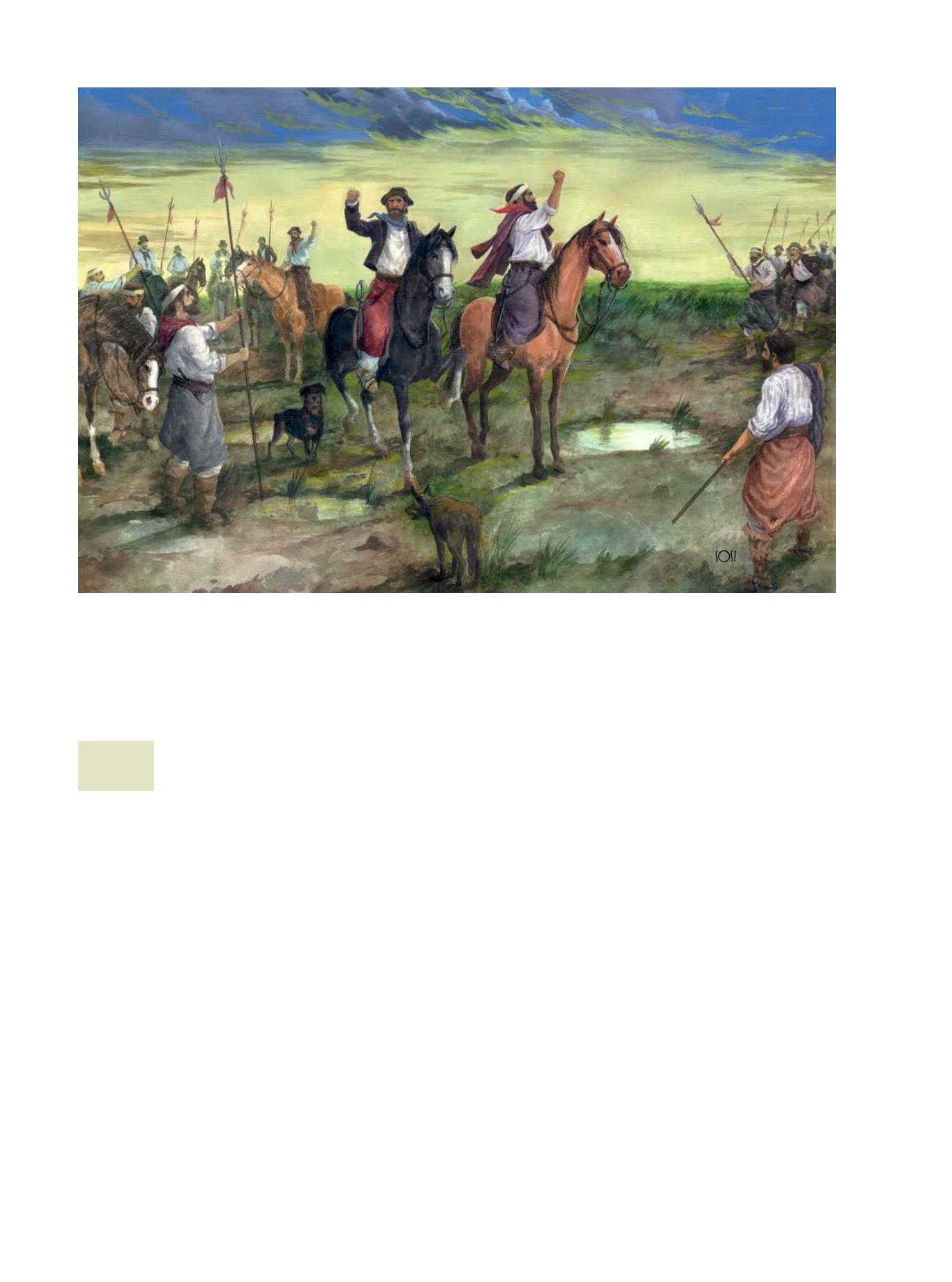
3.Durantegranparte
desuhistoriacolonial
temprana,Uruguayse
conocecomoBanda
Oriental./
Formuch
ofitsearlycolonial
history,uruguay
wasknownasBanda
Oriental.
3
Foto /
Photo
: FARM8 / CMSS / SSL / HOTELES DE MONTEVIDEO / FEDERICO CAIROLI / GETTYIMAGES / EDUARDO AMORIM