


 44 / 134

compás int • int compass
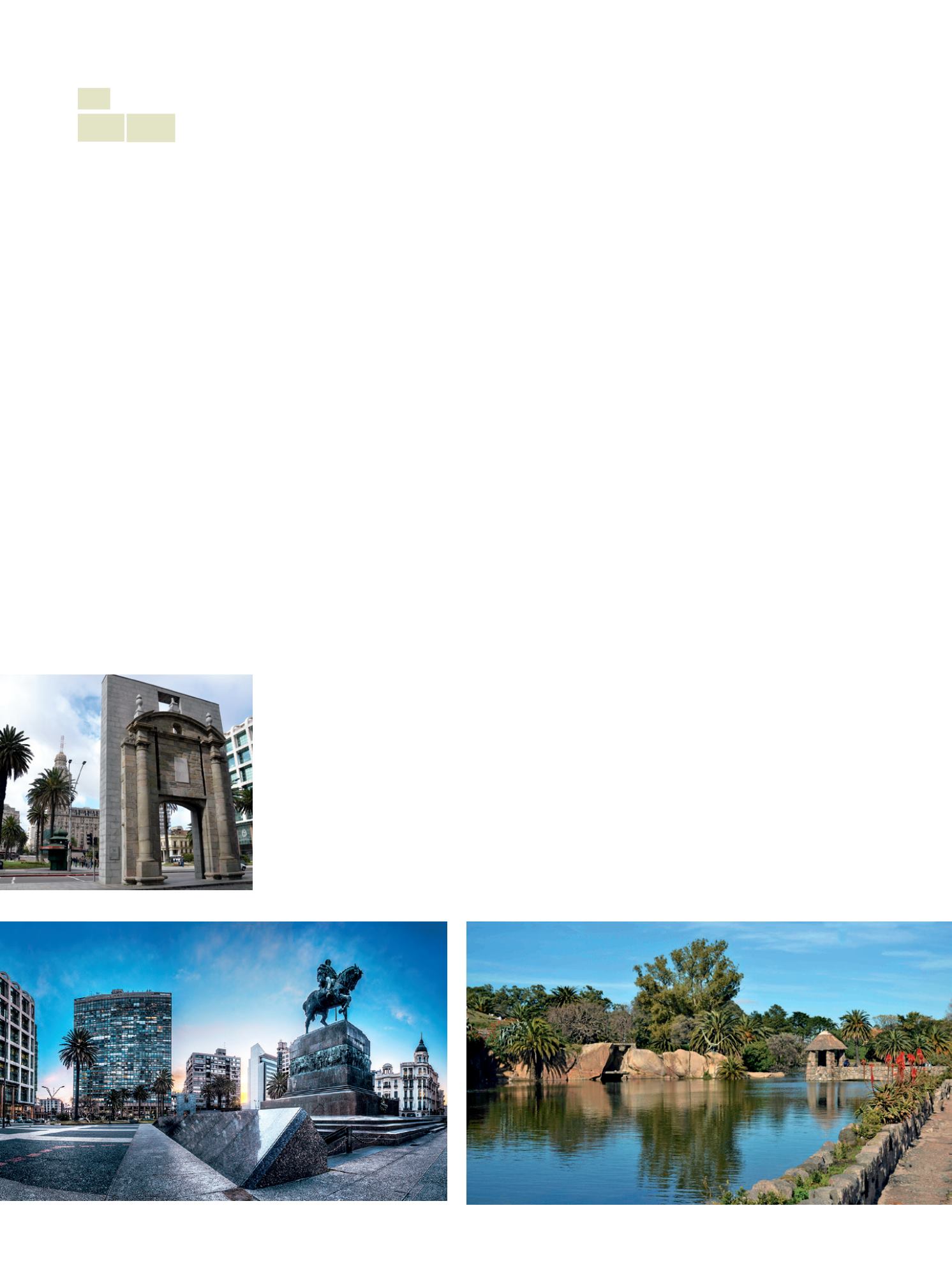
12.Puertade la
Ciudadela,elúltimo
vestigiode laantigua
Montevideo./
The
citadelgate,thelast
vestigeofancient
Montevideo.
13.Plazade la
Independenciaenel
centrode laciudad,
con laestatuadel
héroeuruguayo
JoséArtigas./
Independence
Squareinthecity
downtown,withthe
statueofuruguayan
heroJoseArtigas
.
14.ElParqueRodó
eseláreaverdemás
grandede laciudad;
tieneunasuperficiede
43ha./
RodóParkis
thelargestgreenarea
intown,withanarea
of43ha.
·amura·
40
La Puerta de la Ciudadela
The Gateway of the Citadel
En este punto se enlaza la Ciudad Vieja con el centro de
la ciudad; es la entrada original de la Ciudadela de Mon-
tevideo, erigida durante la dominación española, que
por entonces contaba con rastrillo y puente levadizo.
La puerta es lo único que se preserva del sitio histórico.
It connects the Old City to downtown; it served as the
original entryway of the Citadel of Montevideo, built
during the Spanish conquest. It initiallyhad a rake and
drawbridge.Thegatewayistheonlyaspectofitthathas
beenpreserved fromthis historical site.
This emblematic square was designed in 1836. In it,
the monument to the hero José Artigas is most promi-
nent—standing 17m tall and weighing 30t—along
with the Palace of Justice and the Artigas Mausoleum.
This is the natural seat for the official public acts in the
country since the late19thcentury.
Plaza Independencia
En 1836, se trazó esta simbólica plaza. Destaca en
su espacio el monumento al prócer José Artigas, que
tiene una altura total de 17 m y pesa 30 t; así como el
Palacio de Justicia junto con el Mausoleo de Artigas.
Es la sede natural de los actos públicos oficiales del
país desde fines del siglo XIX.
Plaza Independencia
Rodó Park
43ha make up this space, considered as a pivotal
part of the city. Here, it is possible to enjoy a great
variety of trees that surround the lake, to cruise on
pedal and rowing boats; its beautiful bridges offer
countless strolling options. There is also an
Amuse-
ment Park
for children‘s delight. In the
Summer
Theater
, between February and March of each year,
the official contest of the longest carnival of the
planet takes place—it lasts a month and a half. Af-
ter its inauguration in 1956, there have been count-
less international shows and artists on stage. We
also recommend a visit to
The National Museumof
Visual Arts
, which houses the largest public paint-
ing and sculpture collection in Uruguay.
Parque Rodó
43 ha conforman este espacio considerado como un
pulmón de la ciudad. En este lugar es posible admirar
una gran variedad de árboles que rodean el lago, realizar
paseos en lanchas a pedal y botes de remo; sus bellos
puentes ofrecen infinidad de senderos para caminar. Hay
un
Parque de Diversiones
para el deleite de los niños. En
el
Teatro de Verano
, entre febrero y marzo de cada año,
se celebra el concurso oficial del carnaval más largo del
planeta con unmes ymedio de duración. Tras su inaugu-
ración en 1956, se han presentado incontables espectá-
culos y artistas del mundo en su escenario. Además se
recomienda una visita al
El Museo Nacional de Artes Vi-
suales
, que alberga lamayor colección pública de pintura
y escultura de Uruguay.
12
13
14
Fo
to /
Photo
: CONDESTINOS SA / CMS / AARON PETERSON / PABLO JORDAN / GAUVIN LAPETOULE / BP