


 98 / 134

·amura·
94
11,12 y13.ElEdificio
Salvoeraelmásalto
enUruguaycuando
seconstruyó./
The
Salvo Building was
the tallest building
in Uruguay when it
was built.
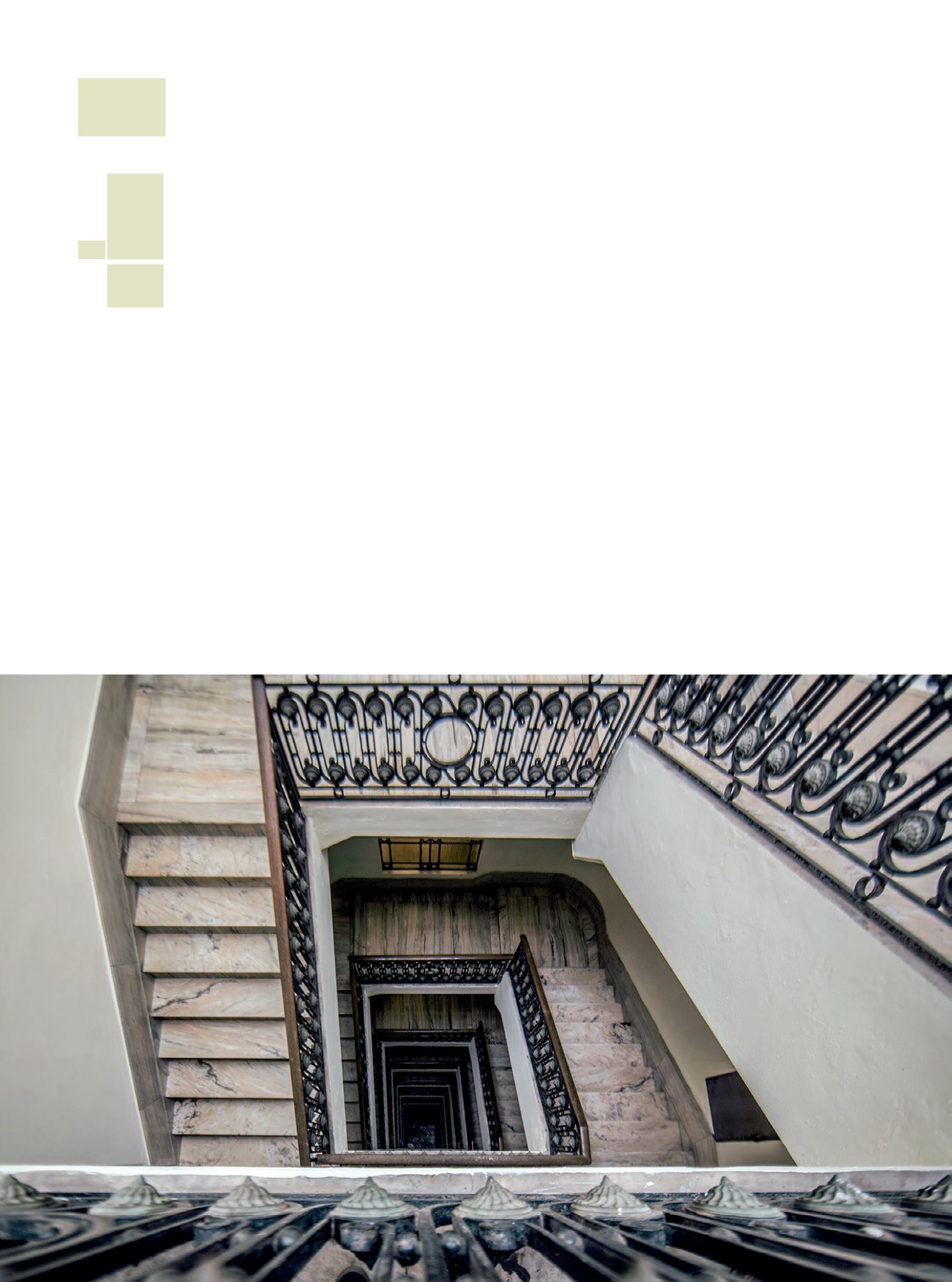
14.Lasestructuras
emanabanunsen-
tidodeverticalidad,
comoesvisibleenel
BazarMitre./
Struc-
tures emanated a
sense of verticality,
such as in the Mitre
Bazar.
Montevideo:
la ciudad del futuro
El Art Déco en Montevideo existe como un manifiesto
contra los sombríos remanentes de la Primera Guerra
Mundial –el glamour post-
Belle Époque
– y una visión
puesta en la próxima década. Los medios de comuni-
cación, el cine y el arte exportaron estas tendencias
que aspiran a ser una fuente de introspección, libera-
ción, interpretación y apreciación visual pura.
Los edificios, a diferencia de la cultura, conservan
las características de la época que representan. Las
personas que los habitan cambian y siguen nuevas
tendencias, por lo que las estructuras se convierten
en un monumento de su década o movimiento. En los
años 20 y 30, Uruguay invirtió en la creación de nue-
vos edificios que representaran riqueza y bienestar. A
pesar de que esta nueva prosperidad sólo duró desde
los años 20 hasta los años 40, las nuevas generaciones
pueden apreciar el testimonio que estas estructuras
ofrecen, la forma en que la arquitectura ha cambiado
y lo que tiene que decirles a los nuevos espectadores
ahora que el codiciado futuro ha llegado.
El Art Déco en Montevideo es en su mayoría inco-
loro, con diseños curvos y voluminosos. Encontramos
influencias clásicas donde las figuras mitológicas son
fuente de inspiración para las esculturas y grabados.
Ornamentos metálicos fueron introducidos para de-
corar fachadas e interiores. La geometría y la jerarquía
se implementaron en la forma y organización de cada
construcción, así como la iconografía, el trabajo en
madera y vitrales.
Montevideo:
The City of the Future
ArtDeco inMontevideoexistsasamanifestoagainst
the somber remnants of the First World War—the
post-
Belle Époque
glamour—and a vision set on the
next decade. The media, film, and art served as a
vessel to export these tendencies that aspire to be
a source of introspection, liberation, interpretation
and pure visual appreciation.
Buildings, unlike culture, retain the charac-
teristics of the epoch they represent. The people
who inhabit them change and follow new trends,
and thus structures become a monument of their
decade or movement. In the 20s and 30s, Uruguay
invested in the creation of new buildings that
represented wealth and wellbeing. Even though
this new-found prosperity only lasted from the
1920s to the 1940s, the new generations can still
appreciate the testimony these structures pro-
vide, the way architecture has changed and what
it has to say to new observers now that the long-
coveted future is here.
Art Deco in Montevideo is mostly colorless,
with curved and voluminous designs. We find
classical influences where mythological figures
are the source of inspiration for sculptures and
engravings. Metallic ornaments were introduced
to decorate façades and interiors. Geometry and
hierarchy was implemented in the shape and or-
ganization in every construction, as well as ico-
nography, wood work and stained glass.
11
12
13
14