·amura·
140
especies •
species
It is estimated that over 61% of the population
that lives in this bioma, includes over 20 000 species of
plants, 270 types of mammals, 992 bird categories, 197
reptile species, 372amphibious, and350kinds of fish.
Located in the “Parque Estadual das Fontes do
Ipiranga (PEFI)”, one of the most important remain-
ing fragments of the Atlantic forest in the city of
São Paulo, the zoo in conjunction with the Zoo Sa-
fari cover 20 streams of the historic Iparinga river
and is home of dozens of species of native wildlife.
Howlingmonkeys, sloths and birds wonder freely in
the 900 000 m
²
.
This portion of vegetation is so important,
that annually hundreds of migratory birds
use its flora and lakes as resting areas, to feed
and reproduce.
The FPZSP maintains the population of nearly
3,200 animals, represented by several species of
mammals, birds, reptiles amphibious and inver-
tebrates. Amongst them, rare species of the entire
world are located here, along with threatened kinds
of animals that are in danger of extinction. Such is
the case of the gavial of Malaysia, three out of four
species of the lion tamarin (black tamarin, lion head
tamarin, and golden lion tamarin), rhinoceros and
the wooly spider monkey, amongst others.
Se estima que más del 61% de la población vive
en este bioma, que incluye más de 20 000 especies de
plantas, 270 tipos de mamíferos, 992 categorías de
aves, 197 de reptiles, 372 de anfibios y 350 de peces.
Ubicados en el “Parque Estadual das Fontes do Ipi-
ranga (PEFI)”, uno de los más importantes fragmentos
restantes de la Mata Atlántica en la ciudad de São Pau-
lo, el Zoológico aunado a el Zoo Safari abarcan aproxi-
madamente 20 nacientes de la histórica corriente del
Ipiranga y es hogar de docenas de especies de la fau-
na nativa. Monos aulladores, osos perezosos y aves,
deambulan libremente en el área de 900.000 m
²
.
Esta porción de vegetación es tan importan-
te que anualmente, centenas de aves migratórias
usan su flora y lagos como áreas de descanso, ali-
mentación y reproducción.
La FPZSP mantiene una población de cerca de
3.200 animales, representados por numerosas
especies de mamíferos, aves, reptiles, anfibios e
invertebrados. Entre estos, se encuentran espe-
cies raras de todo el mundo y amenazadas de pe-
ligro de extinción, como es el caso del gavial de
la Malasia, tres de las cuatro especies de tití león
(tití león negro, tití león de cabeza dorada y el tití
león dorado), rinocerontes, mono araña lanudo,
entre otros.
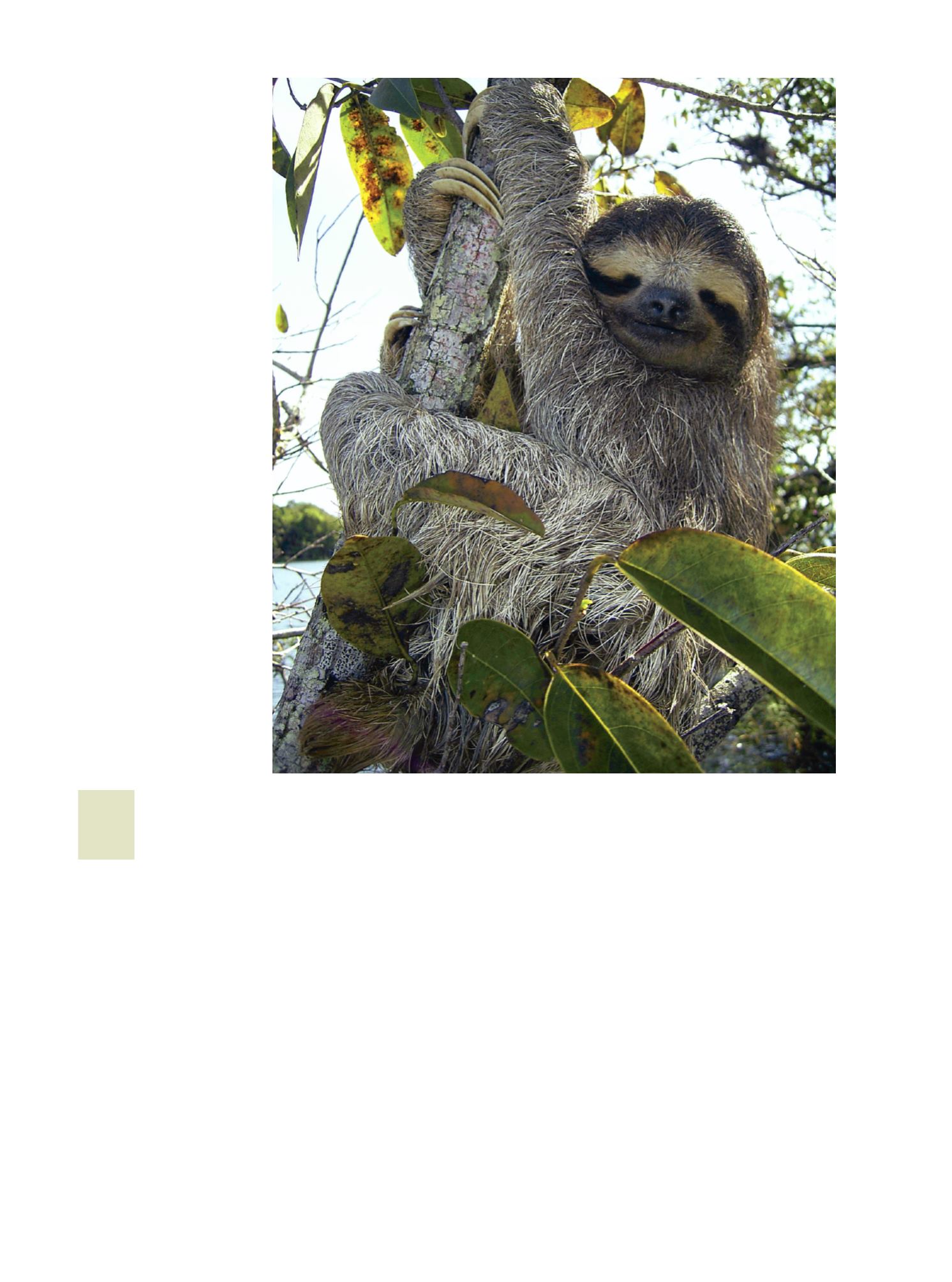
4. Osoperezosoes
unmamíferoque
viveen losbosques
deCentroamérica./
Sloth,mammelthat
livesinthewoodsof
CentralAmerica.
4


