·amura·
121
planeta azul •
blue planet
S
u alargada costa principal recuerda la geografía
de Chile: ambas se estiran a su máximo, como si
quisieran abarcar de un abrazo toda la belleza que
encierran sus mares. A diferencia del país sudamericano,
Croacia tiene además una buena extensión tierra aden-
tro, en su parte norte, donde se abre paso entre Eslove-
nia, Hungría, Bosnia Hezergovina -su mayor frontera- y
Yugoslavia. Esa combinación de mar y montaña permi-
te a su naturaleza ofrecer un turismo activo que abarca
desde el vuelo en planeador (glider) hasta el buceo en
aguas medias, pasando por esquí, navegación a vela,
pesca deportiva de superficie y submarina, canotaje, na-
vegación por rápidos en kajak o balsa (rafting) y buceo.
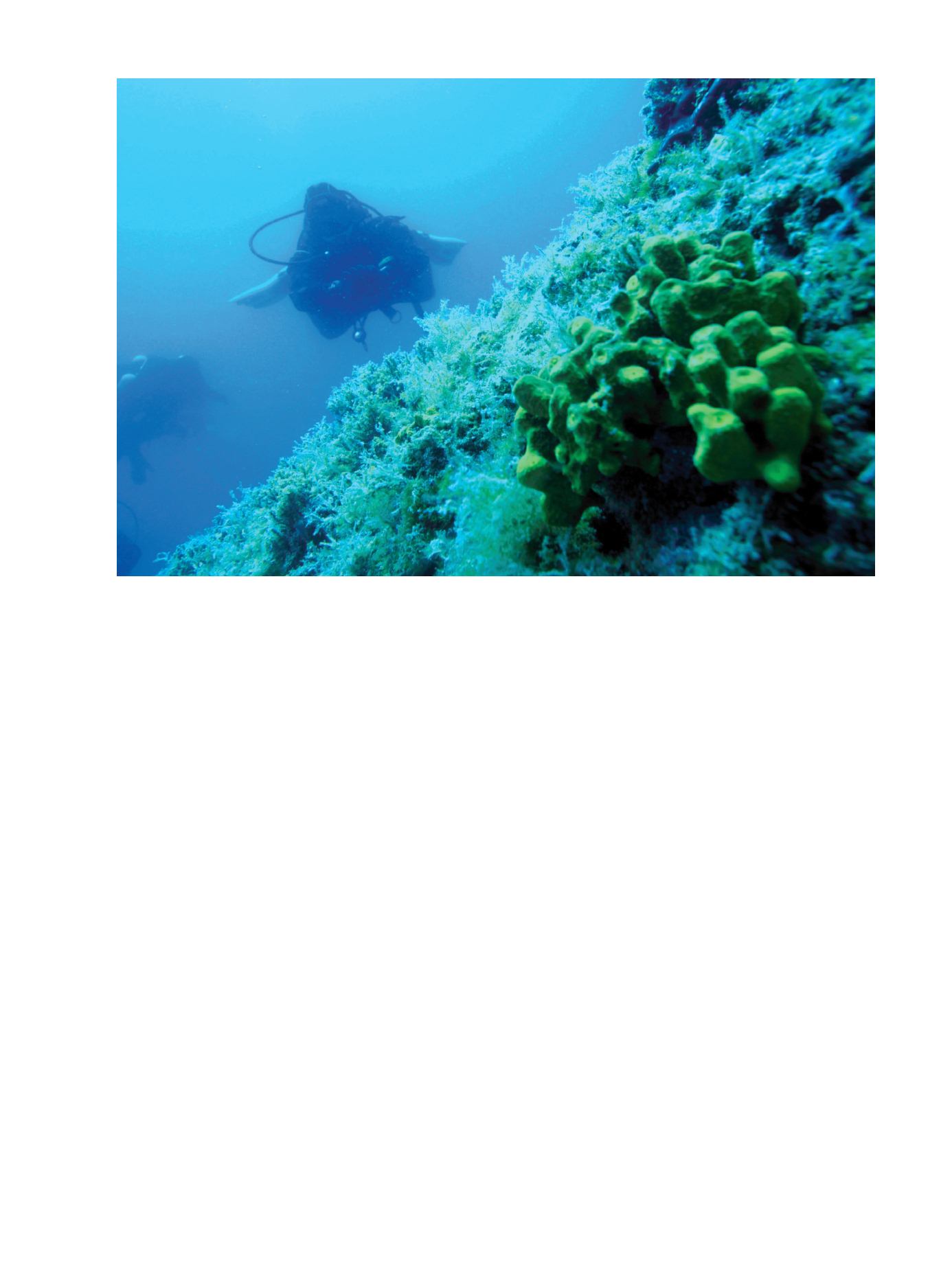
BAJO EL AGUA TURQUESA
Y si en la superficie encontramos un país plaga-
do de maravillas naturales, culturales y culinarias,
bajo el agua descubriremos bosques de gorgonias,
cuevas y, desde Istria hasta Dalmacia, barcos hun-
didos en distintas épocas al sortear este archi-
piélago tan largo como el país mismo. La mayoría
pueden verse sin mayor dificultad posados a pro-
fundidades que van entre los 20 y 40 metros.
Hay más de 140 centros de buceo con personal es-
pecializado, equipo y capacitación disponibles. Se dan
cursos de buceo deportivo en la variante de apnea (rete-
ner la respiración) y con tanque, tanto para principiantes
como para buzos experimentados, e inmersiones con
guías conocedores de estas aguas. Los requisitos para
practicar este deporte en un centro de buceo son un per-
miso internacional de submarinismo y el abono de unos
13 Euros (17 dólares) en cualquiera de estos centros.
La mejor época para bucear en Croacia es entre mayo
y octubre, cuando la temperatura es más agradable. Si la
inmersión llega a los30metros, la temperatura esdeunos
17
º
C durante todo el año. Las corrientes son otro factor a
I
ts elongated main coast reminds us of Chile’s
geography. Both are stretched to their maxi-
mum, as if an arm wanted to embrace the full
beauty of their seas. Unlike the South American
country, Croatia’s land spreads significantly in-
land to the north, where it adjoins with Slovenia,
Hungary, Bosnia Herzegovina (it’s largest bor-
der), and Yugoslavia. That combination of sea
and mountains, allows its nature to offer an ac-
tive tourism industry offering attractions rang-
ing from a glider flight to deep-sea diving, going
through skiing, sailing, fishing, boating, surfing in
kayak or raft rapids.
TURQUOISE UNDERWATER
If onthesurfacewefindacountryplaguedbynat-
ural cultural and culinary wonders, underwater we
will discover gorgonians forests and caves. Addition-
ally, from Istria to Dalmatia, we can see sunken ships
which struggled at different times getting round
this archipelago with a history as long as the coun-
try itself. Most of them can easily be seen perched at
depths ranging between 20 and 40meters.
In Croatia, there are more than 140 dive cen-
ters with specialized personnel, equipment and
training available. Diving courses are given with
the apnea variant (hold your breath) and with a
tank for both beginners and experienced divers.
The guides are well versed in these waters. The re-
quirements for enjoying this sport in a dive cen-
ter are an international diving license and a fee of
about 13 Euros ($ 17 USD).
The best time to scuba dive in Croatia is be-
tween May and October, when temperatures are
more pleasant. If immersion deepens 30 meters,
the temperature will be about 17 ° C throughout the


