46
·amura·
compás int •
compass int
that forms the Poike Peninsula and Ranau Kau,
to the southwest, with a height of 410 meters.
Small craters can be found all over the island,
such as Rano Raraku, where men carved the
Moai
stone statues, and Puna Pau, where the hats
(pukao) of the Moai were carved. The island rests
on amarine platformsome 50 to 60meters below
the surface of the sea, which terminates at a dis-
tance of 15 to 30 km where the ocean floor drops
from 1,800 to 3,600 meters in depth.
Rapa Nui is enigmatic for its culture where
Latin American and Polynesian traditions are
mixed. The history of how the first settlers
arrived on this remote island and how they sur-
vived on a piece of land covering a mere 117 km?
has never been revealed. What is certain is that
they came from Polynesia, from the Marquesas
Islands and they would have to have sailed for
months on end in very small boats.
How they survived that long voyage, taken
by the currents, has never been explained. Once
settled, they said about carving colossal figures,
the Moai, extracting them from the volcanic rock
and transporting them using a system of trunks
to the coast where they were erected on stone
platforms known as “ahu”.
The legends of Rapa Nui tell their version of
history, but we will never really know the truth.
The legends tell that “short-eared” men arrived
from the west and “long-eared” men from the
east, which could mean that they also arrived
Península de Poike, y Ranau Kau, al suroeste, con
410 m. Pequeños cráteres se reparten en la isla,
como Rano Raraku, donde los hombres tallaron
los
moai
, y Puna Pau, de donde sacaban los som-
breros (pukao) de los moai. La isla descansa sobre
una plataforma de 50 a 60 m bajo la superficie,
pero ésta termina a una distancia de 15 a 30 km,
y el piso del océano baja de 1,800 a 3,600 m.
Rapa Nui es enigmática por su cultura, donde
se mezclan tradiciones latinoamericanas y poli-
nesias. La historia nunca ha revelado cómo llega-
ron los primeros pobladores a esa isla tan remota
y cómo sobrevivieron sobre una tierra de sólo
117 kilómetros cuadrados. Lo que es seguro es
que venían de Polinesia, de las Islas Marquesas, y
tienen que haber navegado durante meses, en
pequeñas embarcaciones.
No se ha explicado cómo sobrevivieron en ese
largo viaje, llevados por las corrientes. Una vez
instalados se dedicaron a tallar figuras colosales,
los moai, extrayéndolos de la roca volcánica,
transportándolos, con un sistema que incluye
troncos, hacia la costa, donde los erguían sobre
plataformas de piedra llamadas ahu.
Las leyendas de Rapa Nui cuentan su versión
de la historia, pero nunca sabremos hasta dónde
se cuenta la realidad. Dicen que los hombres de
“orejas cortas” llegaron desde el oeste y los de
“orejas largas” desde el este, lo que puede signifi-
car que también llegaron desde Perú. Teoría que
quiso comprobar en 1955 el científico noruego
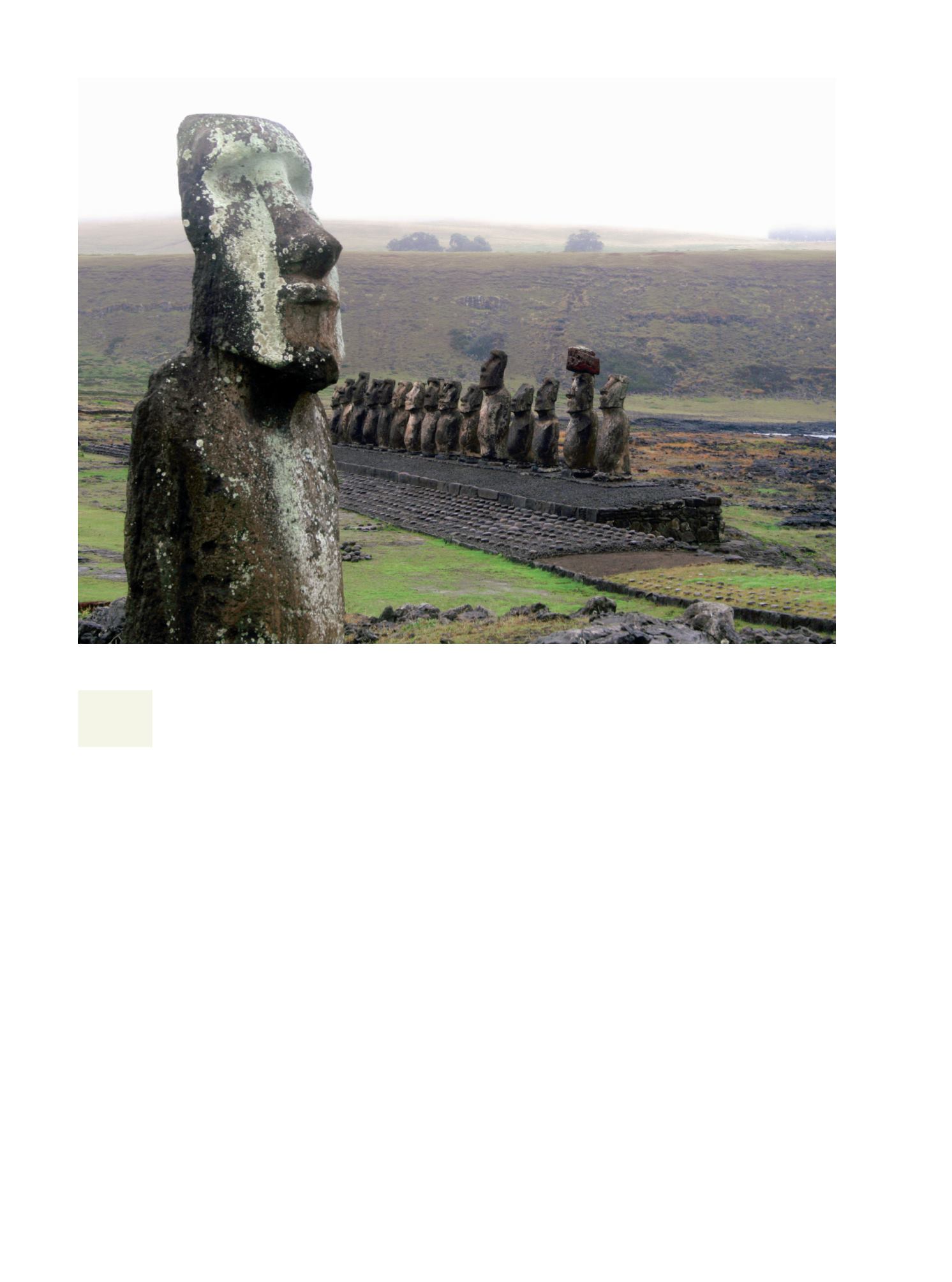
Hanga Tu Hata, un inmenso recinto
vigilado por el Moai, perdido entre
la neblina del invierno
Hanga Tu Hata, an immense
area watched over by the, lost
in the winter fog.


