·amura·
129
herencia cultural •
culture and heritage
S
in lugar a duda uno de los países más pequeños
y antiguos del Medio Oriente, heredero de la
mayor parte del territorio fenicio, limita al nor-
te y al este con Siria, al sur con Israel y al oeste con el
mar Mediterráneo.
Durante siglos, Líbano ha sido un país de con-
troversias, tanto políticas como religiosas, debido a
la diversidad de las diferentes etnias asentadas en
su territorio.
Podría relatar acerca de la situación política, o de
la enorme cantidad de bellezas y riquezas naturales,
pero no. Hoy, una caminata por las calles de Beirut, en
donde diferentes etnias conforman el paisaje huma-
no, dieron lugar a estas columnas, en donde trataré
brevemente de recorrer su historia a través de las et-
nias que más llamaron mi atención.
Comenzaré por los Drusos, quienes hoy en día
conforman el siete por ciento de la población libanesa
y quienes según las estadísticas, la gran mayoría de
sus integrantes se encuentran asentados en Beirut.
Los Drusos surgieron durante el siglo II, cuan-
do Al-Daraz y Hamzah Ibn-Ali llegaron al territorio
libanés, su ideología coincide con el Islam, figura
surgida de la filosofía griega y otras tradiciones,
en donde reconocen la autoridad de los libros
santos, desde la Torá hasta los Evangelios y el Co-
rán, pero rechazan que este último contenga el
dogma definitivo.
Los Drusos se consideran monoteístas y estrictos,
rechazan que Dios pueda describirse dotado de atri-
butos humanos, ellos creen en la reencarnación.
Algo que llamó mi atención fue el hecho de que
uno de los mandamientos de la religión Drusa es man-
tener ocultos sus dogmas y preceptos, por tal motivo
existe muy poca información sobre sus ritos.
La población Drusa está dividida en dos grupos,
los ignorantes (Yuhal) y los espirituales (Uqal), solo
estos últimos son conocedores de la teología Drusa.
Tanto hombres como mujeres pueden solicitar en-
trar al círculo de los Uqal, sin embargo, para ello de-
ben destacarse por llevar una vida moralmente recta
y pasar largos periodos de prueba, una vez admitidos,
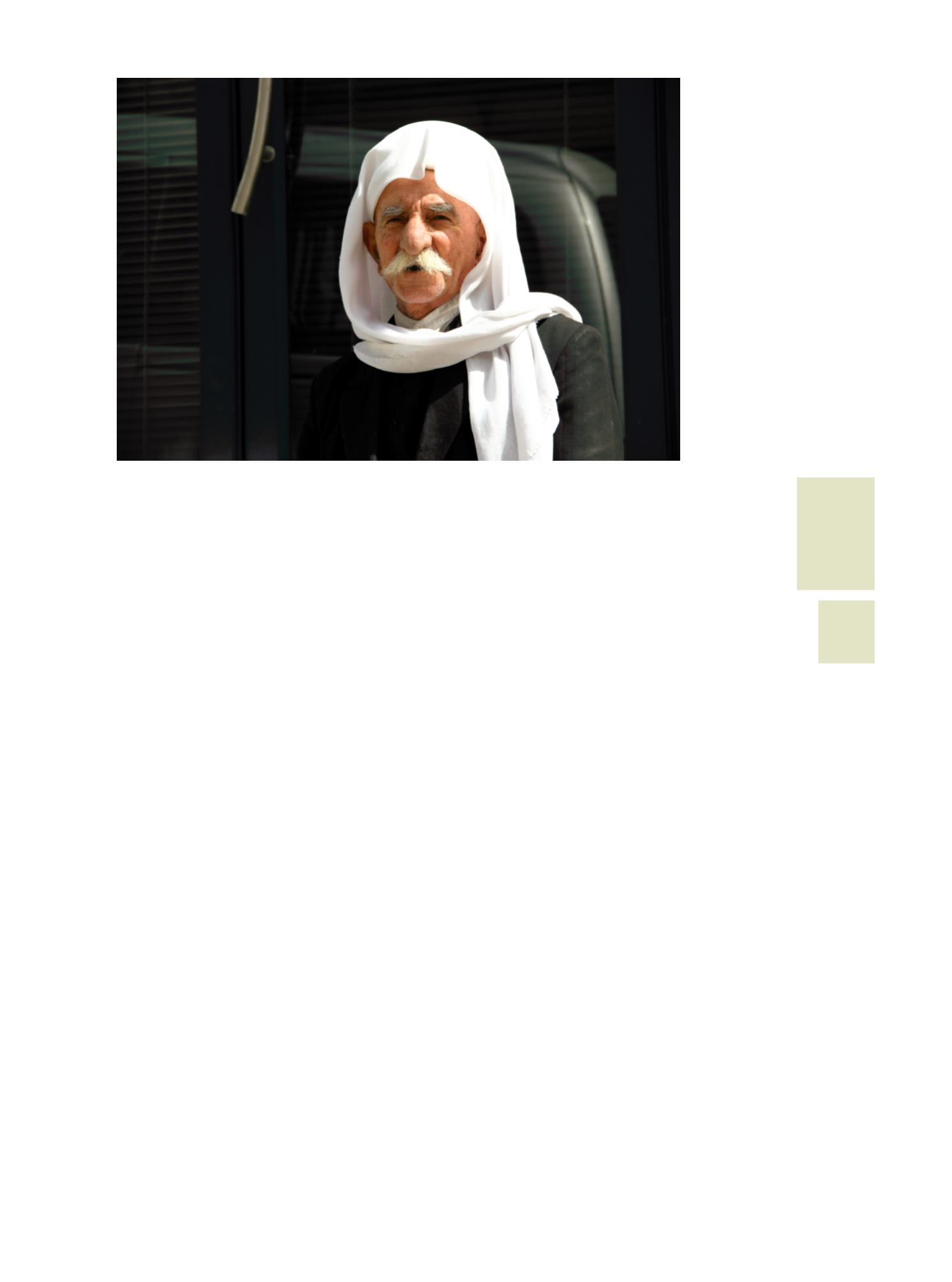
deberán llevar siempre ropa negra con un pesado tur-
bante blanco, en el caso de los hombres.
W
ithout a doubt, one of the most ancient
countries inthe far orient, heir of thegreat-
est part of the Phoenician territory, it lim-
its to the north and east with Syria, to the south with
Israel and to thewest with theMediterranean ocean.
For centuries Lebanon has been a country full
of controversies, both political and religious, due to
the diversity of different ethnics located amongst
its territory.
I could speak about the political situation or the
vast amount of beauty and natural richness, but no.
Today, a stroll through the streets of Beirut, were
different cultures create a human landscape, which
made way to these columns, where I will briefly try
to venture into its history through the ethnics that
called my attention.
I shall begin with the Dur
ū
z
ī
,
whom today con-
form seven percent of Lebanese population and
who, according to statistics, the majority of its inte-
grants reside in Beirut.
The Dur
ū
z
ī
emerged during the II century, when
Al-Daraz and Hamzah Ibn-Ali arrived into Lebanese
territory, its ideology coincides with the Islam, figure
that was born from the Greek philosophy and other
traditions, where the authorities of the sacred books
are acknowledged, from the Torah to the Gospels and
theKoran, but reject however that this lastmentioned
contains the definite dogma.
Dur
ū
z
ī
are considered a monotheist and strict
group, whom reject the idea of God having human
attributes, they believe in reincarnation.
Somethingwhichcaughtmyattentionwasthefact
thatoneofthecommandmentsoftheDur
ū
z
ī
religionis
tomaintainhiddenitsdogmasandprecepts,duetothis
reasonvery information regarding their raits exists.
Their population isdividedamongst twogroups,
the ignorant of Yuhal and the espiritual, Uqal, only
these last one are holders of the Dur
ū
z
ī
theology.
Men and women alikemay solicit to enter a Uqal
circle, however, in order for this to happen the can-
didates must stand out for leading a highly moral
life and spend a long period of probation, once ad-
mitted, they must always wear black clothes with a
heavy white turban, in the case of men.
1
1. Monjes Maronitas
de la Orden de San
Antonio.
/Maronite
monkscongregation
St.Anthony.
2. Fotografía de un
hombre espiritual
(Uqal) de la religión
drusa.
/ Photo of
druze spiritual
man (Uqal).
2


