·amura·
138
herencia cultural •
culture and heritage
The Alawites
TheAlawitesaredissentofShi’ismin theninthcen-
tury.TheybelieveinthedivinityofAliandritualsarenot
disclosed. Some are on the coast of Syria and northern
Lebanon.Whenother groupswere under pressure, they
assumedthe taqiyaKetmanor apretenseof religion.
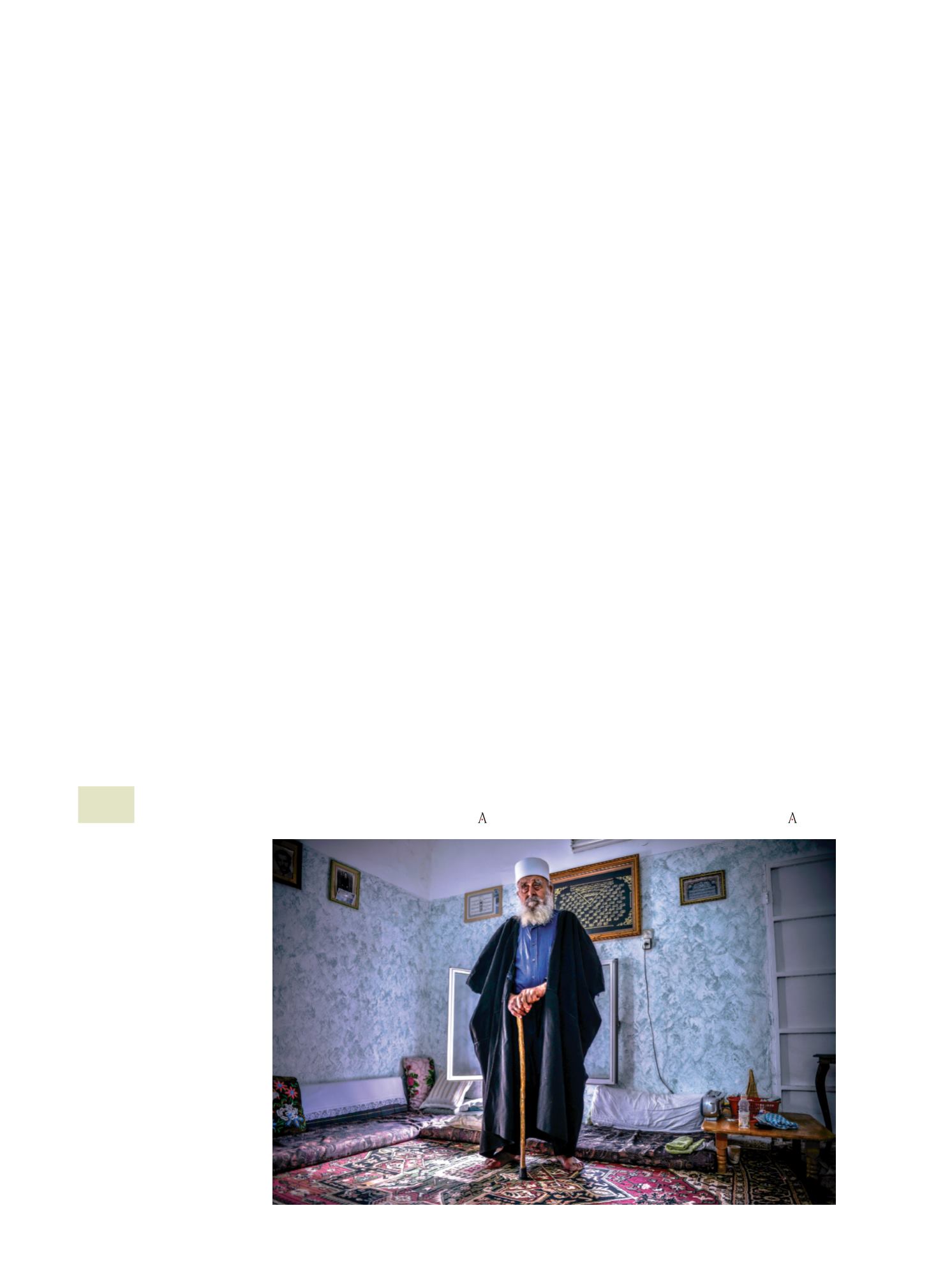
The Druzes
Islam, like Christianity, has had since its in-
ception serious splits. The first was given to the
group that would be called Chia ( Shiites ), then
the Ismailis, nuclei opposed by Sunnis , who make
up a majority of the Muslim Arab world. Follow-
ing the example of Christians who took refuge in
the heights fleeing persecution, especially from
the Jacobites, Monophysite church members from
Syria, reorganized in the sixth century by James
Baradai , who took their name. Dissident Druze
Muslims were from one country to another look-
ing for a land that harbored until they found in
the mountainous region of southern Lebanon. The
Druze were merged to gain control and visibility
south of the mountain.
The word Druze comes from the name of the Per-
sian thinker Muhammad Ben Ismail Al Darazi, secre-
tary of the sixth Fatimid caliph in Cairo , Biamr Allah
Al Hakim ( 977-1021 ). The Druze challenged this af-
filiation and rejected the teachings of the thinker,
calling them outrageous . They preferred to be called
Unionists, believers of one God who incarnated in
certain men, of which the base would be the Caliph
Al Hakim Allah Biamr. Explaining the various incar-
nations that God establishes, through them, a direct
relationship with men. According to their beliefs ,
God has incarnated more than ten times, but the in-
carnationwhich took place in the CaliphAl HakimAl-
lah Biamr was the most perfec . This caliph began his
duties at the age of 11 years and held the post for 18
more, until he was killed by a conspiracy hatched by
those who disapproved of their conduct. The Druze,
however, cast doubt on his death . They claim that he
disappeared voluntarily but will return in the time
chosen by the aura for a triumphant glory.
Los alauitas
Los alauitas disiden del chiismo en el siglo IX.
Creen en la divinidad de Alí y sus ritos no son divulga-
dos. Los hay en la costa de Siria y al norte de Líbano.
Cuando sufrieron presiones de otros grupos, asumían
el ketmán o la taqiya, un fingimiento en la religión.
Los Drusos
El Islam, al igual que el Cristianismo, tuvo desde
sus inicios graves escisiones. La primera se dio con el
grupo que recibiría el nombre de Chía (chiitas), y des-
pués los ismaelitas, núcleos combatidos por los suni-
tas, que integran a la mayoría musulmana del mundo
árabe. Siguiendo el ejemplo de los cristianos que se
refugiaron en las alturas huyendo de las persecucio-
nes, especialmente de los jacobitas, miembros de la
iglesia monofisita de Siria, reorganizada en el Siglo VI
por Jacobo Baradai, de quien tomaron su nombre. Los
disidentes musulmanes de la secta drusa fueron de un
país a otro buscando una tierra que los abrigara, hasta
que la encontraron en la zonamontañosameridional de
Líbano. Los drusos se fusionaron hasta lograr control y
notoriedad al sur de la cadena montañosa.
La palabra “druso”, proviene del nombre del pen-
sador persa Muhammad Ben Ismail Al Darazi, secreta-
rio del sexto califa fatimita de El Cairo, Al Hakim Biamr
Alláh (977-1021). Los drusos impugnaron esta filia-
ción y rechazaron las enseñanzas de su pensador, cali-
ficándolas de escandalosas. Prefirieron llamarse Unio-
nistas, creyentes de un solo Dios encarnado en ciertos
hombres, de los cuales el tronco sería el Califa Al Ha-
kim Biamr Alláh. Explican las diversas reencarnaciones
diciendo que Dios establece, por medio de ellas, una
relación directa con los hombres. Según sus creencias,
Dios se ha encarnado en más de diez ocasiones, pero
la que realizó en el Califa Al Hakim Biamr Alláh fue la
más perfecta. Este califa lo fue desde la edad de 11
años, ejerciendo el cargo por 18 más, hasta que murió
víctima de un complot urdido por los que no aproba-
ban su conducción. Los drusos, sin embargo, ponen
en duda su muerte. Afirman que desapareció volunta-
riamente pero que retornará en la hora escogida para
recibir triunfante la aureola de la gloria.
18
18. Anciano druso
en su vivienda. /
Druze oldman
at home.


