·amura·
131
herencia cultural •
culture and heritage
Otro dato curioso es que los alauitas no discuten
con ningún visitante los detalles de sus creencias, de
hecho un alauita común no sabe las enseñanzas de
su grupo.
Les platicaré ahora un poco de los Fatimíes, quie-
nes aparecieron en el Líbano aproximadamente en
980, haciendo gala de su brutalidad. El nombre “Fa-
tamíe” deriva del profeta Mahoma, pertenecientes
a la corriente Ismailí, dentro de la rama del Islam de
los Chiíes, a diferencia de otros, el ascenso fatimí en
cargos del Estado depende más del mérito que del li-
naje. El imperio creció y floreció bajo el mando de Ca-
lifa Al-Hakin, sin embargo, gradualmente el Califa fue
enloqueciendo al grado de ejecutar a cualquiera que
los desagradara y promulgó leyes arbitrarias como la
prohibición a trabajar de día, a dormir de noche, acabó
con la tolerancia hacia los cristianos y judíos, a quie-
nes obligó a usar ropas distintas para identificarlos.
Toca el turno a los Chiitas, quienes hoy en día con-
forman el 30% de la población libanesa, igualmente
que otras etnias su origen se remonta a Ali, primo y
yerno de Mahoma, consideran a sus descendientes los
verdaderos imanes de la tradición musulmana.
Las particularidades doctrinales de esta etnia son
que Dios no admite que el hombre camine hacia su
perdición, por ello envió a los profetas para guiarlos,
quienes deben de reunir una serie de características
que le hagan ser el hombre más perfecto, además, al
tener cierta investidura sobrenatural otorgada por
Dios, los chiitas consideran que el Corán tiene un
mensaje literal o esotérico, este sincretismo religioso
contrasta con el anhelo del Islammayoritario de man-
tenerse en su forma pura y original. Sin mezclarse con
otras ideologías y creencias.
Another curious fact is that the Alauitas do not
speak of their religious beliefs with any visitor, in
fact, an individual of the minority does not know
the teaching of his group.
The Fatimies, who appeared in Lebanon circa
980, were proud of their brutality. The name Fata-
mie comes from the Mohama. who belong to the Is-
maili current, inside the Islamic branch of the Chi-
is, unlike others, the rise in Fatimi State charges
depend on the merit rather than the lineage. The
empire grew and flourished under the command
of Califa Al-Hakin, however, the Califa gradually
became insane to the degree of executing any who
degraded them and created arbitrary laws such as
the prohibition of work being realized during the
day, or sleeping during the night, he ended the
tolerance of towards Jews and Christians, who he
forced to dress with identificatory clothes.
Now the turn of the Chii. Up to date they create the
thirty percent of the population in Lebanon, just like
other religions their origin is founded in Ali, cousin
and Son-in-law of Mohoma, they consider their de-
scendants the truemagnets of theMuslimtradition.
The doctrinal peculiarities of this ethnic are
that God does not allow men to walk into their
perdition, because of this, he sent the prophets to
guide them, who must own several characteristics
that make the man perfect, besides, by having cer-
tain supernatural investiture granted by God, the
Chii consider the Koran to have a literal or esoteric
massage, this religious syncretism contrasts with
the religious idea of themajority Islamof maintain-
ing its original and pure form. Without mixing ide-
ologies or beliefs.
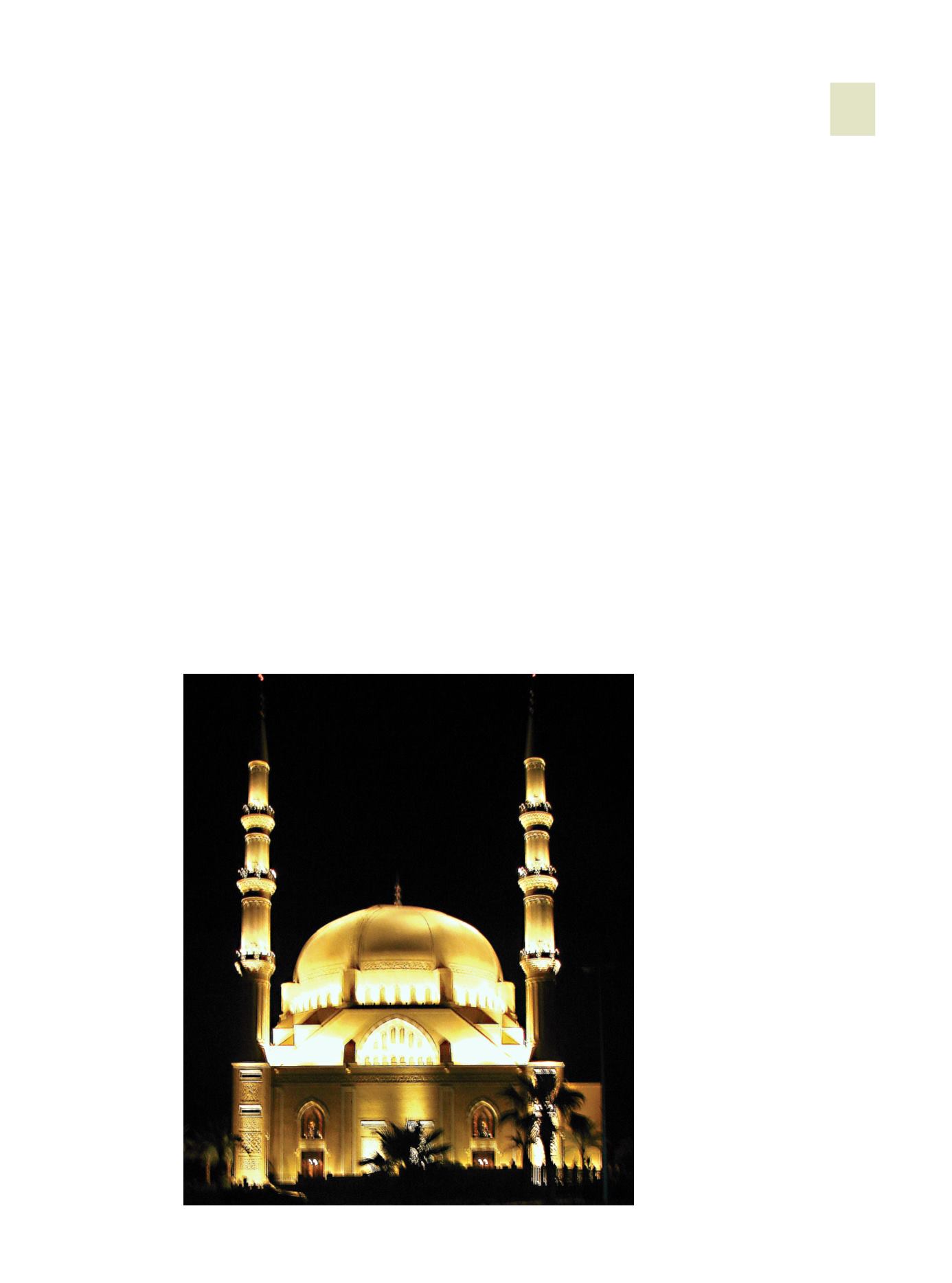
5. Gran mezquita
de Saida. /
Great
mosque of Saida.
5


