·amura·
61
compás int • int compass
El viajero que se dispone a realizar el recorrido del
Expreso Malgache debe estar consciente de que la
velocidad no importa y considerar que se trata de un
medio de transporte que es más histórico que moder-
no, pues resulta lento en su arranque.
Una vez en marcha, el tren se desliza lentamente
por los arrozales de las tierras altas; en algunas esta-
ciones las paradas se demoran más de una hora, pues
en los vagones de mercancías hay gran actividad: des-
cargan y cargan a mano –es sorprendente la gran can-
tidad de plátanos que se transportan–.
El ambiente alrededor es el característico de todas las
comunidades lejanas de los grandes distritos, pues los
pobladores se aglutinan a los costados del tren ofreciendo
susmercancías: frutas, bebidas, bocadillos, o en espera de
algún obsequio por parte del viajero.
En su marcha cuesta abajo, la máquina ahora sufre
para frenar, pero a cambio le regala a sus pasajeros una
magnífica vista de la selva y las llanuras cercanas al mar.
Poco a poco la locomotora se adentra en la jungla y en las
primeras paradas el tren suele llenarse de pasajeros loca-
les, principalmente; con el transcursodel recorrido irá per-
diendo pasajeros. Los últimos kilómetros del viaje, cerca
del aeropuerto, transcurren a la par de la puesta del sol, lo
que significa disfrutar de un colorido horizonte hasta en-
contrarse conManakara.
Para construir el ferrocarril se emplearon más de
5,000 obreros chinos, muchos de los cuales padecie-
ron de malaria y disentería, mermando la mano de
obra, lo que provocó que la construcción de la infraes-
tructura ferroviaria, que inició en 1925, tardara más
de 10 años en finalizar completamente; incluso hubo
quienes decían que jamás se conseguiría que el tren
atravesase la jungla.
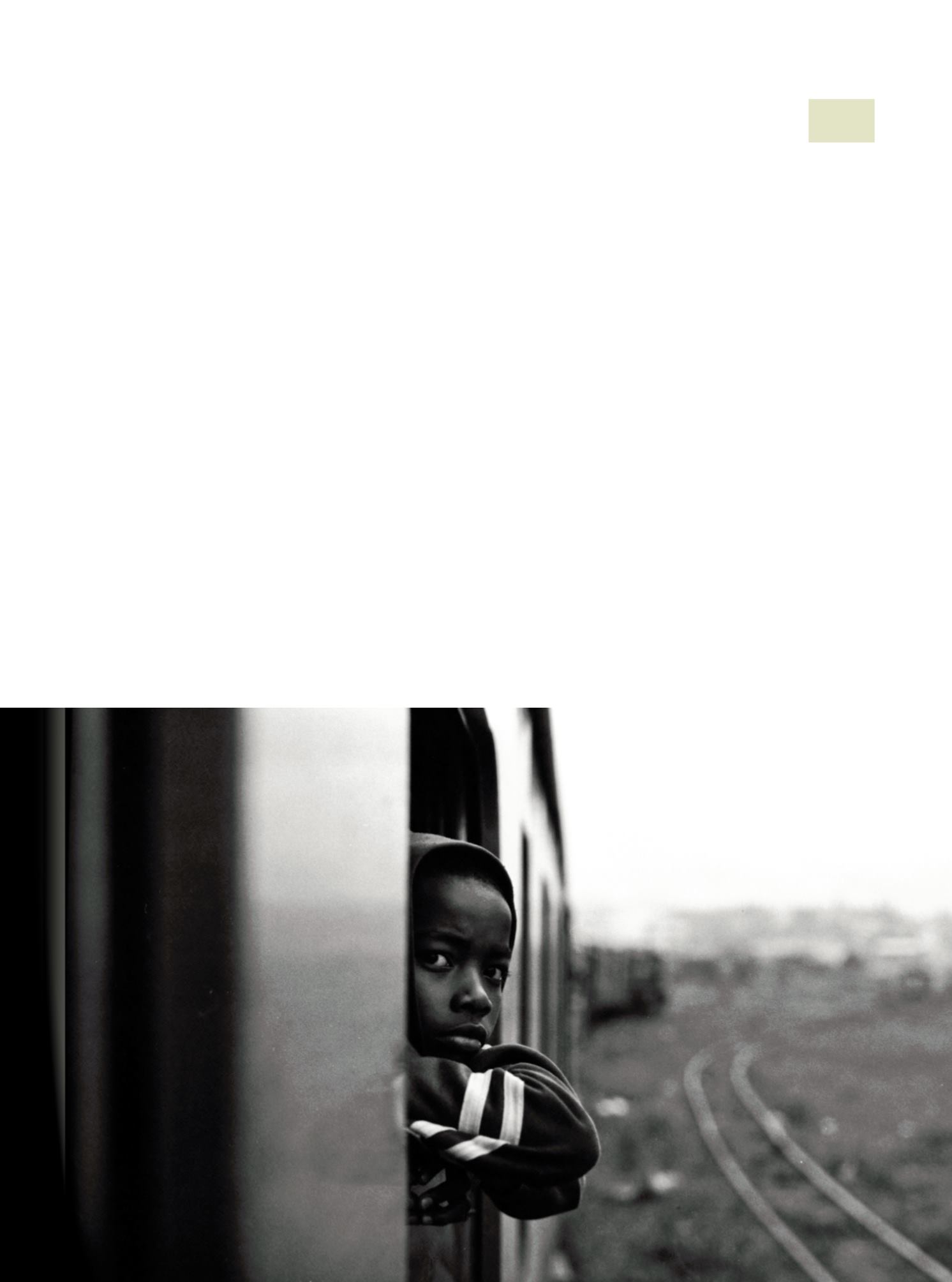
31.La infraestructura
ferroviariadeestetren
tardómásde10años
en lograrse. /
Railway
infrastructureofthis
traintookover10
yearstoachieve.
31
The traveler, ready to make the tour in the
Malagasy Express must be aware that the speed
does not matter, and consider that it is a more
historical than modern transportation means,
because its start is slow.
Once moving, the train slowly glides through
the high lands rice fields; in some stations the
stops last more than an hour for there is lots
of activity in the commodities wagons, load-
ing and unloading by hand, it is surprising the
number of bananas they move. The surround-
ing environment is characteristic of all commu-
nities that are far from the great districts: their
inhabitants crowd aside the train offering their
merchandises, fruits, drinks, snacks, or expect-
ing some gift from the traveler.
When going down, the locomotive now suffers
to brake but as an exchange it gives away a magnifi-
cent viewof the jungle and the plains near the sea to
its passengers. Little by little, the locomotive enters
the jungle, and in the first stops the train is used to
getting full of local passengers, mainly. Along the
run, it will be losing passengers. The last kilometers
of the trip, near the airport, occur simultaneously
with the sunset, which means to relish the colorful
horizon until arriving in Manakara.
In order to build the railroad, more than 5,000
Chinese workers were used; many of them suffered
from malaria and dysentery, dwindling the labor,
which provoked that the construction of the rail-
road infrastructure, started in 1925, lasted more
than 10 years to be finished entirely; even some
people used to say that it would never go through
the jungle.


