especies •
species
70
·amura·
Golfo de California y las Islas Marietas son la zona
de anidación más al sur dentro de su distribución en
Norteamérica. La especie es mundialmente conocida
por su presencia en el hemisferio sur, en las Islas
Galápagos. También anida y permanece en las Islas
Marietas todo el año el sula cuello oscuro (
Sula leu-
cogaster
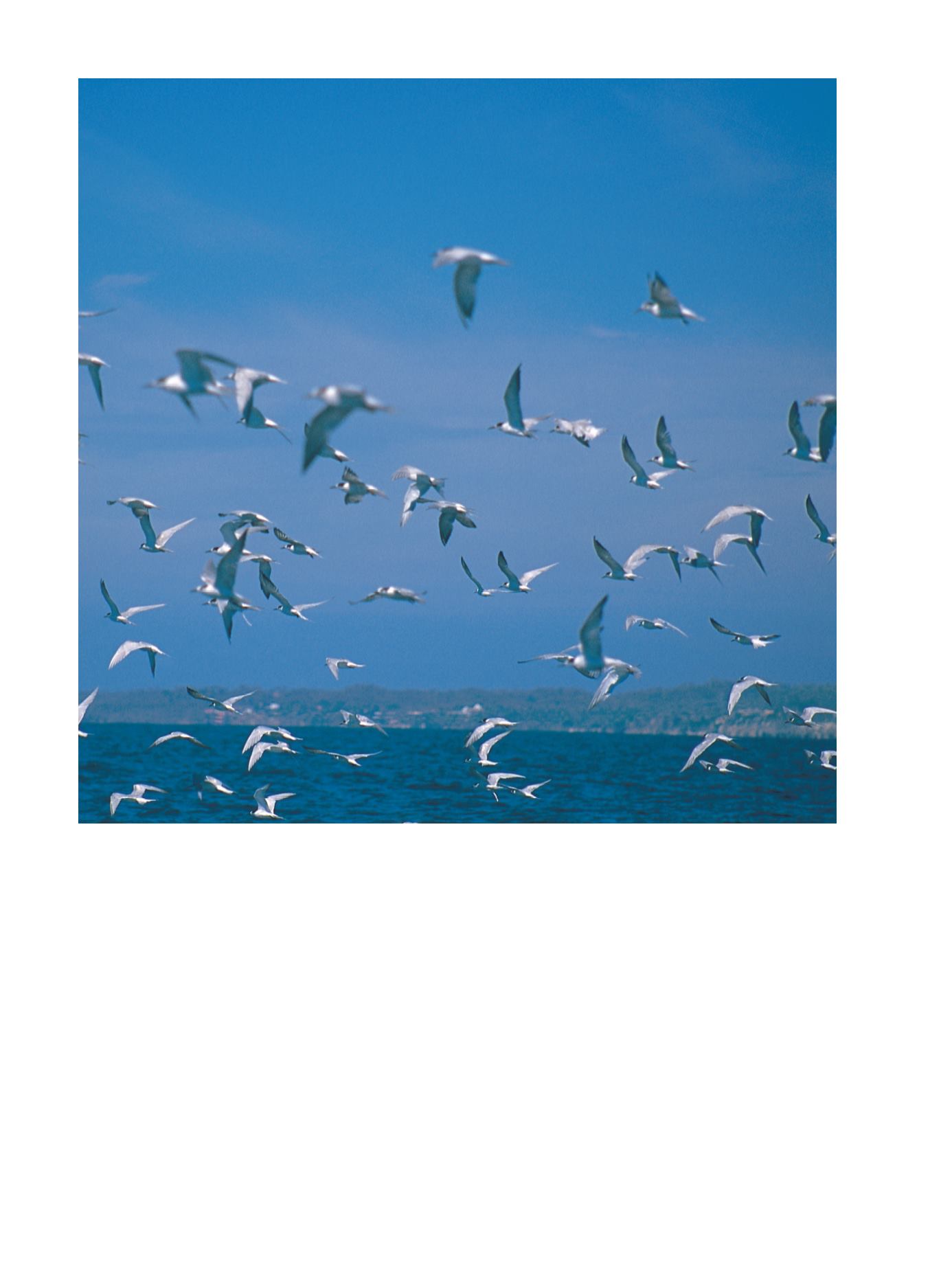
), ambas especies se alimentan de peces de
talla chica y mediana, y se los puede observar for-
mando parvadas sobre el océano y realizando clava-
dos espectaculares sobre los cardúmenes de peces.
Los sulas anidan en los pastizales durante el invierno
y a principios de primavera nacen sus polluelos,
éstos se observan comúnmente en los márgenes de
las islas mostrando su plumaje blanco y desordena-
do, lo que les da una apariencia vulnerable.
Hay algunas especies de aves que no anidan en
estas islas, sin embargo utilizan las aguas que las cir-
cundan como zona para alimentarse, algunas de ellas
son costeras, como las garzas azules, la garza de dedos
islands of the Gulf of California and the Marietas
Islands are the most southerly nesting site within
their distribution in North America. The species is
known the world over for its presence in the south-
ern hemisphere, in the Galapagos Islands. The
Brown Booby (
Sula leucogaster
) also nests and
resides on the Marietas Islands the whole year. Both
species feed on small and medium-sized fish and
they can be seen flying in formation over the sea
and diving spectacularly on banks of fish. The boo-
bies nest on the pastures during winter and their
chicks are born in early spring and can be often
observed at the edges of the islands showing the
white and ruffled plumage, which gives them a vul-
nerable appearance.
Some species do not nest on these islands;
however, they use the surrounding waters to feed.
Some of them are coastal, such as the Little Blue
Heron, the Snowy Egret and the Tricolored Heron,


