


 45 / 142

·amura·
43
compás int • int compass
El Mugam, alma
musical azerbaiyana
Con varios siglos de existencia, cuyos orígenes po-
drían estar en las oraciones y en las canciones de
cuna, transmitidas de generación en generación, es
una especie de culto musical, poético y filosófico con
sus raíces en el pasado pero constantemente enri-
quecido por formas musicales contemporáneas; su
estructura se basa en la improvisación, pero los tonos,
los acordes, los sonidos en general, están regulados
en siete modos y cada uno aporta un significado mu-
sical y emocional. Es otro de los tesoros culturales del
pueblo azerbaiyano, reconocido por la UNESCO. Al-
gunos de los instrumentos tradicionales que utilizan
son: el tar (un laúd con doble cuenco de madera) el ca-
mancha o Kamanché (instrumento de cuerdas que se
toca con arco), el doyra, daf o ghaval (instrumento de
percusión con sonajas) y la voz de los cantantes, lla-
mados jananda, que pueden ser hombres o mujeres.
La figura primordial de este género es Alim Qasimov,
nombrado "Tesoro Nacional Viviente de Azerbaiyán".
The Mugam, musical
soul of the Azeri
Centuries old, its origins lie in prayers and lul-
labies, passed down from generation to generation.
The Mugam is a species of musical cult, poetic and
philosophical. Its roots are set in the past but are
constantly enriched by the contemporary musical
forms. Its structure is based on improvisation, but
the tones, the chords, and the sound in general are
regulated by seven modes, each one contributing a
particular musical and emotional significance. This
is one of the cultural treasures of the Azeri people,
now recognized by the UNESCO. Some of the tradi-
tional instruments that they use are: the tar (a lute
with a double wooden basin), the kamancha, or ka-
manche (a string instrument that is played with a
bow), the doyra, the daf or ghaval (a percussion in-
strument with rattles), and the singer’s voice, called
jananda, which can be male or female. The foremost
figure in this genre is Alim Qasimov, named, “Na-
tional Living Treasure of Azerbaijan.”
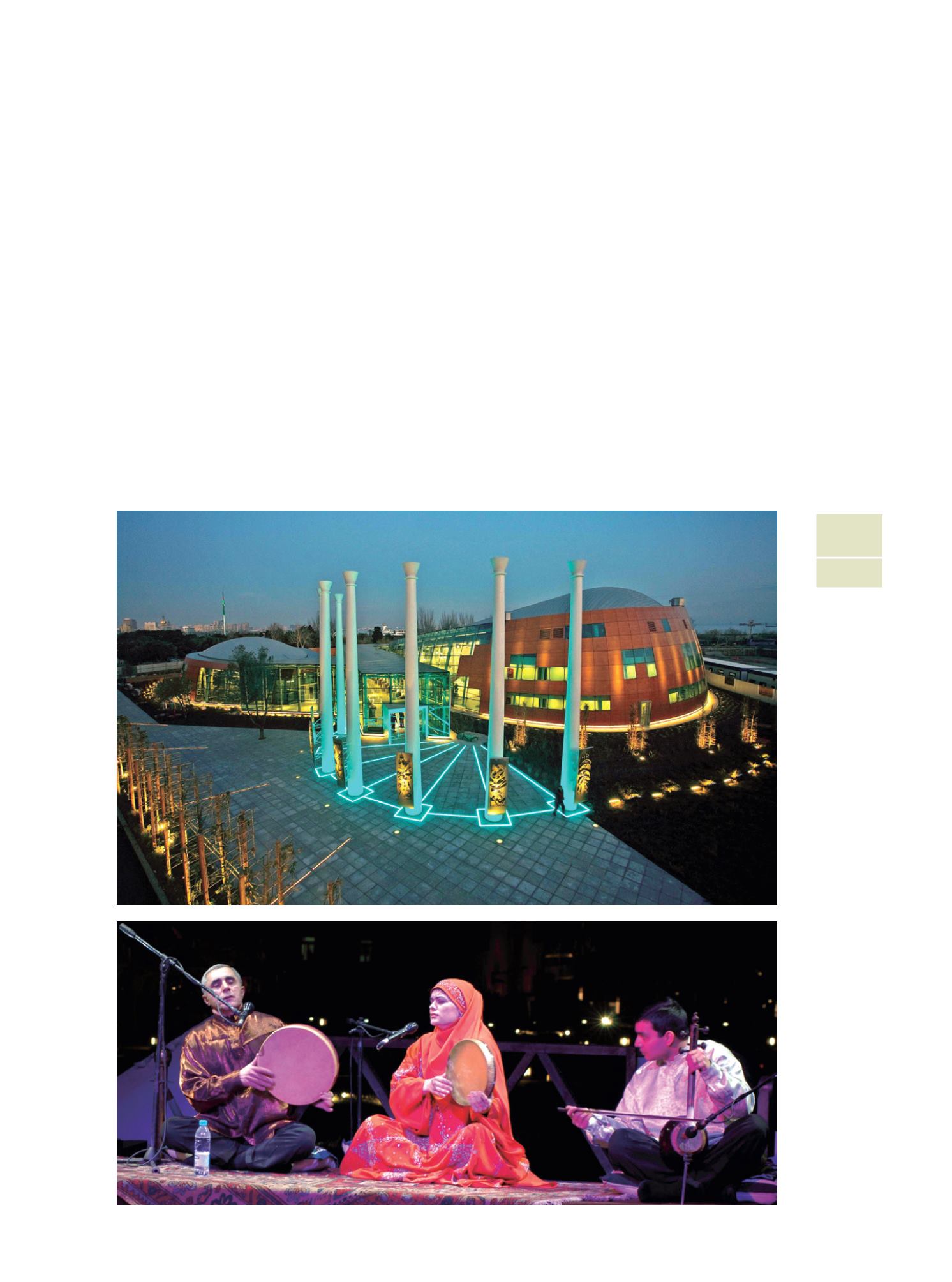
11.CentrodelMugam,
músicatradicional. /
BuildingofMugam
center,folkmusic.
12.Musicosde
Mugam,yAlim
Qasimov, "Tesoro
NacionalViviente"de
Azerbaiyán./
Mugam
musicians,andAlim
Qasimov,"Living
NationalTreasure"
ofAzerbaijan.
11
12
·amura·
43
compás int • int compass
El Muga , al a
usical azerbaiyana
Con varios siglos de existencia, cuyos orígenes po-
drían estar en las oraciones y en las canciones de
cuna, transm tidas de generación en generación, es
una especie de culto musical, poético y filosófico con
sus raíces en el pasado pero constantemente enri-
quecido por formas musicales contemporáneas; su
estructura se basa en la improvisación, pero los tonos,
los acordes, lo sonidos en general, están regulados
en siete modos y cada uno aporta un significado mu-
sical y emocional. Es otro de los tes ros culturales del
pueblo azerbaiyano, reconocido por la UNESCO. Al-
gunos de los instrumentos trad cionales que utilizan
son: el tar (un laúd con doble cuenco de madera) el ca-
mancha o Kamanché (instrumento de cuerdas que se
toca con arco), el doyra, daf o ghaval (instrumento de
percusión con son jas) y la voz de los cantantes, lla-
mados jananda, que pueden ser hombres o muj res.
La figura primordial d este género es Alim Qasimov,
nombrado "Tes ro Nacional Viviente de Azerbaiyán".
T e
ga ,
sical
so l of t e Azeri
Centuries old, its origins lie in prayers and lul-
labies, pa se down from generation to generation.
The Mugam is a species of musical cult, poetic and
philosophical. Its r ots are set in the past but are
constantly enriched by the contemporary musical
forms. Its structure is based on improvisation, but
the tones, the chords, and the sound in general are
regulated by seven modes, each one contributing a
particular musical and emotional sign ficance. This
is one of the cultural treasures of the Azeri people,
now recognized by the UNESCO. Some of the tradi-
tional instruments tha they use are: the tar (a lute
with a double w oden basin), the kamancha, or ka-
manche (a string instrumen that is played with a
bow), the doyra, the daf or ghaval (a percu sion in-
strument with rattles), and the singer’s voice, called
jananda, which can be male or female. The foremost
figure in this genre is Alim Qasimov, named, “Na-
tional Living Treasure of Azerbaijan.”
11.CentrodelMugam,
músicatradicional. /
BuildingofMugam
center,folkmusic.
12.Musicosde
Mugam,yAlim
Qasimov, "Tes ro
NacionalViviente"de
Azerbaiyán./
Mugam
musicians,andAlim
Qasimov,"Living
NationalTreasure"
ofAzerb ijan.
11
12