



 42 / 142

·amura·
40
Foto /
Photo
: © BAZRUH /
© JACKMALIPAN / © SADIK GÜLEÇ / NATIONAL GEOGRAPHIC / ELNIR / AD / CLEO SAMS / RA / ASD
Petróleo,
la savia del planeta
Azerbaiyán, es una inmemorial región productora de
petróleo, fue en esta zona durante el año 1847 cuando
por primera vez en el mundo, se perforaron pozos para
extraer el combustible. En la actualidad conserva 6 billo-
nes de barriles de depósitos probados y existencias en
el Mar Caspio no explotadas. Las reservas de gas natural
son de aproximadamente 2.5 trillones de pies cúbicos.
Impulsado por la producción y exportación de hidrocar-
buros, entre 2003 y 2014 Azerbaiyán creció anualmente
14%, como ningún otro país a nivel mundial en el mismo
periodo, y la renta per cápita pasó de 900USD en el 2003
a 8,000 USD durante el año 2012.
El proceso biológico que dio lugar al “oro negro”
comenzó hace 200 millones de años, mucho antes de
la existencia del Hombre en el planeta; si bien el pe-
tróleo ha traído beneficios energéticos, laborales, de
crecimiento económico, en contraste, ha creado peli-
gros ecológicos irreparables, e influye en situaciones
de tensión geopolítica.
En el contexto actual de crisis en la industria, de
acuerdo con la OPEP (Organización de Países Exporta-
dores de Petróleo) la baja del precio en el último año,
se debe al aumento de los inventarios internaciona-
les. El petróleo sigue siendo la fuente energética mun-
dial predominante, a pesar de los incipientes esfuer-
zos por incrementar la oferta de energías renovables.
Petroleum, the sap of
the planet
Azerbaijan a petroleum-producing region since
time immemorial, became the first region the globe
to be drilled in 1847, when wells were set up to ex-
tract fuel. Currently, there are 1.2 million oil re-
serves and numerous unexploited oil deposits in
the Caspian Sea. Natural gas reserves cover an area
of approximately 4.4 billion cubic feet. Between
2003 and 2004, propelled by hydrocarbon produc-
tion and exports, Azerbaijan's economy grew an-
nually by 14%, unlike any other country during the
same period. Rent per capita increased from 900
USD in 2003, to 8,000 USD in 2012.
The biological process that paved the way for
“black gold” began some 200 million years ago,
long before the existence of humans in this planet.
Although petroleum has benefited the energy and
labor sectors as well economic growth, it has also
created irreparable ecological dangers, and directly
contributes to geopolitical tensions.
In the context of the current industry crisis,
OPEC (Organization of Petroleum Exporting Coun-
tries) cites that lower prices this year are due to
the rise of international reserves. Petroleum is
still the predominant global energy source, de-
spite incipient efforts to increment sustainable
energy offers.
8
9
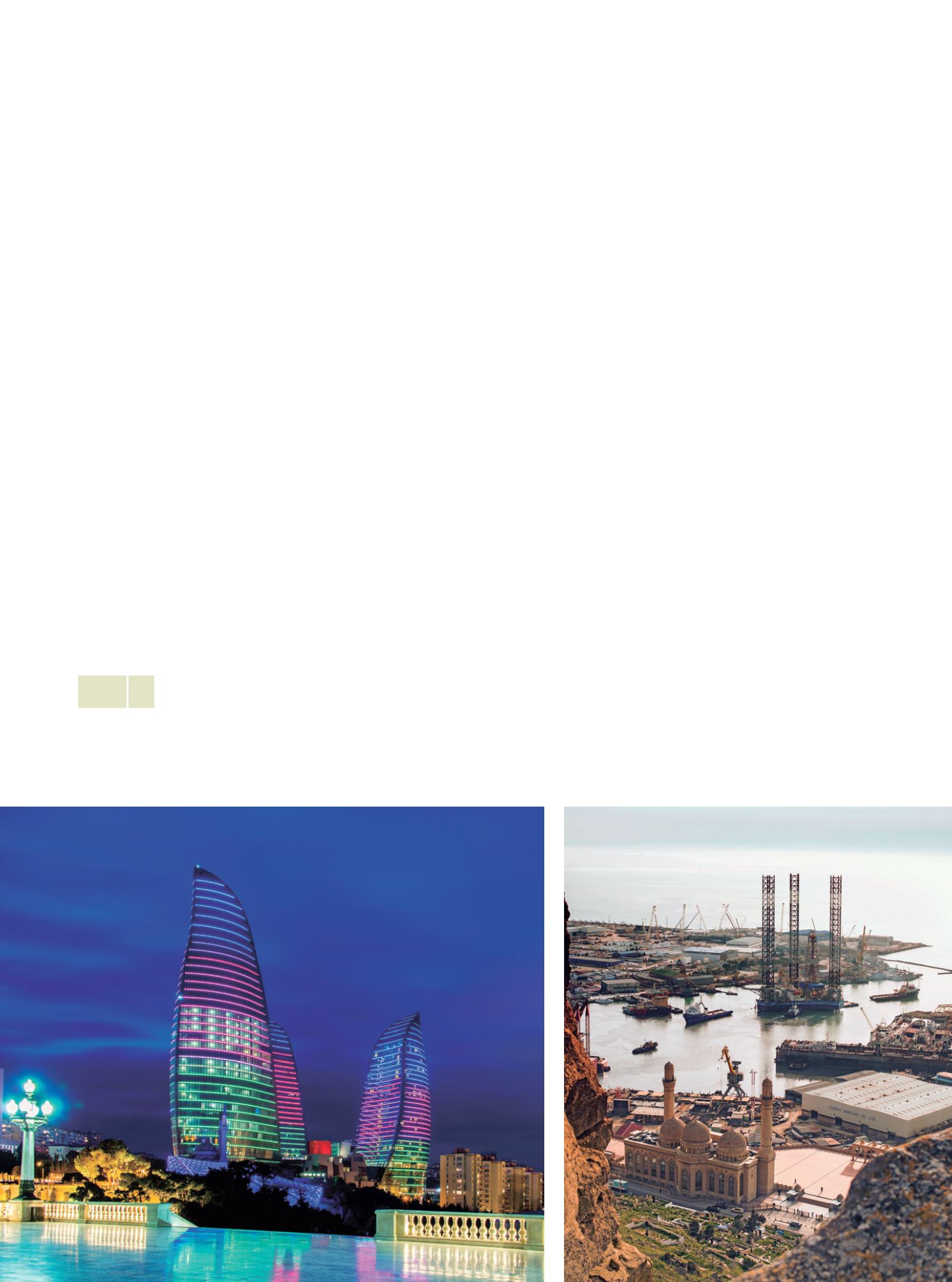
8.Lastorres llama,
nuevosrascacielos
enBakú,/
The
FlamesTower,new
skyscrapersinBaku.
9.MezquitaBibi
Heydatcercadetorres
deperforaciónde
petróleoenelpuerto
deBakú. /
BibiHeybat
Mosquenearoil
derricksontheport
ofBaku.
Foto /
Photo
: © BAZRUH /
© JACKMALIPAN / © SADIK GÜLEÇ / NATIONAL GEOGRAPHIC / ELNIR / AD / CLEO SAMS / RA / ASD