64
·amura·
compás int •
compass int
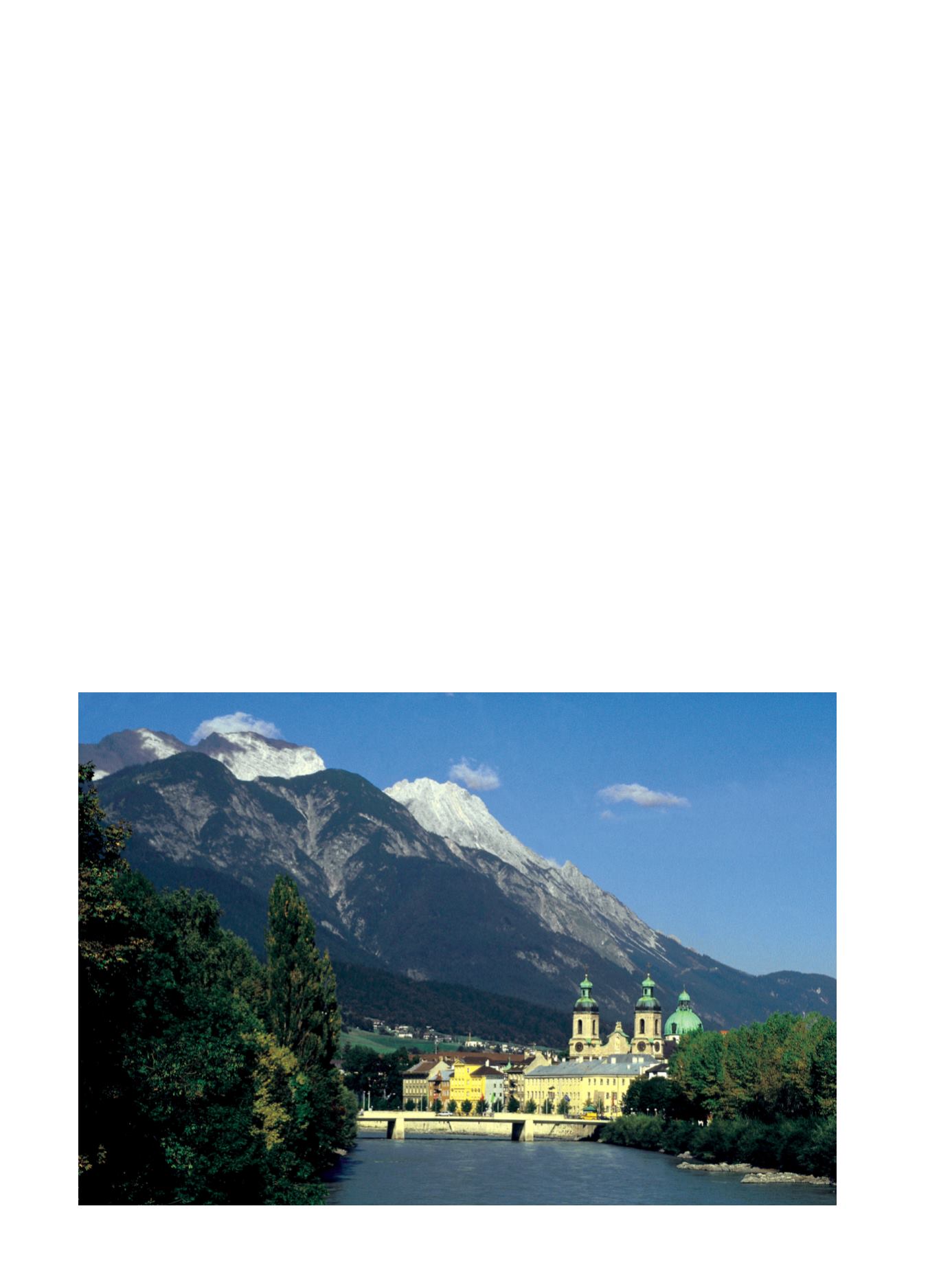
winter sports. The city also counts with a medieval
historic center with real architectural jewels and
modern commercial galleries.
The first historical references to the zone of the
Inngoback to the IV th century, inwhich theRomans
chose this place to establish a strategic military
point among its settlements. The first documents
referred to Innsbruck date from the year 1187
(“Insprucke” for
Inn
and
Brücke
, that means bridge).
The settlement converted in an important crossing
point of the Inn River. Then, the route through the
Passo of the Brennero was the greatest transporta-
tion and communications link between the north
and the southand the simplestway to cross theAlps.
The city generated incomes since it became a cross-
ing site, whichproduced a development for the pros-
perity of the same one. From it’s founding as a
thriving city and strategically located, the history of
Innsbruck was linked to great celebrities. The first
figure connected to the city was that of the duke
Frederic IV, of the family of the Habsburg, who in
1420 takes residency in this city and orders to build
some of its most acknowledged constructions. One
of them is nowadays one of the most representative
monuments of Innsbruck, the Goldenness Dachl or
“shed of gold”, built between 1497 and 1500.
The emperor Maximilian I of Habsburg (1459-
1519), son of the emperor Frederic III and Leonor of
Portugal, ordered to construct several monuments n
Innsbruck, place towhich theywent frequently togo
hunting, to go fishing and explore the mountains.
The chapel located in he cave of theMartiswand rock
recalls his passion for the hunt. The legend tells that
the emperor got lost by the Martiswand rock during
a hunting party. Nowadays is possible to visit one of
the mausoleums of Maximilian I inside the main
un centro histórico medieval con verdaderas joyas de
arquitectura y modernas galerías comerciales.
Las primeras referencias históricas a la zona del
Inn se remontan al siglo IV, en el cual los romanos eli-
gieron este sitio para establecer un punto militar
estratégico entre sus asentamientos. Los primeros
documentos referidos a Innsbruck datan del año
1187 (“Insprucke” de
Inn
y
Brücke
, que significa
puente). El asentamiento se convirtió en un impor-
tante punto de cruce del río Inn. Entonces, la ruta a
través del Passo del Brennero fue el mayor vínculo de
transporte y comunicaciones entre el norte y el sur y
el camino más sencillo para atravesar los Alpes. La
ciudad generaba ingresos ya que se convirtió en un
lugar de paso, lo que produjo un desarrollo para la
prosperidad de la misma. A partir de su instauración
como una ciudad próspera y estratégicamente situa-
da, la historia de Innsbruck estuvo vinculada a gran-
des personajes. La primera figura ligada a la ciudad
fue la del duque Federico IV, de la familia de los
Habsburgo, quien en 1420 toma residencia en esta
ciudad y manda a edificar algunas de sus construc-
ciones más conocidas. Uno de ellos es hoy día uno de
los monumentos más representativos de Innsbruck,
el Goldenes Dachl o “tejadillo de oro”, construido
entre 1497 y 1500.
El emperador Maximiliano I de Habsburgo (1459-
1519), hijo del emperador Federico III y Leonor de
Portugal, mandó a construir varios monumentos en
Innsbruck, lugar al que acudía frecuentemente para
ir de caza, ir de pesca y explorar las montañas. La
capilla situada en la gruta de la roca Martinswand
recuerda su pasión por la caza. Cuenta la leyenda que
el emperador se perdió por la roca Martinswand
durante una partida de caza. Hoy en día es posible
visitar uno de los mausoleos de Maximiliano I dentro


