·amura·
94
especies •
species
Behavior and customs
They are used to living in little though tight fam-
ily groups, of about 15 to 20 members. The fam-
ily heads are the females, which are the ones to
decide where to go or where to rest, having pre-
cedence to feed. Moreover, some of these groups
are formed only by females and their litters, since
they already have expelled all the males.
Differences between sexes are negligible, thus
being very difficult to distinguish them; in fact,
they are the only primate species in which both
are so similar to each other. They live over the
trees part time, and their ways to communicate
are extremely interesting. Every group or fam-
ily has got peculiar sounds to communicate with
each other, as if it were group slang.
Comportamiento y costumbres
Suelenvivir engrupos familiarespequeños, peromuyuni-
dos, de 15 a 20 miembros aproximadamente. Los líderes
de estas familias son las hembras, son ellas quienes deci-
denadónde ir odóndedescansar, además tienenprioridad
a la hora de alimentarse. Algunos de estos grupos están
formados exclusivamente por las hembras y sus crías, ya
que éstas han expulsado a todos losmachos.
Las diferencias entre ambos sexos son mínimas,
por lo que es muy difícil distinguirlos; de hecho, es la
única especie de primates en la que ambos son tan si-
milares. Viven la mayor parte del tiempo en los árboles
y las formas en que se comunican son por demás inte-
resantes; cada grupo o familia posee sonidos especí-
ficos para comunicarse entre sí, como si se tratara de
una jerga grupal.
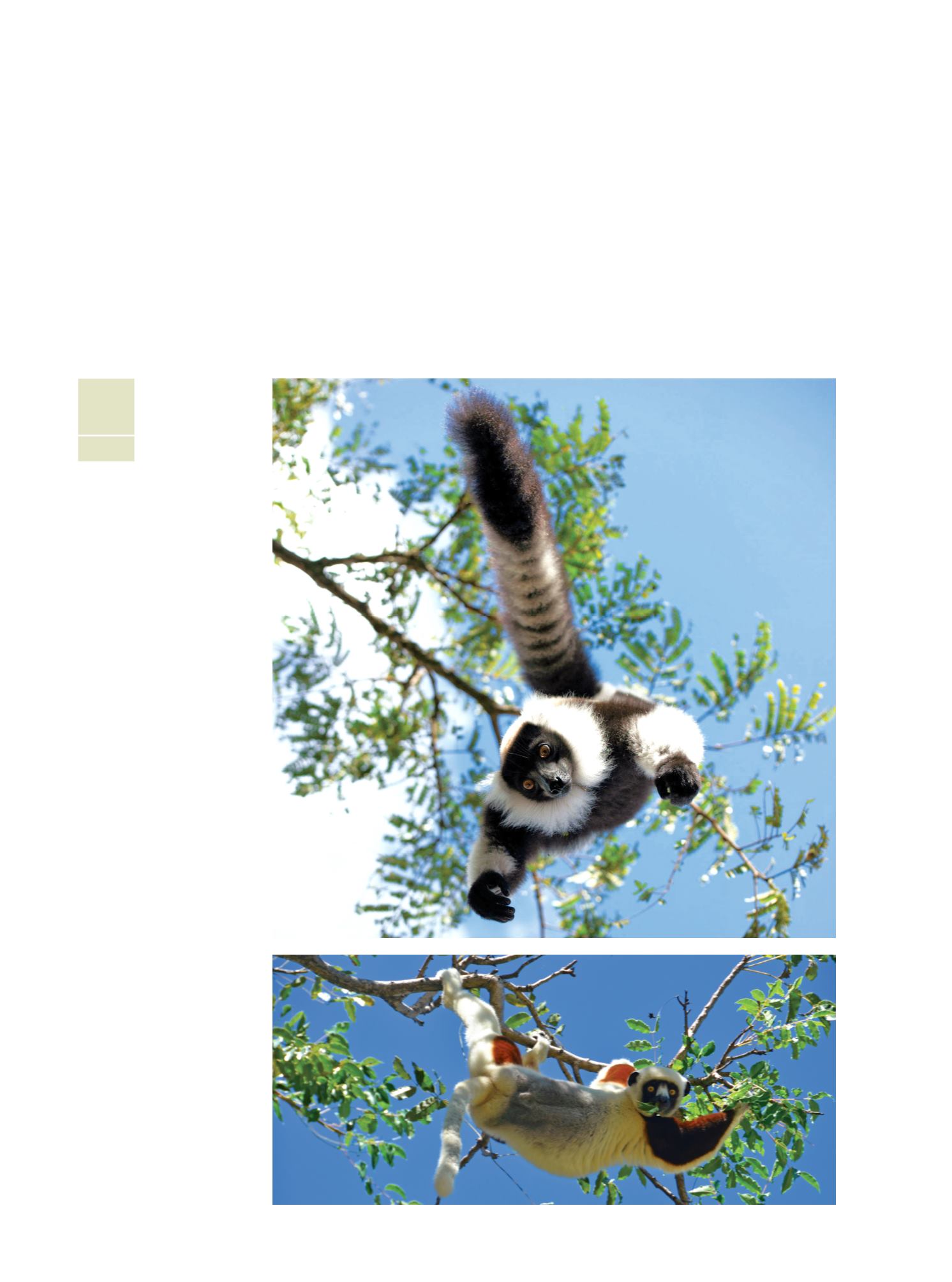
3. Gran parte de su
vida la pasan en las
copas de los árboles.
/
Much of his life
was spent in the
treetops.
4. Con frecuencia
se les puede ver
tomando baños de
sol con los brazos
extendidos. /
Often
they can be seen
sunbathing with
outstretched arms.
3
4
Foto /
Photo
: CANONISTAS / TRIP AFRICA / WPS


