



 37 / 132

·amura·
35
Esta relación tiene su origen con aquellos españoles
que partieron de la costamexicana para colonizar el archi-
piélago, para más tarde estrechar este contacto a través
del legendario Galeón de Manila, que conectaba el puerto
de Acapulco con la capital filipina en un intercambio eco-
nómico, social y cultural por demás trascendente, además
de establecerse como un auténtico antecedente de la glo-
balizaciónmoderna.
Al llegar a Manila notaremos contrastes. Por una par-
te, se trata de unparaíso portuario con escenarios inspira-
dores y exuberante naturaleza, por otra, encontraremos
profundas diferencias sociales que se acentúan cuan-
do observamos las zonas más lujosas de la ciudad, pero
atreviéndonos también a no ignorar el resto de la misma;
sobrecogedora y repleta de colores, sonidos, olores y per-
sonas que viven incluso a la intemperie. Y nada de esto
desalienta, por el contrario, resulta dignificante observar
cómo losmanileños leen, cantan, sueñanyvivenbajocán-
taros de lluvia –casi diaria–, arropados a la vez que sacudi-
dos por un oasis tropical donde los árboles frutales se dan
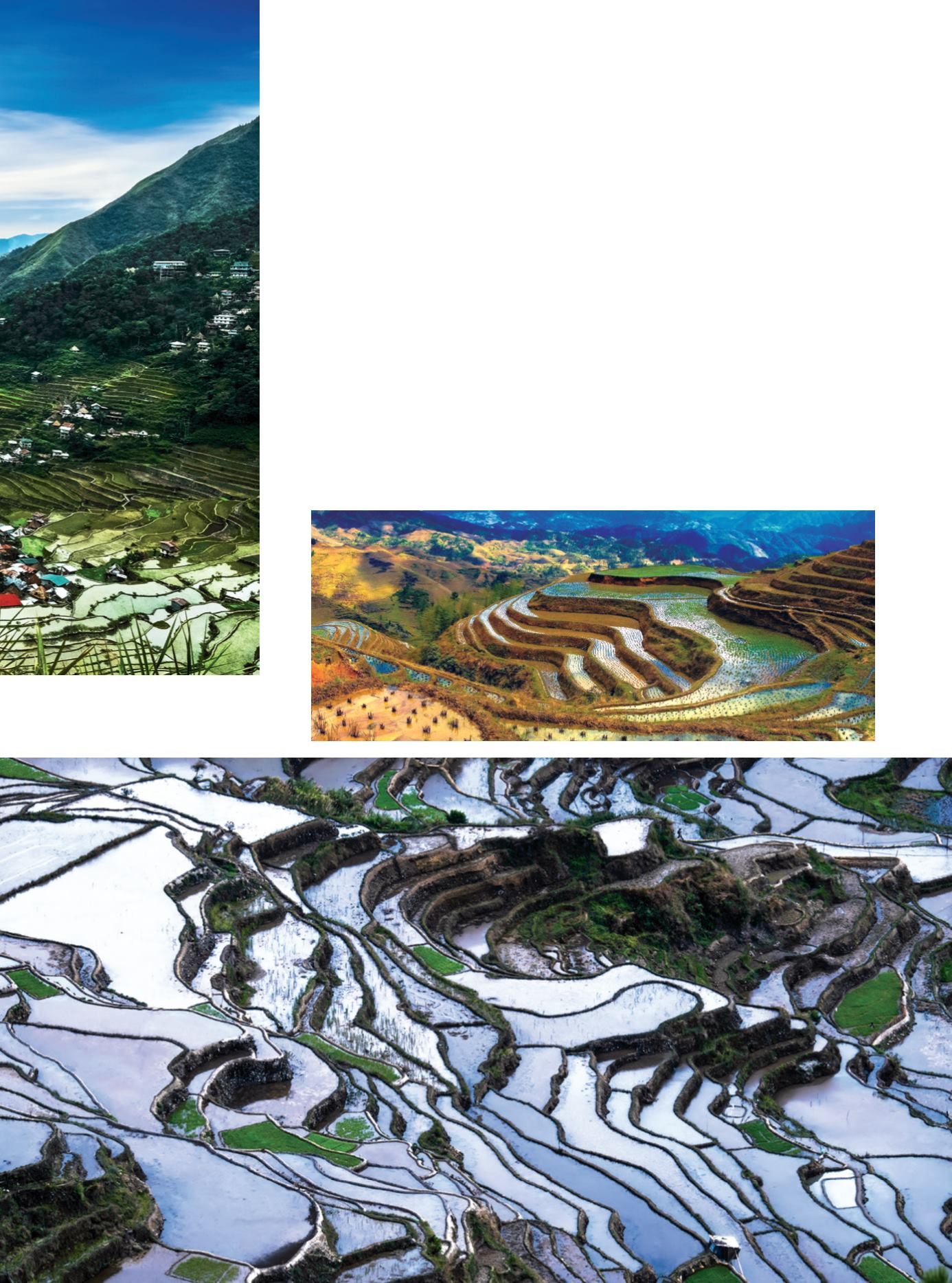
sin esmero y los arrozales perseveran, soportando tifones
y tormentas. Hoy Manila navega firme sobre las dificulta-
des del archipiélago y del planeta, redirigiendo su destino
con la conciencia propia de su identidad independiente.
This relationship originates from those Spaniards
who departed from the Mexican coasts to colonize the
archipelago, only to later strengthen this bond by way
of the legendary Manila Galleon, which connected the
port of Acapulco with the Filipino capital, forming an
economic, cultural, and social exchange and, in the
process, becoming part of the backbone of what would
eventual become aglobal economy.
One will notice a stark contrast when arriv-
ing at Manila. One the one hand, it is an earthly
paradise dotted by inspiring scenery and exuber-
ant flora and fauna. On the other, we find a deep
welfare divide that reaches new depths when one
travels along the most luxurious parts of the city.
In spite of this, it is wise not to ignore the poorer
parts of town, as they are homely and awash in
bright colors, sounds, smells, and people willing
to give a hand. It is a dignifying endeavor to ob-
serve how the locals read, sing, dream, and live
under the rain showers —which fall daily— and
to see how these showers embrace and hardened
those who live in this tropical paradise. Today,
Manila sails firmly on a set path, making its way
through the world as an independent entity.
comQgT iOt • iOt comQBTT