



 43 / 132

·amura·
41
comQgT iOt • iOt comQBTT
El espíritu manileño
Losmanileñosvivenalairelibre,cuentenconunaviviendao
no;elloscomen,conviven,inclusoduermenysebañanbajo
el cielo, por lo que viajar a Manila es como visitar una in-
mensa familia, donde un sin número de posibilidades y ex-
periencias nos rodean, algunasmás agradables queotras.
El inglés es el idioma común, todos en Filipinas lo
hablan, intercalando frecuentes palabras en español,
así como el tagalo, lengua completamente local. Los
filipinos son amables, educados y siempre están dis-
puestos a brindar ayuda a quien lo pida. Su cultura es
la de compartir.
No es casualidad que uno de los negocios proliferan-
tes en Manila sean los
call center
, pues muchos filipinos
–especialmente manileños-, son multilingües y se espe-
cializan en brindar una atención excelente. Es por ello que
tambiénsongrandes interlocutoresyprominentesperso-
nas de negocios. Solicitar la ayuda de una persona filipina
es garantía de buena voluntad. Si la persona incluso no
puede asistirnos, buscará quién lo haga o quién la ayude
a ayudarnos. Ese es el espíritu de este pueblo, que una y
otra vez ha tenido que reconstruirse y levantarse, sobre-
viviendo a la vez a sus complejas circunstancias internas,
económicas, geopolíticas y sociales.
Entre el caos de un tráfico imposible, la persona-
lidad del manileño tiene tintes de la tradicional serie-
dad asiática, pero con una notable alegría propia del
latino, así como un sentido del humor similar al inge-
nio mexicano. La fusión cultural en Manila ha dado
por fruto una identidad sumamente interesante. Nada
ilustra mejor esto como observar los famosos
Jeep-
neys
; el trasporte público de Manila que consiste en
pequeños camiones decorados con coloridos
collages
que evidencian un sincretismo asombroso, dotando
de mucha vida al escenario urbano.
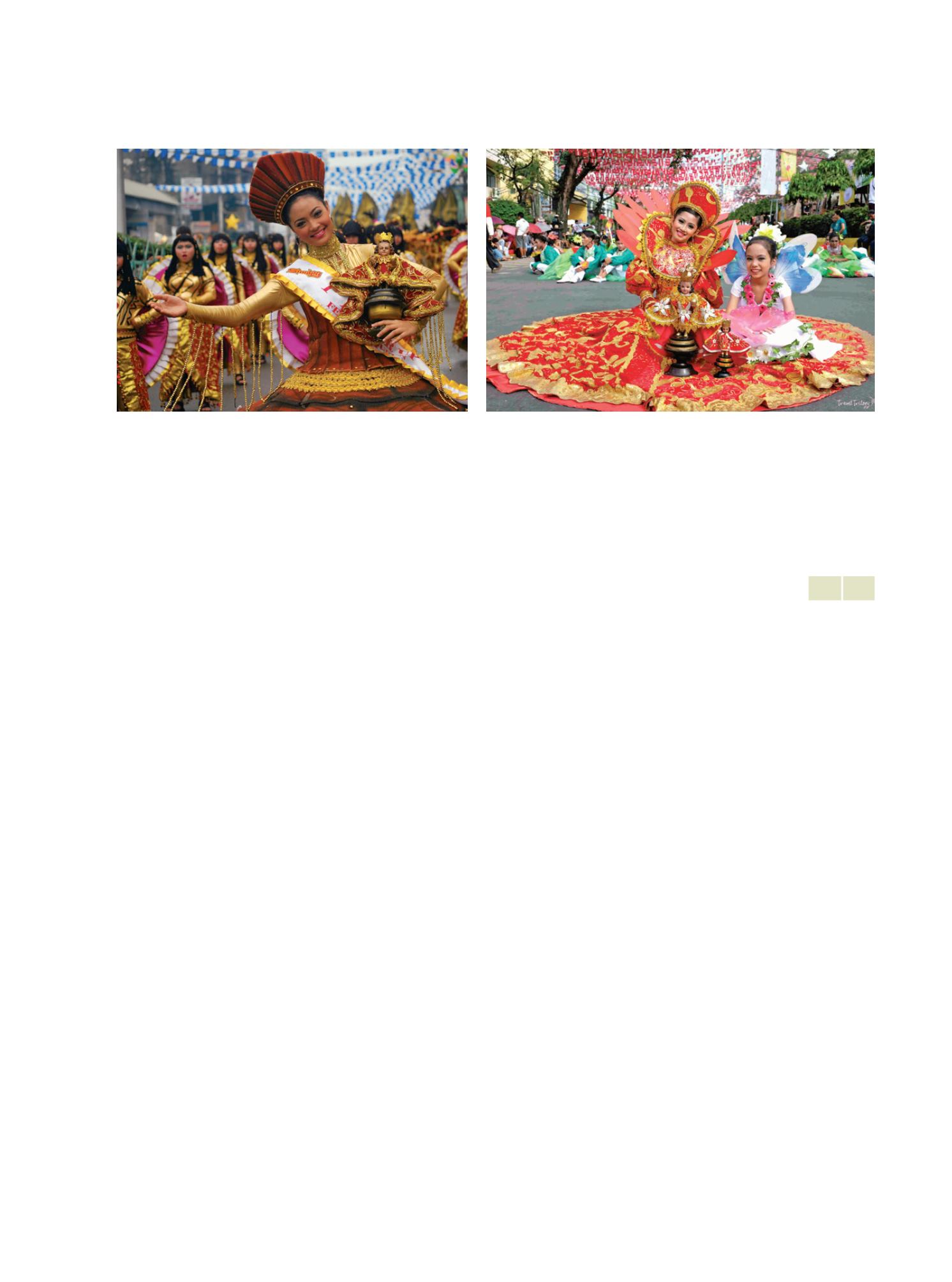
13y14 .Lasfiestas
religiosasson
eventosculturales
clavesenManila./
Religiousholidays
representan
importantcultural
keyforManila.
13 14
The Manila spirt
Whether they own a home or not, the people in
Manila mostly live outdoors. They eat, play, and
sometimes even sleep and bathe under the sky.
This gives travelers the impression that they are
visiting a great family when they’re in Manila.
English is the unofficial language. A majority
of Filipinos speak it while incorporating a num-
ber of Spanish and Tagalo words into the conver-
sation. The locals are for the most part kind, edu-
cates, and always willing to lend a hands. Theirs
is a culture of sharing.
It’s no surprise then that one of the most
profitable businesses in Manila is the call cen-
ter, as many Filipinos—especially those from
Manila—are multilingual and specialize in
costumer service. Manila is also home to many
prominent translators and businessmen. If one
is in need of assistance in the Philippines then
one can expect an act of goodwill to follow. If the
person cannot provide direct assistance, he will
find someone to do so. This is the spirit of the
city that has had to rise up from the ashes time
and time again.
Amongst the chaos that is the daily dose of
traffic, the people in Manila exude an air of Asian
serenity and Latin joy, as well as marked sense of
humor that reminds one of the Mexican people.
Manila’s cultural fusion has created a unique
national identity. Nothing illustrates this better
than observing the famous “Jeepneys”, Manila’s
public transport that consists of small buses
decorated by the drivers themselves with a mix
of collages that reflect the vibrant and diverse
urban landscape.