



 42 / 132

·amura·
40
comQgT iOt • iOt comQBTT
Metrópoli con
alma de buque
La arquitectura de Manila es especial. Como parte de un
gran archipiélago, cuenta con una costa que la rodea; por
donde quiera que miremos hay agua. Por ello, en Manila
notaremos construcciones que se erigen de un modo fa-
miliar, con un tono náutico, como si la misma tierra firme
navegara sobre el mar. El clima propicia esta tendencia, el
mododevida,perosobretodo,laherenciaculturalquetie-
ne la ciudad destino del tornaviaje del legendario Galeón
de Manila (o Nao de China). La típica casa manileña suele
contar con materiales como el bambú y madera, abun-
dantes y amplias ventanas, así como un suelo elevado y
estructuras que permiten la libre circulación del aire; la
planta superior suele contar con un metro excedente de
madera que sobresale para cubrir a la planta baja del sol y
la lluvia, mientras que los techos cuentan con la forma de
una proa, la cual permite que la lluvia se deslice.
Incluso algunas casas cuentan con filas diagonales
para sostener el techo, llamadas quiles, una palabra
que proviene de “quilla”, la cual se refiere al mismo tipo
de estructura que va de proa a popa y que sostiene la
armadura de un barco.
Esta tendencia no es nueva, antes del gran incendiode
1583 (iniciado en la iglesia de San Agustín) y del temblor
que derribó numerosas construcciones en 1645, ya existía
este tipo de construcción en Manila, resultado de un am-
biente tropical y una profunda cultura portuaria. Después
de estas tragedias, los materiales resistentes se convir-
tieron en algo más frecuente, pero la arquitectura de Ma-
nila conservó su tono tropical y naval, aunque también dio
paso a otros estilos, sobre todo en fechas recientes.
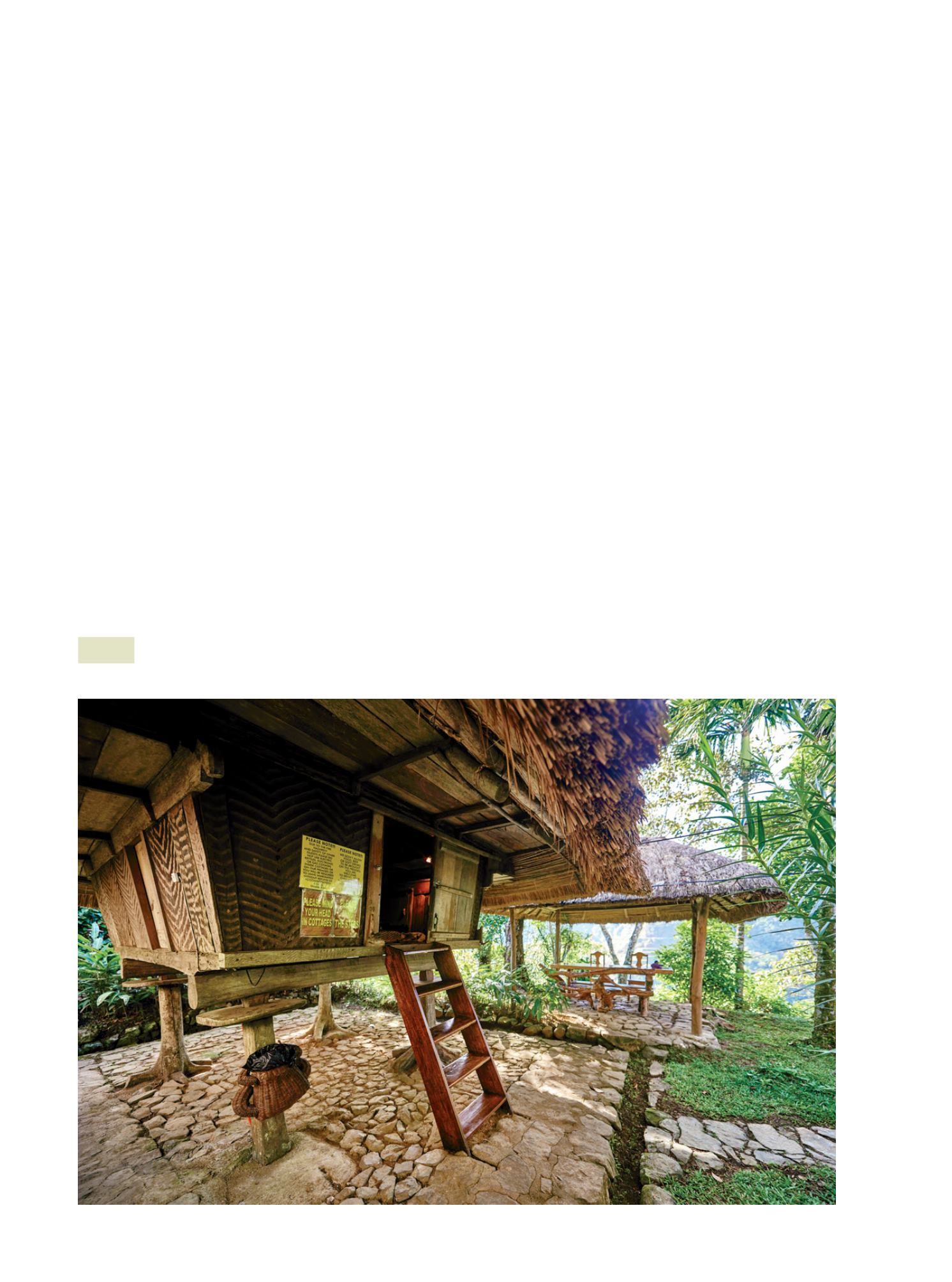
12.Muchascasas
enManilacuentan
conelementos
característicosde
losbarcos./
Many
housesinManilahas
severalcharacteristic
elementsofthe
ships.
12
A metropolis with
the soul of a ship
Manilas’ architecture is special. As part of a great
archipelago, water surrounds it from all sides.
Because of this, urban structures in Manila pos-
sess a nautical theme, as if the earth itself was
floating on the water. The tropical weather af-
fects not only the day to day activities but the
culture in general as well. The typical Manila
home is built with materials such as bamboo
and wood, and are cooled by way of numer-
ous and large windows. They are elevated from
the ground, which allows wind to freely move
around the structure. The upper floors is usually
wider and longer than the lower floor to provide
it with shade, and prevent flooding. The roofs are
slanted to allow the rain water to prevent water
from puddling.
Some homes, in fact, features “quiles” (it means
“keels”); diagonal structures that support the roof
and which resemble the structure that goes from
stern to bow and holds together the structure of a
ship (a ceiling in this case).
This is not a novel technique –it existed well
before the great fire of 1583, and the earthquake
of 1645. After these tragedies, hardened struc-
tures became more prevalent, but Manila’s ar-
chitecture kept its nautical and tropical themes,
which would later incorporate styles from other
cultures and new materials. The cultural heritage
that has the city that hosted the legendary Ma-
nila Galleon is undeniable.