



 51 / 132

comQgT iOt • iOt comQBTT
Ya adentrándonos en Luzón, encontramos las her-
mosas terrazas de arroz de Banaue, las cuales maravi-
llan a locales y extranjeros por igual. Construidas por
los nativos de Ifugao a lo largo de dos milenios, estas
montañas escalonadas de agua e insólitos arrozales,
se extienden más allá de la longitud que supone la
Gran Muralla China.
Por otra parte, con destinos menos próximos a
Manila, todo el archipiélago es territorio de observa-
ción científica, buceo y convivencia con admirables
especies marinas, donde debemos optar por un tu-
rismo responsable e informado sobre esta fauna y su
ecosistema. Los principales puntos de encuentro con
especies son Mindoro, Palawan, Mala Pascua, Puerto
Princesa, Bohol, Busuanga, Tizon Pass e Islas Babu-
yan, así como el Estrecho de Tañón.
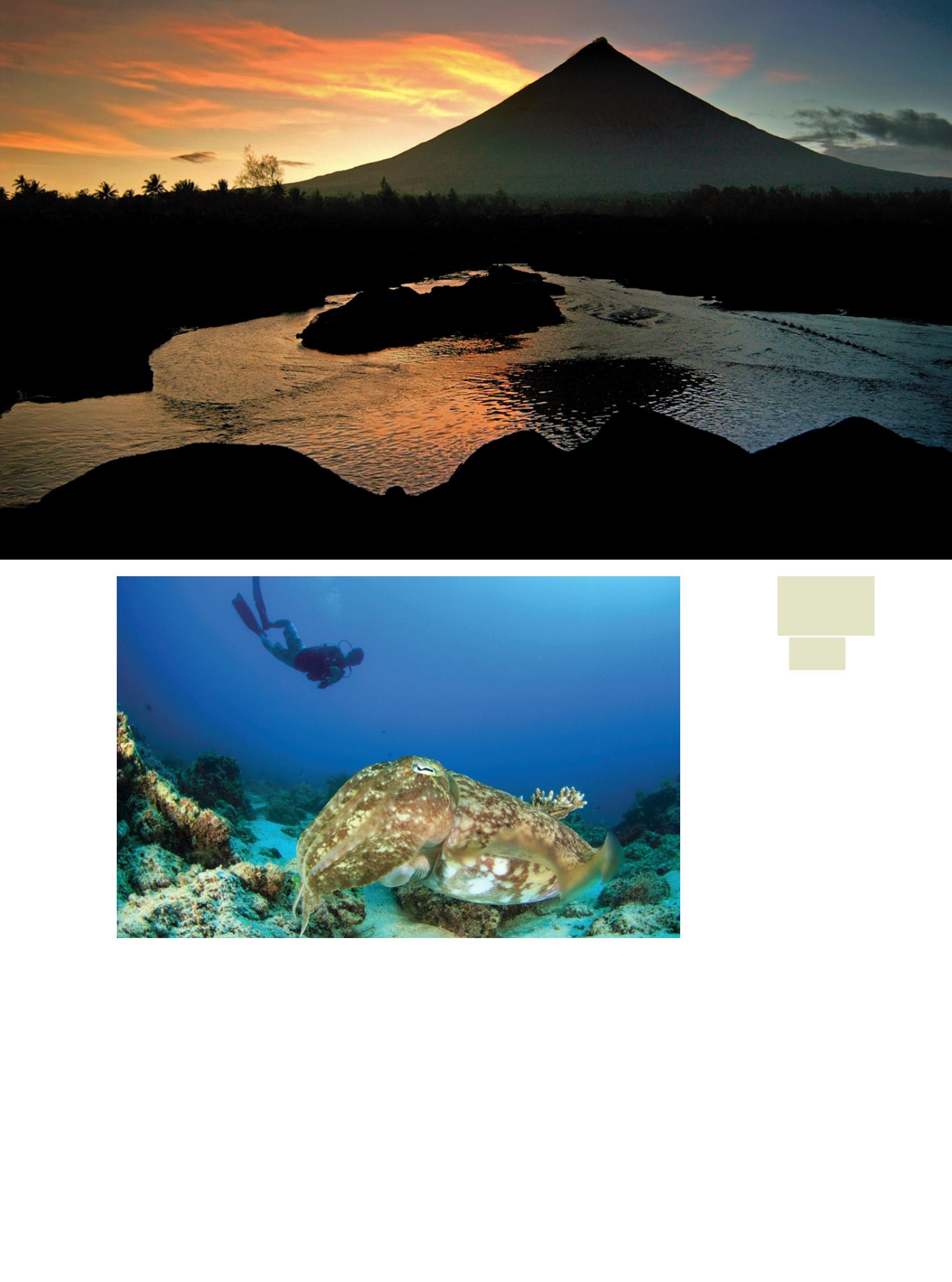
35.VolcándeMayón
a330KmdeManila,
Filipinas./
Mayon
volcanoat330
kmfromManila,
Philippines.
36. Buceoen
Filipinas,unade
lasactividadesmás
recomendablesen
estedestino./
Divinginthe
Philippines,oneof
thebestactivitiesat
thisdestination.
35
36
49
·amura·
In the depths of Luzon, we can also find the
mesmerizing rice paddies of Banaue, which still
amaze foreigners and locals alike. They were
built by the natives of Ifugao over two millennia,
and it’s been said that these stacked an unusual
paddies dot the landscape well beyond the Great
Wall of China.
Beyond Manila’s local attractions, the ar-
chipelago is a land rich for scientific inquiries.
Travellers are encouraged to come face to face
with the local flora and fauna, and to learn about
sustainability and responsible tourism. Mind-
oro, Palawan, Mala Pascua, Puerto Princesa, Bo-
hol, Busuanga, Tizon Pass, and the Babuyan Is-
lands are places where a large number of native
species reside.