



 53 / 132

·amura·
51
comQgT iOt • iOt comQBTT
Algo que nunca pasa desapercibido es el
balut
: un
snack
que se compone de huevo cocido con un embrión
de pato entero, lo cual resulta intimidante para quien ob-
serva absorto cómo este proteínico bocado -considera-
do unmanjar en Filipinas y otras partes de Asia-, es ven-
dido en cada rincón, incluso en puestos callejeros. Los
manileños insisten en que, al menos una vez, logremos
probarlo, aunque no luzca apetecible. Otros elementos
apreciados por los filipinos y poco celebrados por el gus-
to extranjero, son los grillos que se venden como patatas
fritas en losmercados, así como la sangreymenudencias
de varios animales para crear el denominado
dinuguan.
Las probabilidades de ser invitado a comer
a una casa filipina son muy altas. De ser así, los
platos más típicos suelen ser el
pancit
–fideos
salteados–,
lugaw
–sopa de arroz–,
mami
–sopa
de fideos– o el
sisig
–carne con huevo–, entre
otros, que son elaborados con distintas varia-
ciones. No nos sorprenda usar las manos como
cubiertos y, como invitados, lo mejor es lle-
gar con un presente, ya sea vino, flores o al-
gún postre como el turrón filipino, muy reco-
mendable. Al terminar el festín, lo más cordial
es agradecer con la expresión tagala ¡Masarap!
(¡Estuvo delicioso!).
La cerveza es lo que más se bebe en Manila y
predomina la marca San Miguel, además de opcio-
nes más robustas como Red Horse.
Otras bebidas importantes son el ron, el bran-
dy de jerez (donde la marca Emperador es la más
reconocida y aunque su imagen sea muy española,
es propiedad de un filipino), así como el
nilak
(vino
de coco), un licor producido
in situ
que el gobierno
filipino busca establecer como una bebida de ori-
gen, equiparable al tequila en México.
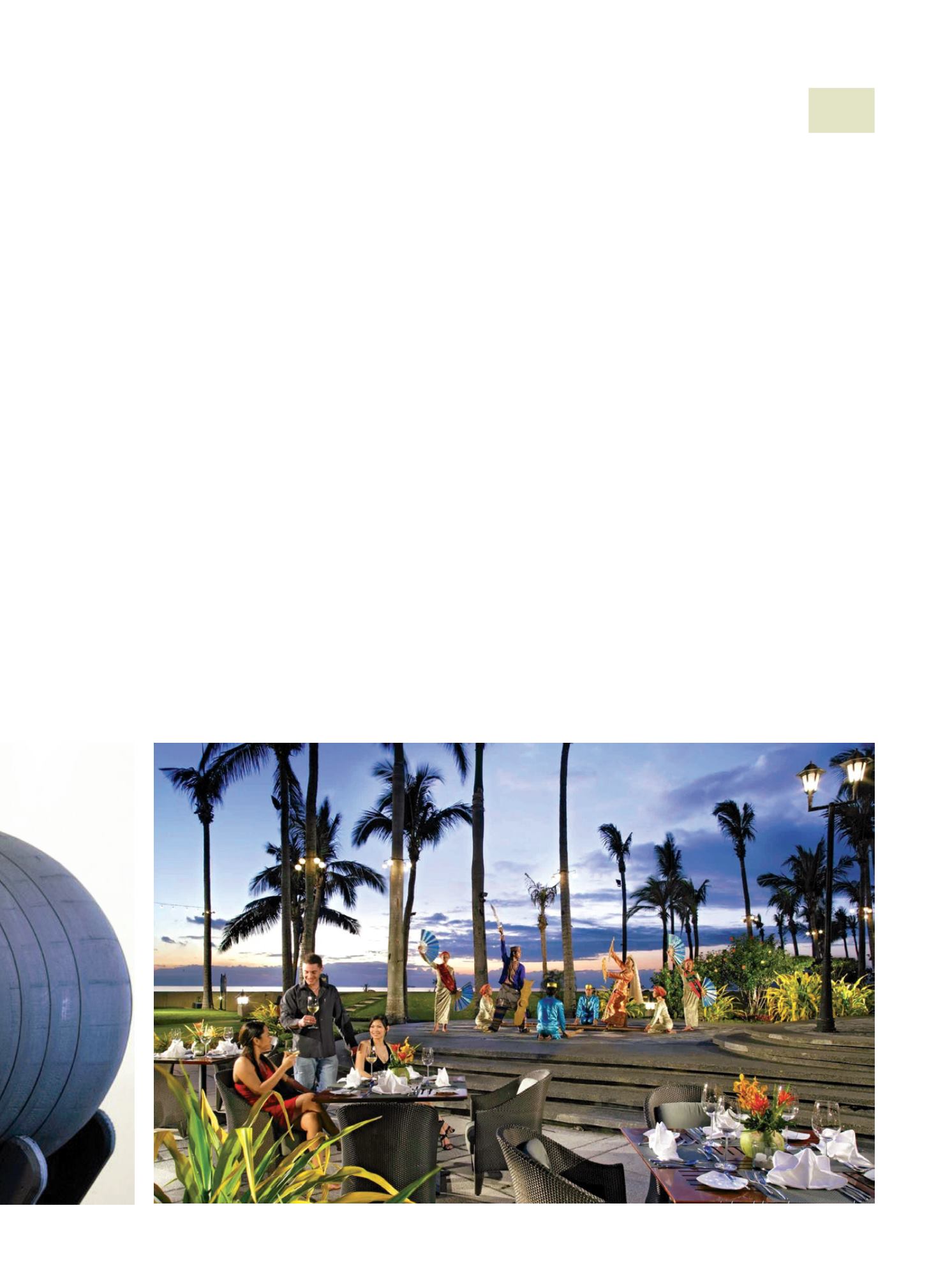
39.Manilatiene
muchosproyectos
paraaumentarsu
ofertaturística./
Manilahasmany
projectstoincrease
tourism.
39
Another food item that has existed since
time immemorial is the “balut”: a snack made of a
duck embryo cooked in the shell. One might find
the sight of this protein-rich delicacy, which is
sold in the streets of Manila and Asia, to be in-
timidating. The locals insist that one has try it
at least once, in spite of its unappetizing look.
Other elements appreciated by Filipinos, those
that are not universally esteemed by western
palates, are grasshoppers -sold like fries in some
markets-, as well as blood and offal from various
animals to create a dish called “dinuguan”.
WheninthePhilippines,thechancesofbeinginvit-
ed over to a home to dine rise astronomically. If this be
the case, dishes that are usually served include: “pan-
cit”, a type of saltednoodles; “lugaw”, rice soup; “mami”,
noodle soup; and “sisig”, steak and eggs; amongst oth-
ers. These dishes can be serve in a variety of ways, but
all followthe samebasic recipe. Hands areused to serve
and to eat and, as guests, it is recommended to arrive
withapresent of some kind for thehost, whether it can
bewine,flowers,oradessert,suchastheenjoyablePhil-
ippine nougat. Once the plates are removed, the most
cordial thing to do is to thank the guests with the true
expression: “Masarap!” (“Itwasdelicious!”).
Themost commondrink inManila is beer, and “San
Miguel” is the preferred brand, although more robust
beers, suchas “RedHorse”.
Other favorites include rum, sherrybrandy (includ-
ing the “Emperador” sherry, which, despite it being a
recognizable “Spanish” brand, is owned by a Filipino)
as well as “nilak” (coconut wine), a liquor that is locally
produced; by the way, the Filipino government is look-
ing at a Protected Designation of Origin label for this
product, aswas the casewithTequila inMexico.