U
no de los países más exóticos y cálidos del conti-
nente africano es Marruecos. Su gastronomía, su
colorido, su hospitalidad y su clima lo convierten
en uno de los destinos más interesantes para el viajero.
Destacan los trabajos en cuero y las tallas enmadera.
Pero es de destacar que en los pueblos de Marruecos las
alfombras cuelgan por todas partes y en cualquier lugar,
y uno se da cuenta de que la decoración típica de ese país
incluye la presencia fundamental de los tapetes. En
cualquier casa o mansión, en cualquier hotel o restau-
rante, las alfombras o los tapetes son la parte más impor-
tante de la escenografía o del arreglo de los espacios.
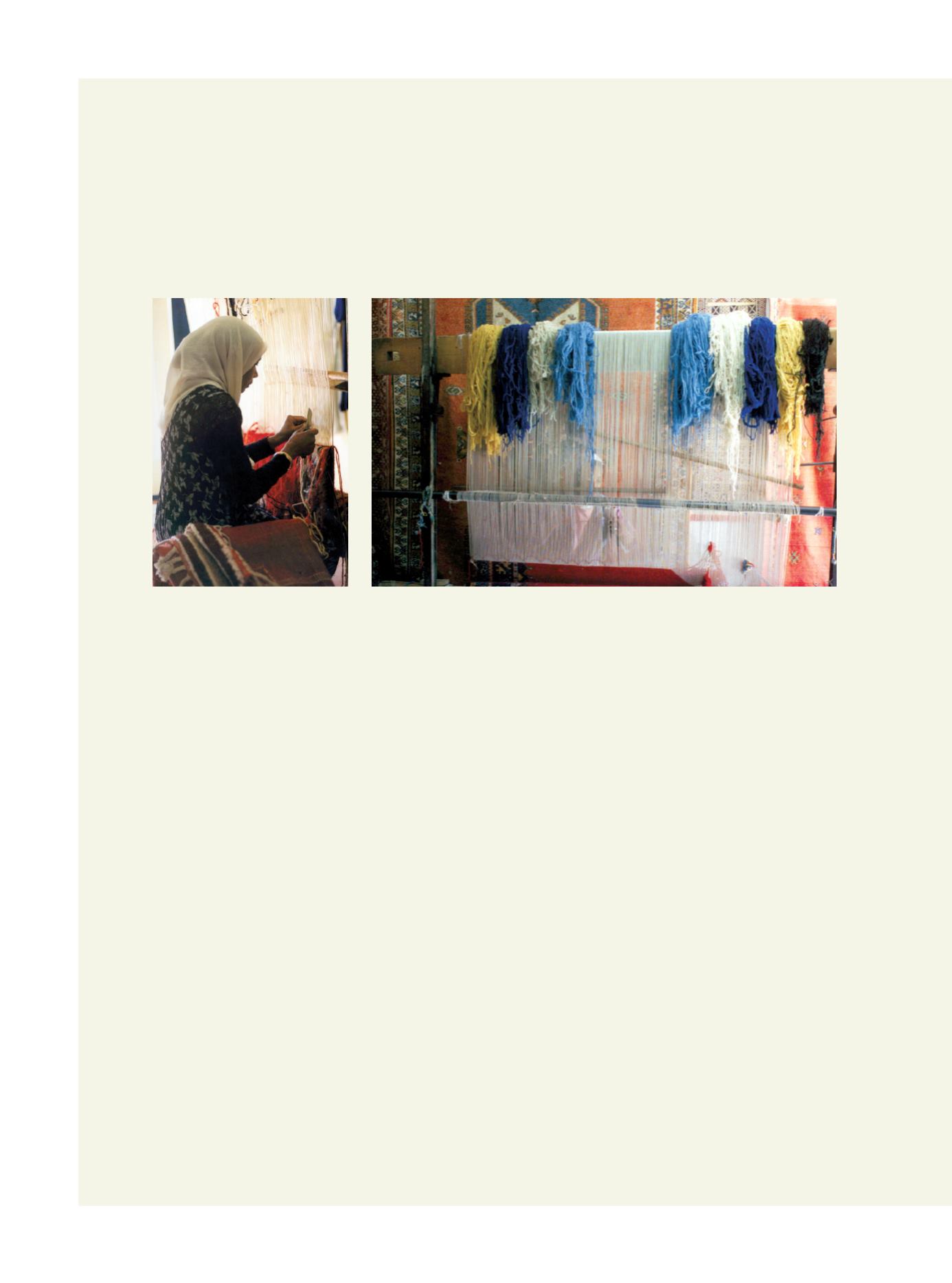
Hechas de lana o de hilo, y algunas veces de manta,
las alfombras marroquíes vienen originalmente de la
tribu de los berber, cuyos integrantes se dedicaban a ser
pastores y a construir sus tiendas, así como a hacer su
ropa de la lana de los borregos. Para ganarse la vida las
mujeres berber empezaron a tejer alfombras de la lana
que traían sus esposos y así empezó una tradición, que
hasta el día de hoy existe en Marruecos.Los colores, los
diseños y la técnica que emplean para hacer cada alfom-
bra son únicos. Se dedican en cuerpo y alma a diseñar y
a perfeccionar un tapete, y a veces se tardan tres meses
para terminar un trabajo.
Artistas comoChristian Lacroix, Klee yMatisse se inspi-
raron en diseños de tapetes marroquíes. Desde Europa, y
desde el Museo de Diseño Bauhaus, y en los años de las
décadas de 1960 y 1970, diseñadores como Billy Baldwin
han diseñado interiores alrededor de estos tapetes.
Al entrevistar a una de las mujeres que se dedican a
crear tapetes, nos dijo: "ésta es una tradición que nos
han dejado nuestros ancestros. No sabemos de dónde
nos viene la creatividad, no sabemos cómo escogemos
los colores, simplemente lo tenemos en la sangre".
M
orocco is one of the most exotic, welcoming
countries in Africa. Its cuisine, color, hospi-
tality and climate also make it one of the
most fascinating tourist destinations.
The leatherwork and wood carvings are to note.
But what is most outstanding in Moroccan towns are
the rugs that hang everywhere and anywhere, and we
realize that the country’s typical décor necessarily
includes the presence of these rugs. In any house or
mansion, in any hotel or restaurant, the carpets and
rugs are the most important part of the setting and
spatial arrangements.
Woven from wool or linen, and sometimes from
coarse cotton, the origin of Moroccan rugs began with
a Berber tribe, the members of which worked as shep-
herds and building tents. They also made clothing
from the wool of their sheep. In order tomake a living,
Berber women began weaving rugs from the wool
their husbands brought home, which is the origin of
this tradition that exists to this very day. The colors,
designs and technique they use to make each rug are
unique. They dedicate themselves body and soul to
designing and perfecting each rug, which sometimes
take three months to complete.
Artists like Christian Lacroix, Klee and Matisse
were inspired by the patterns of Moroccan rugs. From
Europe and the Bauhuas Museum of Design, during
the 1960s and 1970s, designers like Billy Baldwin
planned interiors around these rugs.
Interviewing one of the women who make these
rugs, she said: “It is a tradition that was left to us by
our ancestors. We do not know fromwhere we get our
inspiration, we do not know how we choose the col-
ors, we simply carry it in our blood.”
Alfombras marroquíes, estupenda opción para decorar
Moroccan rugs, a stunning enhancement to your decor
compás int •
compass int
54
·amura·
Texto /
Text
• Foto /
Photo
: Anaís de Melo


