61
compás int •
compass int
·amura·
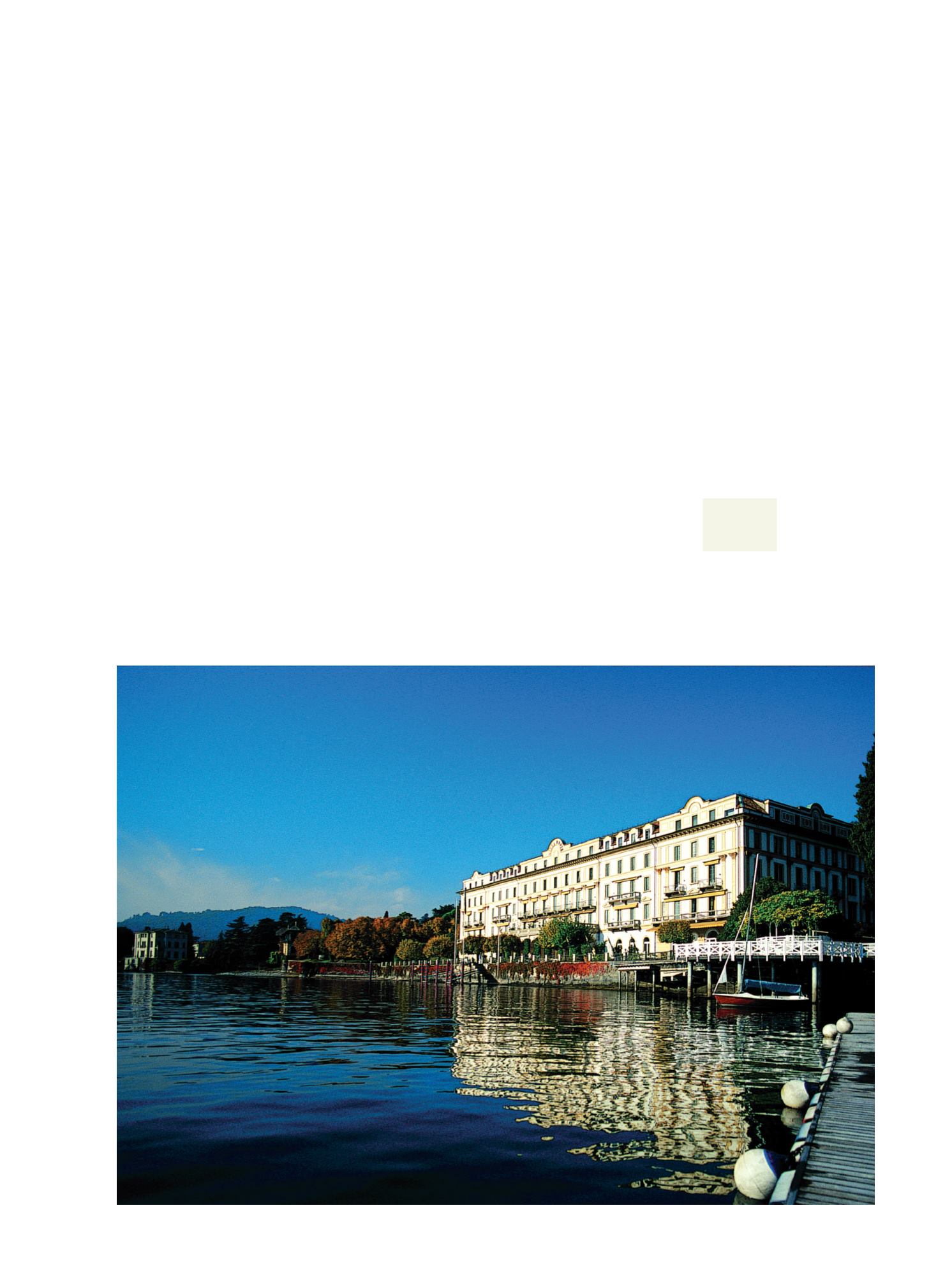
Hotel Villa d´Este, Edificio del
Cardenal
Cardinal Building in the
Hotel Villa d’Este
this place. Since then, the villa passed through
several owners until it was renovated and conver-
ted into a luxury hotel. The building counts with a
collection of paintings and sculptures from the
XVIth century. Some of its exceptional attractions
are: the park, the caves, the fountains and statues
that may be found in its surroundings.
Bellagio and the Royalty
To the end of the XIXth century, an episode without
an apparent importance changed forever the destiny
of this city at the lake shore: the Count Francesco de
Melzi, Duke of Lodi and vice-president of the
CisalpineRepublic, choose tobuildhis summery resi-
dencehere. Itwas thenthat theCount built awonder-
ful villa in the west coast, near of Loppia. This fact
attracted the attention of the Milan aristocracy
towards this area and Bellagio was turned into a city
chosen by the royalty. Roads were built to allow the
access to the carriages, as well as a road that connec-
ted the city of Erba with Bellagio.
The fame of the small city was growing until this
beautiful village at the shore of the lake was turned
into a famous place, even in the neighbor areas of
Lombardia-Venice. Even though, the Emperor
Francisco I of Austria decided to visit the place in
1816. In 1825, the Emperor came back to visit this
place, staying at the Villas Serbelloni (now a day’s
turned into one of the most important luxury hotels
of Bellagio), Troti andMelzi.
In1838, Bellagio received the visit of the Emperor
Ferdinando I, the Archduke Ranieri and the Minister
Metternich. These three characters of the history
colección de pinturas y esculturas del s. XVI. Otros
de sus excepcionales atractivos son: el parque, las
cuevas, las fuentes y estatuas que pueden encon-
trarse en sus alrededores.
Bellagio y la realeza
A finales del s. XIX, un episodio sin importancia
aparente cambió para siempre el destino de esta
ciudad a orillas del lago: el Conde Francesco de
Melzi, Duque de Lodi y vicepresidente de la
República Cisalpina, eligió erigir su residencia
veraniega aquí. Fuen entonces que el Conde cons-
truyó una maravillosa villa en la costa oeste, cerca
de Loppia. Este hecho atrajo la atención de la aris-
tocracia milanesa hacia esta zona y Bellagio se
convirtió en la ciudad elegida por la realeza. Se
construyeron caminos para permitir el acceso a los
carruajes, así como un camino que conectaba la
ciudad de Erba con Bellagio.
La fama de la pequeña ciudad fue creciendo
hasta que este hermoso pueblo a orillas del lago se
convirtió en un lugar famoso, incluso en las zonas
vecinas de Lombardia-Venecia. Incluso, el Emperador
Francisco I de Austria decidió visitar el lugar en 1816.
En 1825, el Emperador volvió a visitar este lugar,
hospedándose en las Villas Serbelloni (hoy en día
convertida en uno de los más importantes hoteles
de lujo de Bellagio), Troti y Melzi.
En 1838, Bellagio recibió la visita del Emperador
Ferdinando I, el Archiduque Ranieri y el Ministro
Metternich. Estos tres personajes de la historia lle-
garon a la ciudad desde Varenna en 1826, a bordo del
primer barco de vapor que surcó el lago Lario.


