·amura·
138
Diseño •
Design
Estructuras de arte visual
La arquitectura de Massimiliano Fuksas es profun-
damente romana, como él mismo lo señala, cada
uno de sus proyectos busca recortar una porción de
cielo y Roma es la ciudad que recorta el cielo en un
modo sublime. Su trabajo no ha ido evolucionando a
lo largo del tiempo, simplemente utiliza un lenguaje
diferente en cada proyecto, aunque el concepto es
siempre el mismo, en toda su obra siempre está
presente la confrontación entre opuestos, entre
racional e irracional, orgánico e inorgánico, expre-
sionismo o geometría simple.
Fuksas destaca que lo más importante para la ar-
quitectura es crear un concepto desde el cual parta el
diseño. Si no hay una idea previa, jamás se podrá comu-
nicar algo, un edificio podrá ser agradable o estructural-
mente perfecto, pero carecerá de emoción.
Considera que a principios del siglo pasado la
arquitectura tenía una inquietud vanguardista, era
partícipe del proceso social y tecnológico, ahora, por
el contrario, expresa muy poco. El creador debe ser
crítico de la sociedad a la que pertenece y hacer algo.
Sobre esto comenta: “El arquitecto debe tomar una
posición respecto del momento en que vive, ser más
comprometido. Cuando Shimon Peres me convocó
para hacer el Centro de Paz, sentí que era una gran
ocasión, no sólo de hacer buena arquitectura –que
creo haberla hecho–, sino de participar en un proceso:
El proceso de paz en Israel. No se trataba solamente
de hacer un bello edificio”.
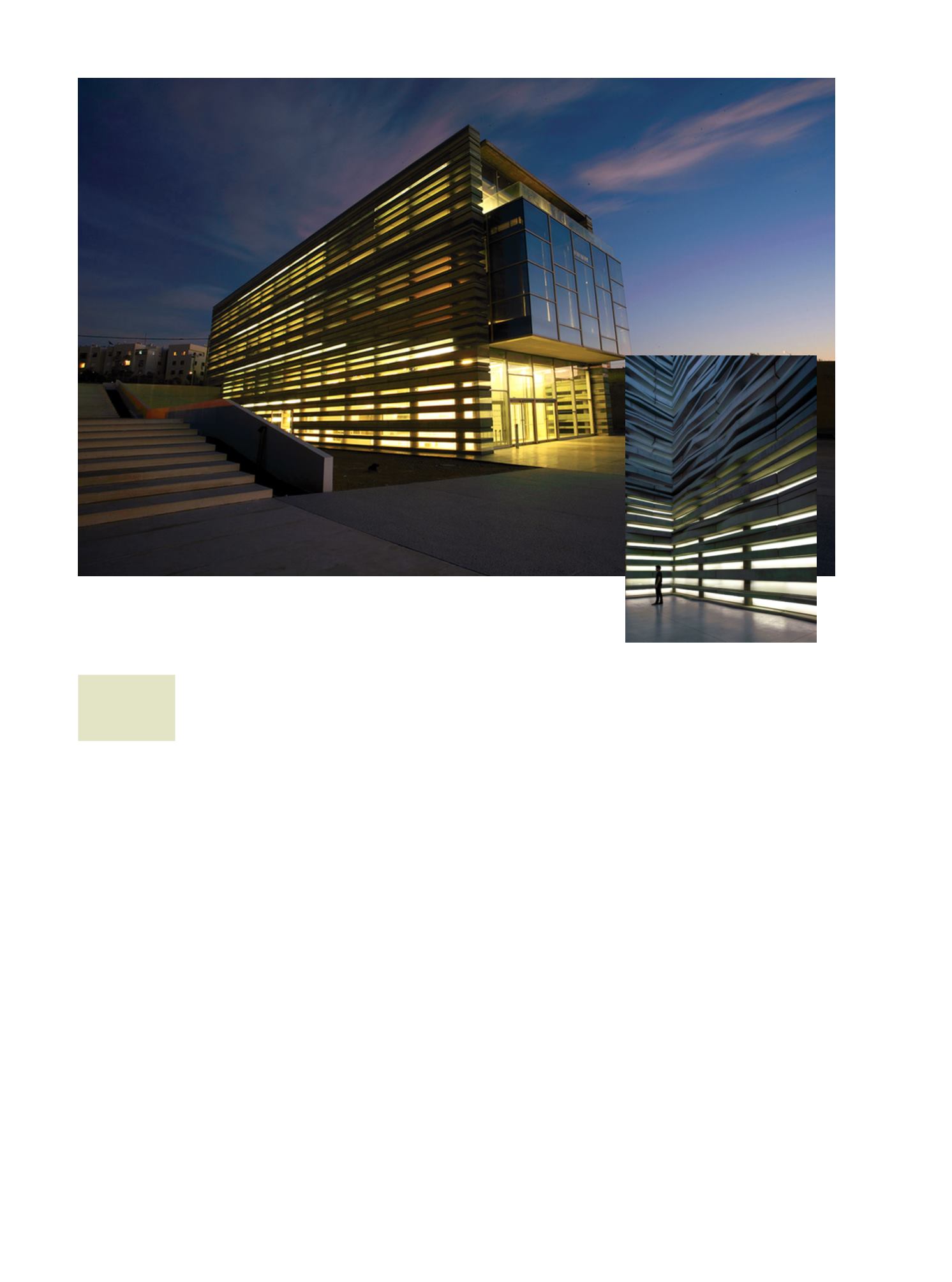
7.EledificioPeres
PeaceHouse,
diseñadoporel
arquitecto italiano
MassimilianoFuksas,
sesitúaaorillasdel
Mediterráneo,en
Jaffa(TelAviv)./
The
PeresPeaceHouse
building,designedby
theItalianarchitect
MassimilianoFuksas,
issituatedonthe
Mediterranean,in
Jaffa(TelAviv).
7
Structures of visual art
The architecture of Massimiliano Fuksas is pro-
foundly Roman, as himself indicates, each one of
his projects tries to snip off as piece of the sky and
Rome is the city that clips the sky in a sublime way.
His work has not been evolving through time, he
simply uses a different language on each project,
although the concept is always the same, in all his
work the confrontation between opposites is al-
ways present, the one between rational and irratio-
nal, between organic and inorganic, expressionism
or simply geometry.
Fuksashighlightsthatthemostimportantthingfor
architectureistocreateaconceptfromwherethedesign
may start. If there is not a previous idea, it will never be
able to communicate something, a building may be
pleasant or structurallyperfect, but itwill lackemotion.
He considers that at thebeginningof the century,
the architecture had an avant-garde interest, it took
part of the social and technological process, nowcon-
versely, it expresses very little. The creator must be a
critic of the society he belongs to and do something
about it. In this regard he comments: “The architect
has to take a standing in relation to the moment he
gets to live, be more involved. When Shimon Peres
summonedme co build the Peace House in Palestine,
I felt it was a great moment, not only for doing great
architecture –that I think I did–, but of taking part in
a process: the peace process in Israel. It was not only
about doing a pretty building”.


