·amura·
102
personajes •
characters
Maria Quitéria, el poderoso dulzor del azúcar
Desde la perspectiva de la conquista y colonización
de América, podríamos decir irónicamente que Brasil
ha sido el único país descubierto dos veces en la his-
toria. España asegura que las expedición de Yáñez Pin-
zón puso pie el 26 de enero de 1500. Portugal, por otro
lado, señala que Pedro Alvares Cabral fue el descubri-
dor de esta tierra el 22 de abril de 1500. El Tratado de
Tordesillas (1494) sentaría las bases entre las Coronas
española y portuguesa para fijar los límites del Nuevo
Mundo, evitando así penosas guerras y duros conflictos
de intereses inter pares, si bien existieron las disputas
con otras naciones europeas por la conquista del litoral
-por ejemplo, franceses e ingleses-.
Lugar de una destacable población de indígenas,
Bahia siempre fue una zona de especial predilección
para los conquistadores portugueses desde su llegada
a comienzos del siglo XVI. Bahía es el río Paraguazú,
la búsqueda de oro en el río de las Cuentas y el culti-
vo de la caña de azúcar. Este elemento resulta capital
para entender la paradoja histórica de la que somos
testigos. La caña de azúcar fue un símbolo del proceso
de colonización de Portugal. Reproduciendo el siste-
ma de algunas de sus islas en el Atlántico, la Corona
portuguesa introduce los cultivos extensivos de caña
de azúcar como elemento de desarrollo económico
que fraguaba la cohesión social, generando trabajo y
servidumbres. Un sistema de colonización esclavista
que gozaba de cierto éxito, cuyo arraigo y prosperidad
permitió en 1548 la creación del primer Gobierno Ge-
neral de Salvador de Bahía. Y en este caldo de cultivo
nacería María Quitéira, la hija de un terrateniente, he-
roína liberadora de una nación en ciernes.
O
Maria Quitéria, the powerful sweetness of sugar.
From the perspective of colonization and conquer
inAmerica,wecouldironicallysaythatBrazilhasbeen
the only countrydiscovered twice inhistory. Spainas-
sures theexpeditionof YáñezPinzón,whenhe set foot
on this land the 26 of January of 1500. Portugal, on the
other hand, points out that Pedro Alvares Cabral dis-
covered this land the 22 of April of that same year. The
Tratado de Tordesillas (1494) will make the base be-
tween the Spaniard and Portuguese Crowns, with the
fixation of new limits in the NewWorld, avoidingwars
and harsh conflicts of un even interests. Several dis-
puteswithother Europeannations for the conquest of
the litoral raised (the Franch and the English).
A place of outstanding native population, Bahia
always was the preferred zone for the Portuguese
conquistadors upon their arrival at the beginning
of the century. XVI. Bahía is Paraguazú River, the
search for gold in the river of Cuentas and the cul-
tivation of sugar cane. This element is the capital to
comprehend the historical paradox of which we are
all witness. The sugar cane was a symbol of colo-
nial process of Portugal. Reproducing the system, in
some of the islands of the Atlantic, the Portuguese
Crown introduces new extensive crops of sugar cane
as an element in the economic development that
figured with the social cohesion, generating jobs
and servitude. A system of colonization with slav-
ery that enjoyed of certain success, which roots and
prosperity allowed in 1548 the creation of the first
General Government in Bahia Do Salvador, in this
place, María Quitéira would be born, daughter of a
land lord, freeing heroine of a nation in sifts.
O
5
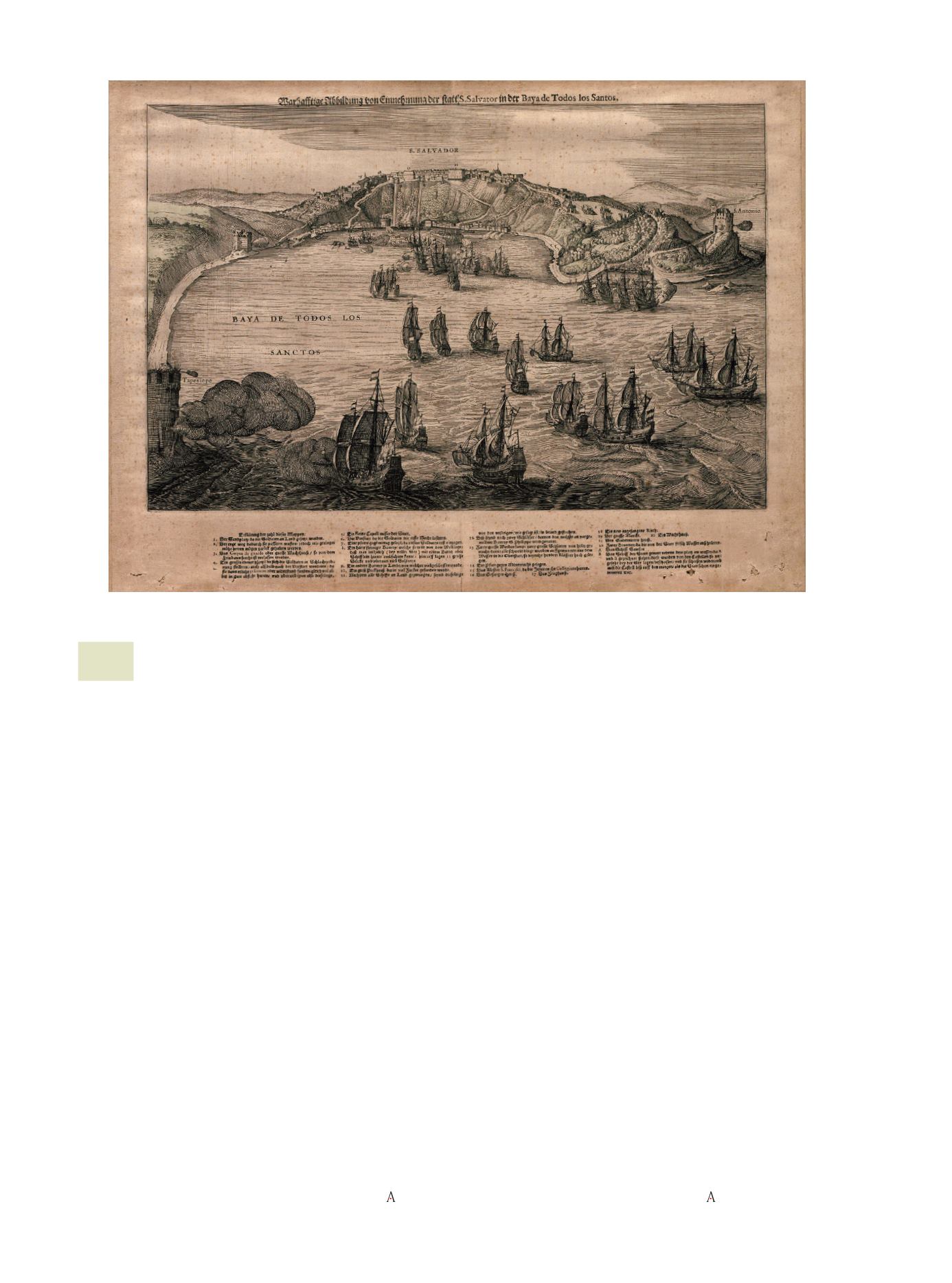
5.BahíadelSalvador.
/
Bahia Do Salvador.


