·amura·
54
compás int • int compass
Dubrovnik
From the Hotel Villa Argentina, I discover Du-
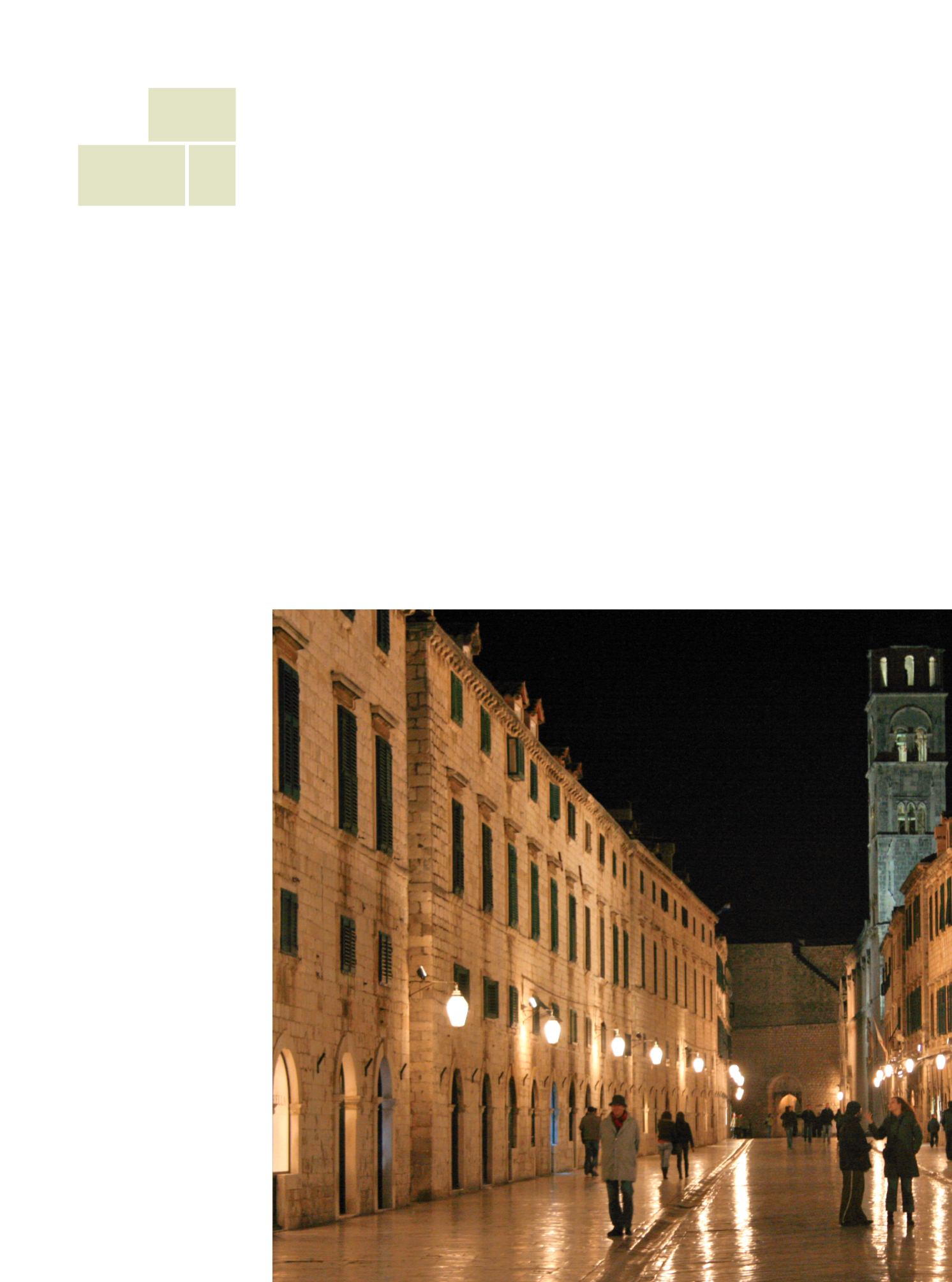
brovnik. It isa fortifiedcity illuminatedbyashymoon.
On this rock, the ancient inhabitants of Ragusa, be-
longing to the Byzantine Empire, decided to build an
imposing wall to protect themselves from barbarian
invasions in the ninth century. They resisted the as-
sault of theArabs for 15months. Dubrovnikwas creat-
ed and the channel separating two villages was filled
to create the plate, or Central Street. By the twelfth
century, Dubrovnik was an important trading port
and jealous Venice subjected and dominated the city
for 153 years. It joined the CroatianHungarian Empire
in 1358, retaining its commercial independence and,
in the fifteenth century, the Ragusina Republic was
created. A devastating earthquake in 1667 destroyed
the monuments of the Renaissance and its recon-
structionwasdone inauniformbaroque style. In1806
Napoleon Bonaparte’s troops invaded the city, which
fell andwas annexed to the Austro-Hungarian Empire
in 1815. This maritime power of yesteryear, survives
todaywith the tourismindustry.
Without resisting the devil called “explorer”
that lives within me, I throw myself into explore
the alleys of the city, passing by the fortified gate
of Plo
č
e and to enter a medieval world inhabited
by the ghosts of the night, dazzling brightness of
pavement and adorned by its churches. I realized
that I invented some illogical roads getting lost in
the nooks and alleys as I savor the beauty.
Dubrovnik
Desde el hotel Villa Argentina descubro Dubro-
vnik, la ciudad fortificada que ilumina una tímida
luna. En ese peñón, los habitantes de la antigua
Ragusa, perteneciente al imperio bizantino, deci-
dieron construir una imponente muralla para pro-
tegerse de las invasiones bárbaras y en el siglo IX
resistieron durante 15 meses el asalto de los ára-
bes. Se creó entonces Dubrovnik y el canal que se-
paraba dos aldeas se rellenó para crear la Placa, la
calle central. A partir del siglo XII era un importante
puerto comercial y la celosa Venecia la sometió y
dominó durante 153 años. Se integró al reino Hún-
garo Croata en 1358, conservando su independen-
cia comercial y en el siglo XV se creó la República Ra-
gusina. Un terrible terremoto en 1667 destruyó los
monumentos del renacimiento y su reconstrucción
se hizo con un estilo barroco uniforme. En 1806 las
tropas de Napoleón Bonaparte invadieron la ciudad,
que cayó y fue anexada al imperio austro-húngaro
en 1815. Potencia marítima de antaño, hoy sobrevi-
ve gracias al turismo.
Sin resistirme al demonio llamado “explorador”
que me habita, me lanzo a caminar por los callejones
de la ciudad, pasando la puerta fortificada de Plo
č
e
para penetrar en un mundo medieval habitado por los
fantasmas de la noche, deslumbrante por el brillo de
su pavimento, adornado por sus iglesias. Descubro,
invento unos caminos ilógicos, me pierdo en los rinco-
nes y callejones, saboreo la belleza.
23. Dubrovnik, ciudad amurallada
/ Dubrovnik, a fortified city
24. Tranquilo paseo nocturno en Dubrovnik
/ Dubrovnik quiet walk at night
25. Iluminación decorativa en las fachadas
/ Decorative illumination on facades
25
24
23


