·amura·
56
compás int • int compass
A la luz del sol brillante, mis pasos siguen la magia
de las callejuelas, el olor a sortilegio y la fascinación
del entorno. La majestuosa puerta Plo
č
e me invita a
pasar y descubrir el monasterio dominicano con su
claustro florentino, la recta Placa (calle central) ador-
nada con las mejores tiendas, el palacio Sponza (siglo
XVI) mira la encantadora iglesia San Blasco, la Catedral
barroca domina el escenario desde lo alto de sus esca-
linatas, el monasterio franciscano esconde su hermo-
so claustro del siglo XIV con sus columnas geminadas
cuyos capiteles representan personajes o animales.
La puerta Pile me impresiona por su fuerza, pero
me dejo llevar por la fascinación al pasear por la po-
tente muralla que hunde sus pies en el mar y protege
la ciudad de sus montañas. Adornada por torreones y
fuertes, encierra las casas de techos rojos como una
madre abraza a sus hijos. Dubrovnik ha sufrido a lo
largo de los siglos y me sorprende verla tan bella, tan
perfecta, tan seductora, como surgida de una novela
romántica diseñada por el más lunático de los cuen-
tistas. Comer los platillos típicos, beber, platicar con
la gente, disfrutar de las terrazas, es el encanto de la
vida en la majestuosa Dubrovnik, ciudad que tiene un
antes y un después.
Dentro de la tormenta de la guerra civil, Dubrovnik
recibió entre 1991 y 1992 más de 2 mil obuses que le
provocaron graves daños al 68% de sus 814 edificios.
Dos de cada tres techos fueron destruidos, fachadas
y pavimentos recibieron 314 impactos directos, 111
la muralla, los palacios históricos y las iglesias habían
sufrido un daño severo. Me fue imposible encontrar
las tejas color miel, porque la fábrica había cerrado;
se reemplazaron con tejas rojas de Agen (Francia) y de
Eslovenia. Cuando no era ya viable obtener la piedra
In bright sunlight, my steps follow the magic of
the streets, the smell of charm and the fascination of
the environment. The majestic Plo
č
e door invites me
to discover the Dominican monastery and its Floren-
tine cloister. The straight plate (main street) adorned
with the best shops, the Sponza Palace (XVI century)
overlooking at the lovely San Blasco church. The ba-
roque Cathedral dominates the scene from the top of
its steps; the Franciscan monastery hides its beauti-
ful XIV century cloister with its twin columns whose
peaks represent characters or animals.
The Pile Gate impresses me for its strength, but I
am driven by the fascination of strolling through the
powerful wall that has its feet in the sea and protects
the city from the mountains. Adorned with strong
towers, it holds the red-roofed houses that seem as a
mother embracing her children. Dubrovnik has suf-
fered greatly over the centuries and it amazes me to
see it so beautiful, so perfect and so seductive, as if
arising froma romancenovel designedby themost lu-
naticof thestorytellers. Onehave toeat the traditional
dishes, todrink, to talk topeople, to enjoy the terraces,
this is the charm of life in the majestic Dubrovnik, a
city that has a before and an after.
In the storm of the civil war, (1991-1992) Du-
brovnik was victim of more than 2000 shells that
caused severe damage to 68% of its 814 buildings.
Two out of three roofs were destroyed; facades and
pavements received 314 direct hits and 111 hits to
the wall, the historic palaces and churches had suf-
fered severe damage. I was unable to find the honey-
colored tiles, because the factory had closed. They
were replaced with red tiles from Agen (France) and
Slovenia. When it was no longer feasible to obtain the
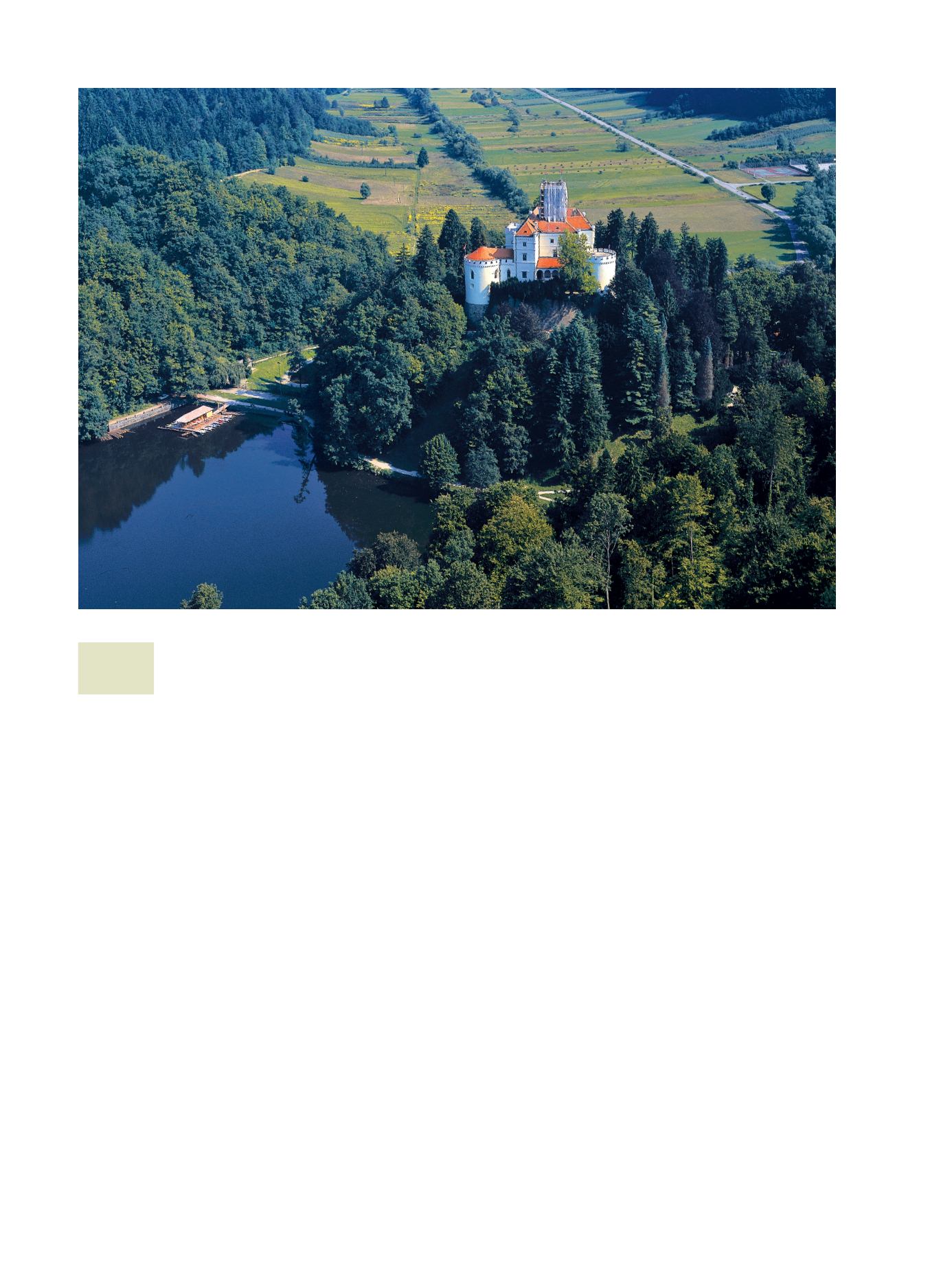
28. Castillo de
Trako
šć
an.
/ Trako
šć
an Castle
26


